Story Highlight
– AI helps manage airport disruption amid rising passenger numbers.
– Major airports nearing pre-pandemic passenger levels.
– AI predicts delays and tracks inbound flights effectively.
– 1ST Airport Taxis uses AI for real-time vehicle dispatch.
– Predictive technology enhances reliability for time-sensitive travelers.
Full Story
The integration of artificial intelligence (AI) in UK airports is becoming increasingly significant as passenger volumes approach pre-pandemic levels, according to data from the Civil Aviation Authority (CAA). Major airports such as Heathrow, Gatwick, and Luton are facing heightened challenges in managing flight operations and ground transport due to this surge in traveler numbers.
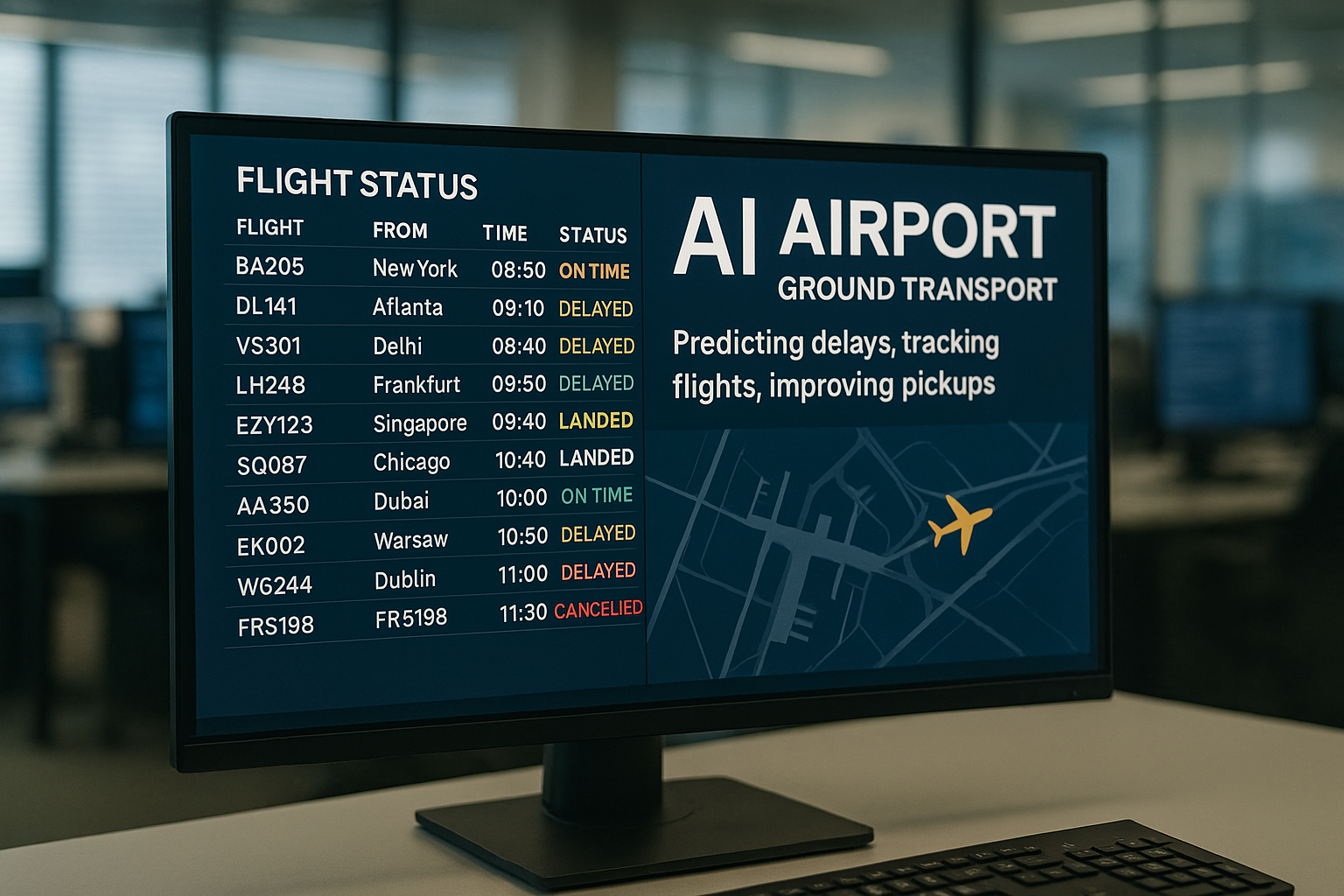
Industry experts highlight that AI technology is being employed to enhance the prediction of flight delays, monitor incoming flights, and streamline subsequent travel arrangements, especially during busy travel seasons. Research into aviation technology indicates that AI systems have the potential to decrease delays in airport ground transport by as much as 20% amidst disruptions. This benefit is particularly noticeable in areas concerning airport mobility, where timing issues can quickly escalate.
Among the companies leading this technological advancement is 1ST Airport Taxis, a UK-based operator that utilizes its own AI-enhanced systems to effectively connect live flight updates with vehicle dispatch services. Their AI algorithms forecast delays, adjust vehicle deployment in real-time, and provide drivers and passengers with timely information regarding road conditions and possible delays. This proactive approach helps improve the reliability and efficiency of airport pickups during high-traffic periods.
With the anticipated growth in passenger traffic at the UK’s busiest airports, experts assert that the adoption of predictive technologies is vital for ensuring dependability for travelers who require timely connections.