
Story Highlight
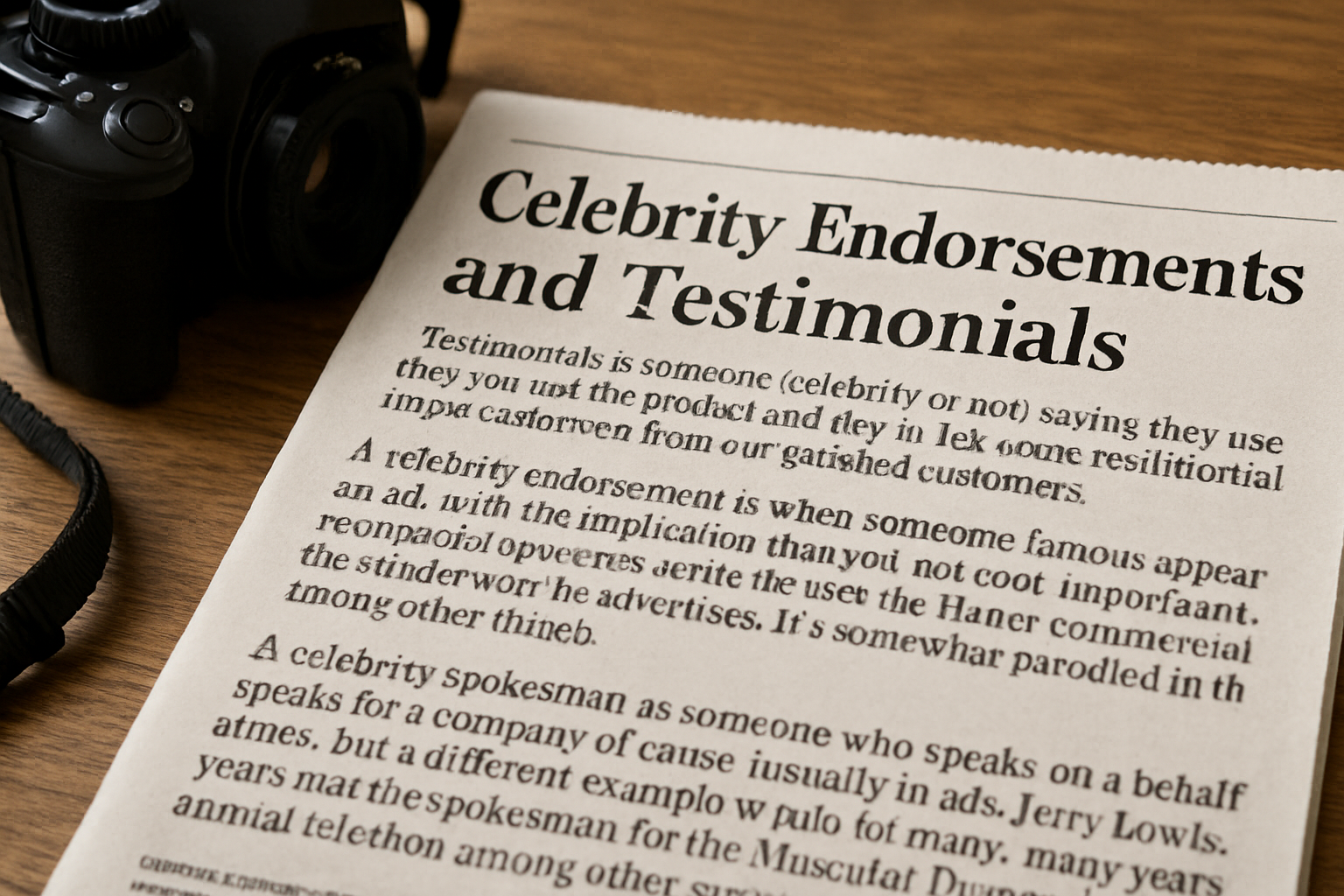
– Testimonials reflect personal opinions of product usage.
– Celebrity endorsements aim to enhance product appeal.
– Haynes ads parody celebrity endorsement dynamics.
– Celebrity spokesmen represent companies or causes.
– Jerry Lewis supported Muscular Dystrophy Association charity.
Full Story
In the realm of marketing, the terms ‘testimonial’ and ‘celebrity endorsement’ serve distinct purposes, though they often overlap in their function to boost a product’s appeal. A testimonial typically features an individual, whether a well-known figure or an everyday consumer, sharing their positive experience with a product. These personal accounts aim to build trust and credibility among potential buyers, showcasing satisfaction from real users.
Conversely, a celebrity endorsement involves a famous personality actively promoting a brand or product, suggesting that consumers may attain a similar level of desirability or status by choosing the same item. This concept is cleverly illustrated in the recent advertisements for Haynes, featuring basketball icon Michael Jordan. In these commercials, ordinary people express their admiration by revealing that they also wear the underwear he models, humorously highlighting the connection between celebrity status and consumer choice.
Additionally, the role of a celebrity spokesperson extends beyond mere product promotion. For instance, Jerry Lewis, an established figure in entertainment, served as a prominent face for the Muscular Dystrophy Association for numerous years. His involvement included hosting the annual telethon, drawing significant attention to the cause and enhancing public engagement.
By understanding the nuances between personal testimonials and celebrity endorsements, brands can strategically leverage these tools to create compelling narratives that resonate with their audiences.

