
Story Highlight
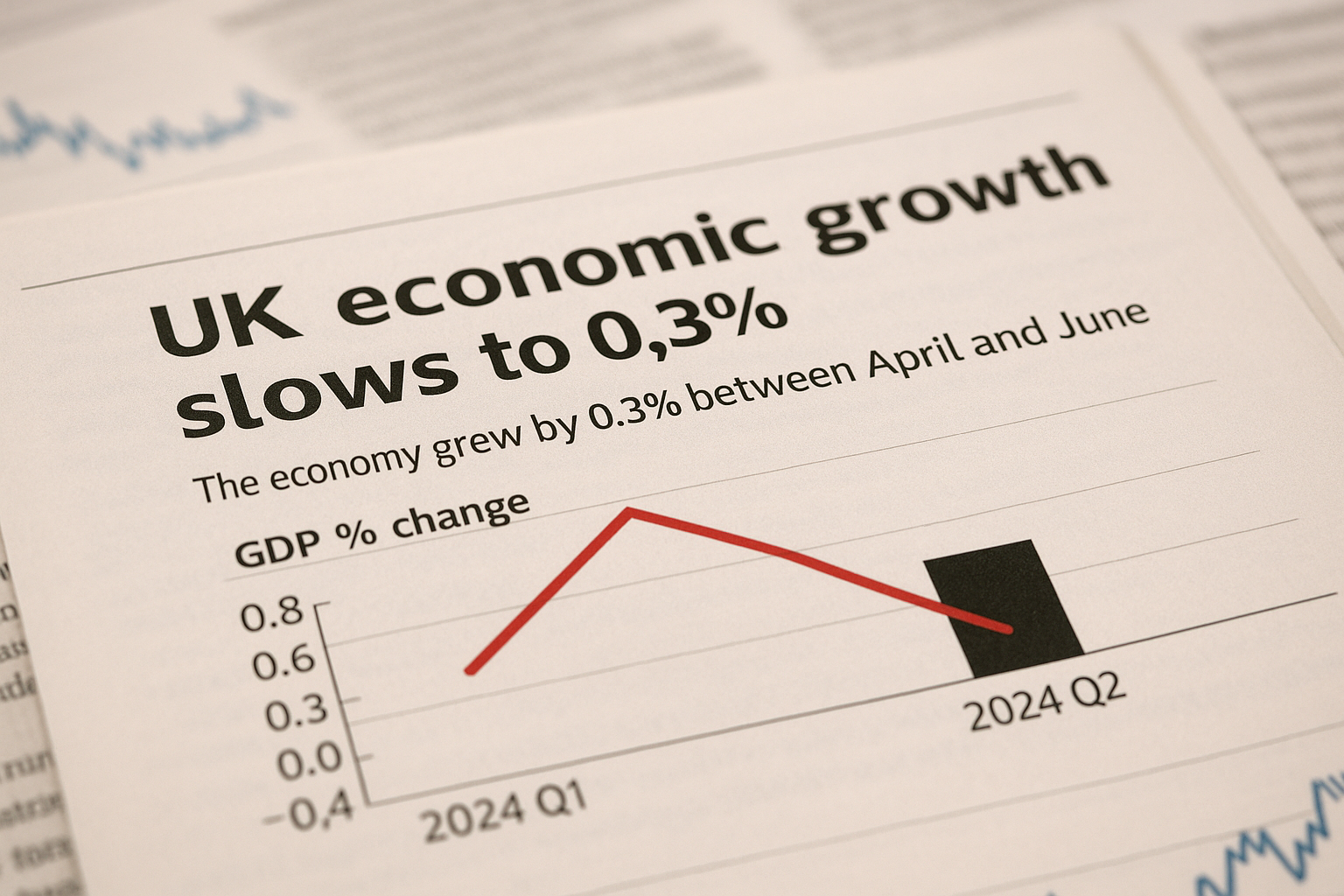
– UK economic growth slowed to 0.3% between April and June.
– Services and construction sectors contributed most to growth.
– Government aims to boost economy amidst rising tax concerns.
– Business investment fell sharply by 4% during the period.
– Hot weather improved consumer confidence and economic activity.
Full Story
UK economic growth experienced a slowdown from April to June, with an official growth rate of 0.3%, according to the Office for National Statistics (ONS). This figure follows a stronger growth of 0.7% in the first quarter of the year, indicating a deceleration yet still surpassing expectations of a mere 0.1% rise.
The services sector provided the most significant boost to the economy, supported by advancements in computer programming, consultancy, and health services, including hospitals and nursing homes. Meanwhile, growth in construction was also notable, increasing by 1.2% during the quarter, aided by favorable weather conditions.
Chancellor Rachel Reeves acknowledged the better-than-expected results but emphasized ongoing challenges. “We still have more to do to ensure that growth benefits people in all regions of the country,” she stated, alongside headlines suggesting that June’s performance was notably strong. The ONS also made revisions for April, now indicating a contraction of just 0.1% instead of a previously reported 0.3%.
Despite these positive indicators, retail continued to weigh down overall growth during this period but showed signs of recovery towards its conclusion. In the context of international comparisons, the UK held the fastest growth rate among G7 countries in the initial quarter, although this was not maintained in subsequent months.
Experts have raised concerns regarding the sustainability of this growth pace in light of a sluggish global environment that may hinder further expansion. Susannah Streeter, from Hargreaves Lansdown, suggested that the resilience shown in the UK economy might lead the Bank of England to be cautious about reducing interest rates until inflation moves closer to its target of 2%. Last week, the Bank revised its inflation expectations, forecasting a peak of 4% later this year before a gradual return to the target by 2027.
Ruth Gregory, from Capital Economics, cautioned that maintaining this growth momentum may be challenging, considering the detrimental impact of recent tax increases and ongoing uncertainty regarding future taxation. She noted, “The weak global economy will remain a drag on UK growth for a while yet.”
The National Institute of Economic and Social Research has indicated that tax increases will be necessary should the government wish to adhere to its borrowing targets, estimating a shortfall of £41.2 billion.
Business investment took a hit, falling by 4% as opposed to a growth of 3.9% in the previous quarter, alongside a decline in household spending. Local business owner Iain Hoskins from Liverpool expressed his initial concerns following the latest Budget, which increased National Insurance Contributions, elevating his costs by £100,000. However, he noted a shift in sentiment towards optimism, attributing it to improved weather patterns and an uptick in consumer confidence. “Unexpected sunshine really did bring people out in force,” he said, remarking on the benefits of recent interest rate cuts.
Goldman Sachs has upgraded its forecast for UK annual growth from 1.2% to 1.4%. Chancellor Reeves reiterated that tackling the economic stagnation caused by previous administrations is a priority, while her critics have decried current policies as “economic vandalism” and bemoaned the sluggish pace of recovery.
James Smith, an economist at ING Bank, described the growth figure for this quarter as “not bad,” suggesting that initial boosts earlier in the year, driven by companies anticipating tariffs from then-President Donald Trump, were likely unsustainable.
In related trade news, British goods exports to the US fell to their lowest levels in over three years, attributed to the effects of Trump’s tariffs, signaling challenges ahead as the nation navigates a complicated economic landscape.

