Story Highlight
– UK study will restrict social media access for children.
– Research involves 4,000 children across 30 schools.
– Participants’ social media use limited to one hour daily.
– Results expected by summer 2027, focus on anxiety.
– Politicians push for social media ban for under-16s.
Full Story
A groundbreaking study is set to explore the effects of limiting social media usage among children in the UK, coinciding with rising global discussion on this topic. Australia has recently made headlines by becoming the first nation to prohibit social media access for those under 16, prompting other governments, including the UK’s, to consider similar measures.
While numerous experts agree that certain elements of social media can be detrimental to children, a significant experimental study examining the implications of reduced social media exposure among healthy children has not been conducted until now. “This study is a world first to try to look at that question,” noted Professor Amy Orben from the University of Cambridge, who is leading the research.
The research team plans to involve approximately 4,000 secondary school students from 30 institutions in Bradford, West Yorkshire, concentrating on those in years 8, 9, and 10. Participants will first complete a questionnaire covering areas such as mental health, sleep, and friendships, and will then be required to install a research app on their primary devices.
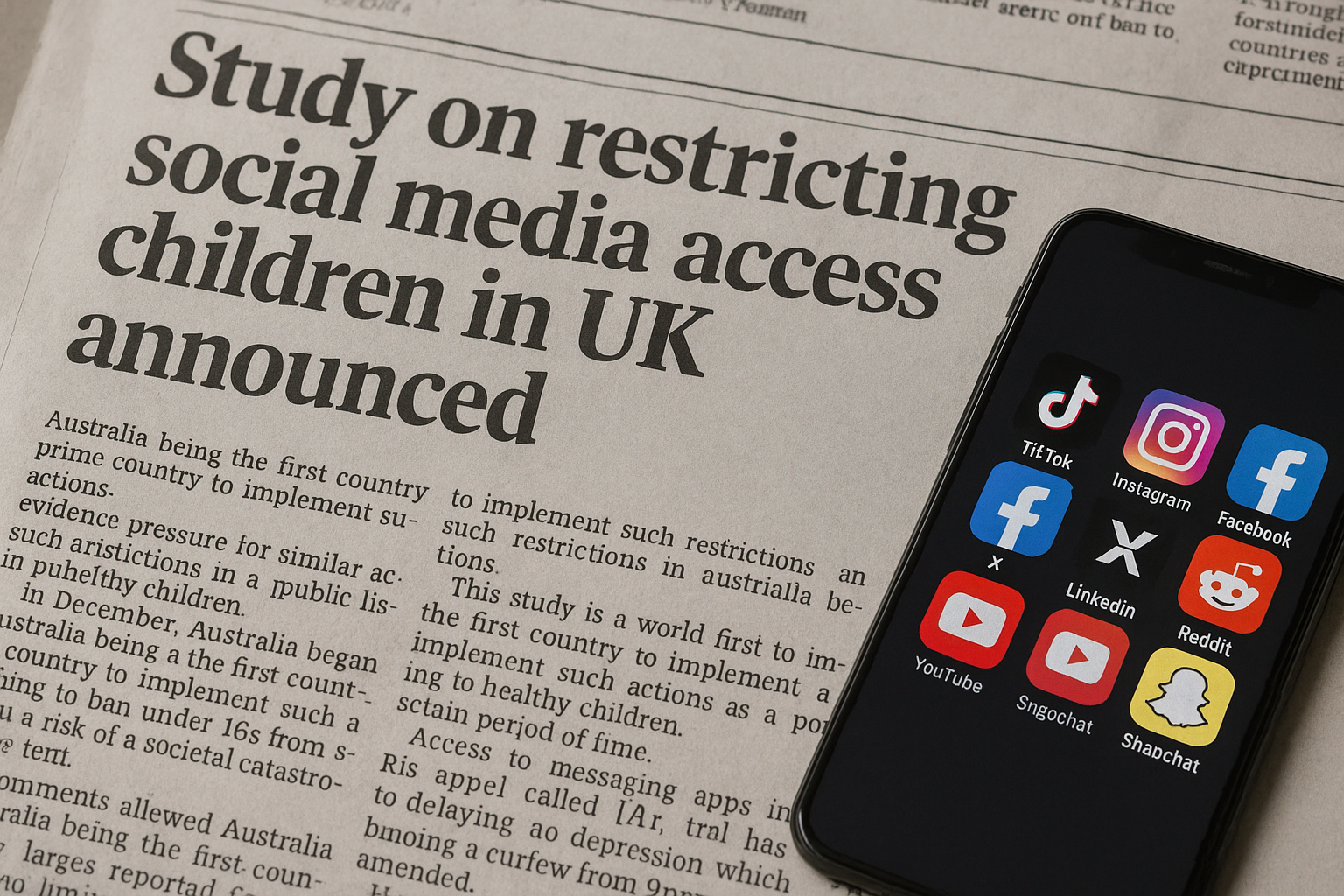
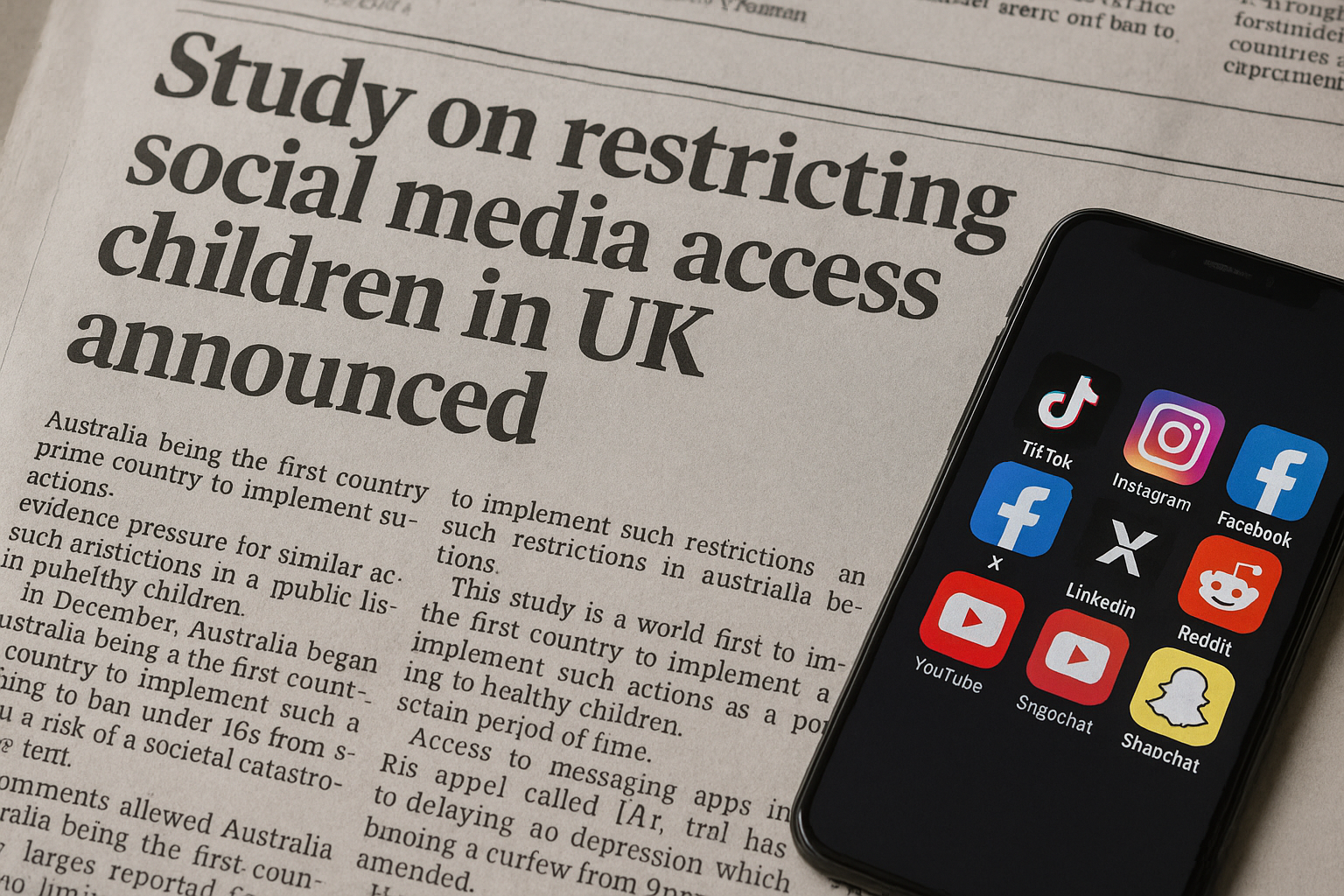
Students from each year group will be allocated randomly to one of two groups: one will simply log their social media activities, while the other will face restrictions, having their access to platforms such as TikTok, Instagram, Facebook, X, LinkedIn, Reddit, YouTube, and Snapchat limited to one hour per day, with a curfew imposed from 9pm to 7am. Significantly, the researchers emphasize that all students within a specific year group will undergo the same intervention, a factor they believe is crucial. “We know that if we take away social media for one adolescent, that might have a very different impact than if we take it away for their whole friendship group for a certain period of time,” Orben explained.
Messaging services like WhatsApp will remain open, as they play a vital role in family communication. After a six-week duration, participants will complete a follow-up questionnaire. The study will begin with a pilot phase in April, followed by the main research starting in October, with initial findings anticipated by summer 2027.
In a related development, members of the House of Lords are poised to vote on an amendment proposed by John Nash that seeks to impose a total ban on children’s social media use. This initiative has garnered support from several Labour peers and, if approved in the Lords, will move to the Commons, where a group of 61 Labour MPs recently urged the Prime Minister to implement a ban.
Liz Kendall, the Secretary of State for Digital, Culture, Media and Sport, assured members of Parliament that the ongoing consultation regarding this issue would conclude within months, with the government aiming for a clear stance by summer. However, Nash expressed his determination to pursue immediate legislation for a ban, stating, “The time for delay and procrastination is over. Without swift action to raise the age limit for social media to 16, we are at risk of a societal catastrophe.”
Meanwhile, researchers acknowledge some limitations of the trial—such as potential use of shared devices—and remain hopeful that their findings will inform the impact of reduced social media use among teenagers. Dr. Dan Lewer, who leads the Bradford Centre for Health Data Science and co-leads the study, mentioned that while anxiety will be the primary focus, they will also investigate depression and patterns of app usage, along with aspects like sleep quality, experiences of bullying, and time spent with friends and family.
Orben clarified that the trial operates independently of the government’s consultation, reinforcing that their goal is to provide high-quality evidence for policymakers. “The decision that policymakers need to make is up to them,” she stated. “We’re really just delivering the best quality evidence we can in the timeframes that are available.”