
Story Highlight
– Jeremy Corbyn launches new left-wing political party.
– Over 600,000 supporters registered, name undecided.
– Supporters encouraged to suggest potential party names.
– Historical caution against new parties with unclear branding.
– Success depends more on strategy than name choice.
Full Story
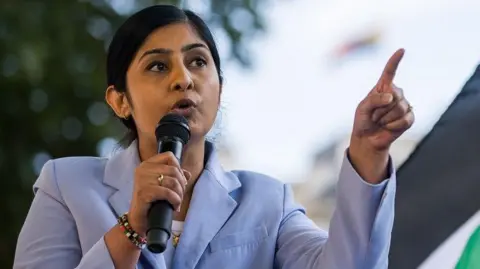
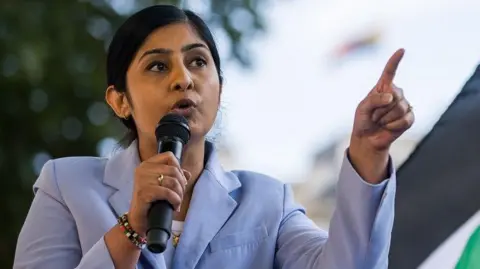
Jeremy Corbyn, the former leader of the Labour Party, is embarking on an unconventional path with the launch of a new political party, which currently lacks an official name. Alongside ex-Labour MP Zarah Sultana, Corbyn claims that over 600,000 individuals have already registered as supporters for this new left-wing initiative.
While initial speculation suggested that the party might be called “Your Party,” named after their sign-up website, Sultana quickly refuted that idea. She has proposed “The Left” or “the Left Party” as potential names, but the pair would prefer to open the floor to supporters for naming suggestions. This participatory approach fits into their broader discussions on the party’s principles. Registration with the Electoral Commission is necessary before they can field candidates in elections, which imposes restrictions on name duplication.
Professor Matthew Flinders of Sheffield University noted that a name should encapsulate the core essence of the party and suggested that the political landscape is ready for a party that resonates with contemporary values. He remarked that many young voters may not connect with the traditional parties, as the historical significance of names like Labour and Conservative has diminished over time. In our digital age, conventional social dynamics have shifted, creating a greater need for a politically relevant brand.
Laura Rogers, a creative director at the advertising agency AMV BBDO, emphasised the significance of a name in political branding, suggesting it should be impactful for both online engagement and merchandise. She cautioned that poor choices could lead to mockery, referencing past branding failures such as the Post Office’s short-lived “Consignia” rebranding.
Journalist Ash Sarkar from Novara Media highlighted the importance of avoiding names that could lead to unintended jokes, recalling the infamous “Boaty McBoatface” incident where public voting resulted in a comical name for a scientific vessel. She warned that democratizing the naming process could lead to unsuitable suggestions from the public.
Dominic Bailey of branding agency Baxter and Bailey viewed Corbyn’s strategy of involving supporters as a savvy move, fostering engagement and ownership. However, he questioned the effectiveness of a collective approach to naming, suggesting it might undermine clarity.
Historically, many new political parties have struggled to gain traction. The UK sees new party registrations almost weekly, yet few achieve prominence. An example includes The Independent Group (TIG), which, despite launching during a politically charged period in 2019, failed to maintain momentum and underwent multiple name changes within a brief period.
Former Tory MP Heidi Allen, who once led Change UK, shared her experience of the administrative burdens that can hinder a party’s mission. She remarked on the challenges of selecting a distinct name that resonates and is not already claimed.
Pamela Fitzpatrick, associated with the Peace and Justice Project alongside Corbyn, recently registered a new party called “Arise,” inspired by one of Corbyn’s preferred poems. Political strategist Chris Bruni-Lowe cautioned against names that lack clarity, emphasizing that effective political branding should communicate a clear vision to the electorate.
As discussions continue, Corbyn has stated that a final name will be determined after gathering input from supporters, with the decision expected at the party’s founding conference in the autumn. Sarkar posited that concerns over the name were misplaced, asserting that the party’s success will hinge on its political strategy rather than its title. She concluded by noting that the substantial support garnered thus far, despite the absence of a name, underscores that the essence of the party is vested in its members, declaring, “whatever the name, it is always going to be your party.”

