
Story Highlight
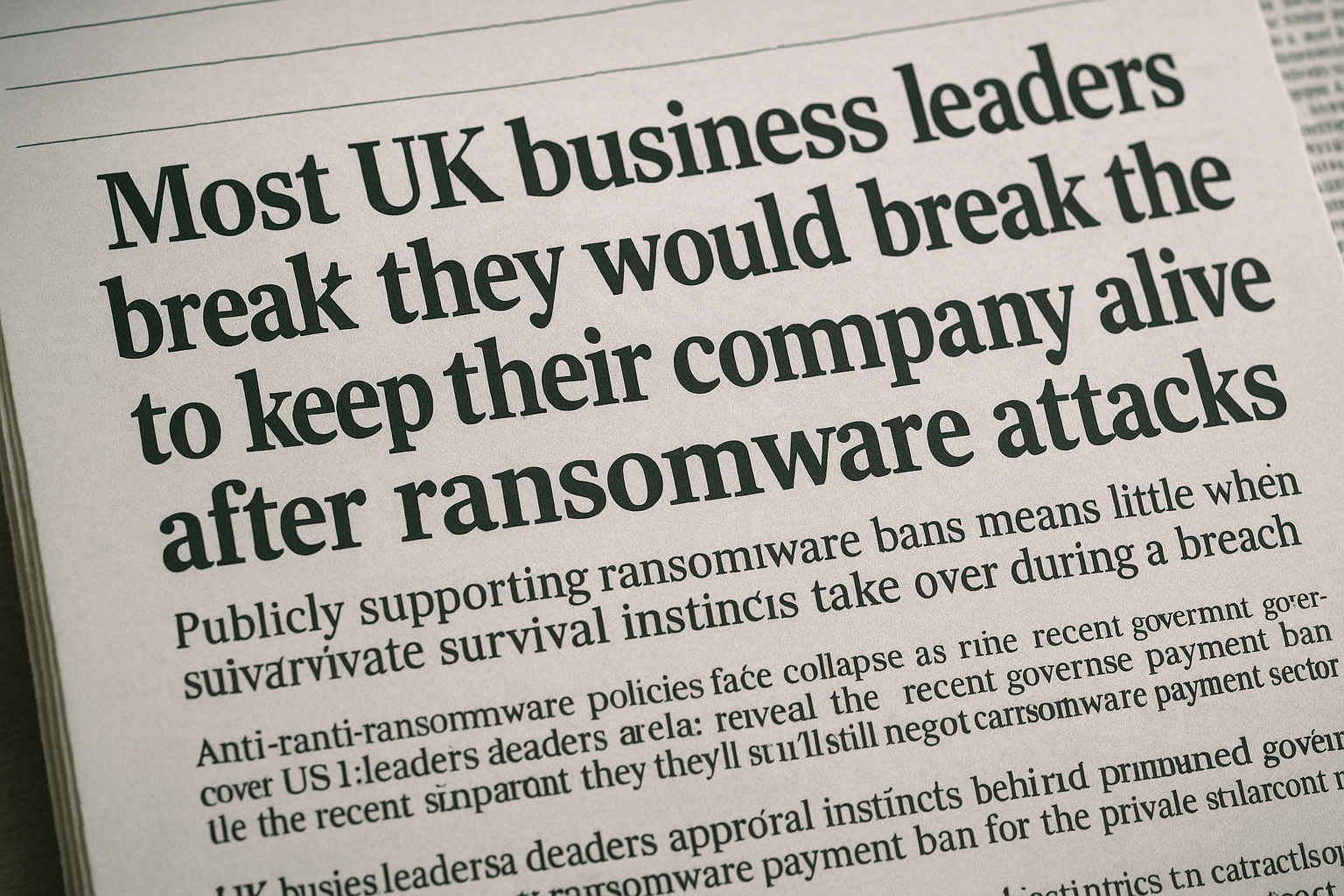
– Most UK leaders would break laws to survive cyberattacks.
– Public support for ransomware ban contrasts with private actions.
– 43% of businesses experienced cyber breaches last year.
– Ransom payments rarely ensure data recovery or eliminate targeting.
– Compliance with the ban is doubtful during crisis situations.
Full Story
A significant number of business leaders in the UK have indicated a willingness to breach laws regarding ransomware payments to safeguard their companies. Although many publicly endorse the government’s initiative to prohibit such payments, findings from recent research highlight a disconnect between their stated support and actual practices during cyber incidents.
The Cyber Security Breaches Survey 2025 conducted by Commvault reveals that nearly all participants support the ban on ransom payments, yet approximately 75% admitted they would consider paying a ransom if it were essential for their organization’s survival. This disparity underscores the conflict between adherence to policy and the instinct to protect one’s business during a crisis.
The report shows that 43% of UK businesses encountered some form of cybersecurity breach in the last year, indicating that the threat spans across various industries and sizes. Consequently, enhancing cybersecurity is increasingly recognized as a vital aspect of business operations, with 98% of respondents signaling intentions to increase spending in this area.
Experts stress that simply paying ransoms does not ensure successful recovery from a cyber incident. “Paying a ransom rarely guarantees recovery and often increases the likelihood of being targeted again,” commented Darren Thomson, Field CTO EMEAI at Commvault. He argued that while a robust ban could diminish ransomware’s profitability, it must be complemented by increased investment in preventative measures, detection capabilities, and recovery testing procedures.
There is a strong push towards building resilience rather than resorting to payments. Businesses are adopting more comprehensive antivirus solutions and maintaining robust endpoint protection systems, alongside integrating ransomware defense into their recovery plans. This shift is crucial as the average time required to recover from such incidents now averages 24 days, which can be devastating for smaller firms pressured to resume operations swiftly.
Supporters of the payment ban argue that it could catalyze meaningful changes within the industry. One in three respondents expressed that the ban could lead to heightened governmental support and investment in cybersecurity infrastructure, while another third believe it could deter criminals by removing their financial incentive.
Despite this, even among proponents, there is a reluctance to fully commit to compliance in times of crisis, with only 10% of surveyed leaders stating they would adhere to the ban if faced with potential business failure. The UK government has already extended the ban to public sector entities, such as NHS trusts and local councils. However, the practical implementation of this legislation appears uncertain, as many remain skeptical about sacrificing their business stability over legal compliance.