Story Highlight
– Police compile target profile from various sources.
– Watch list includes photographs from custody records.
– Live images converted into biometric code for analysis.
– Technology measures unchanging facial features for accuracy.
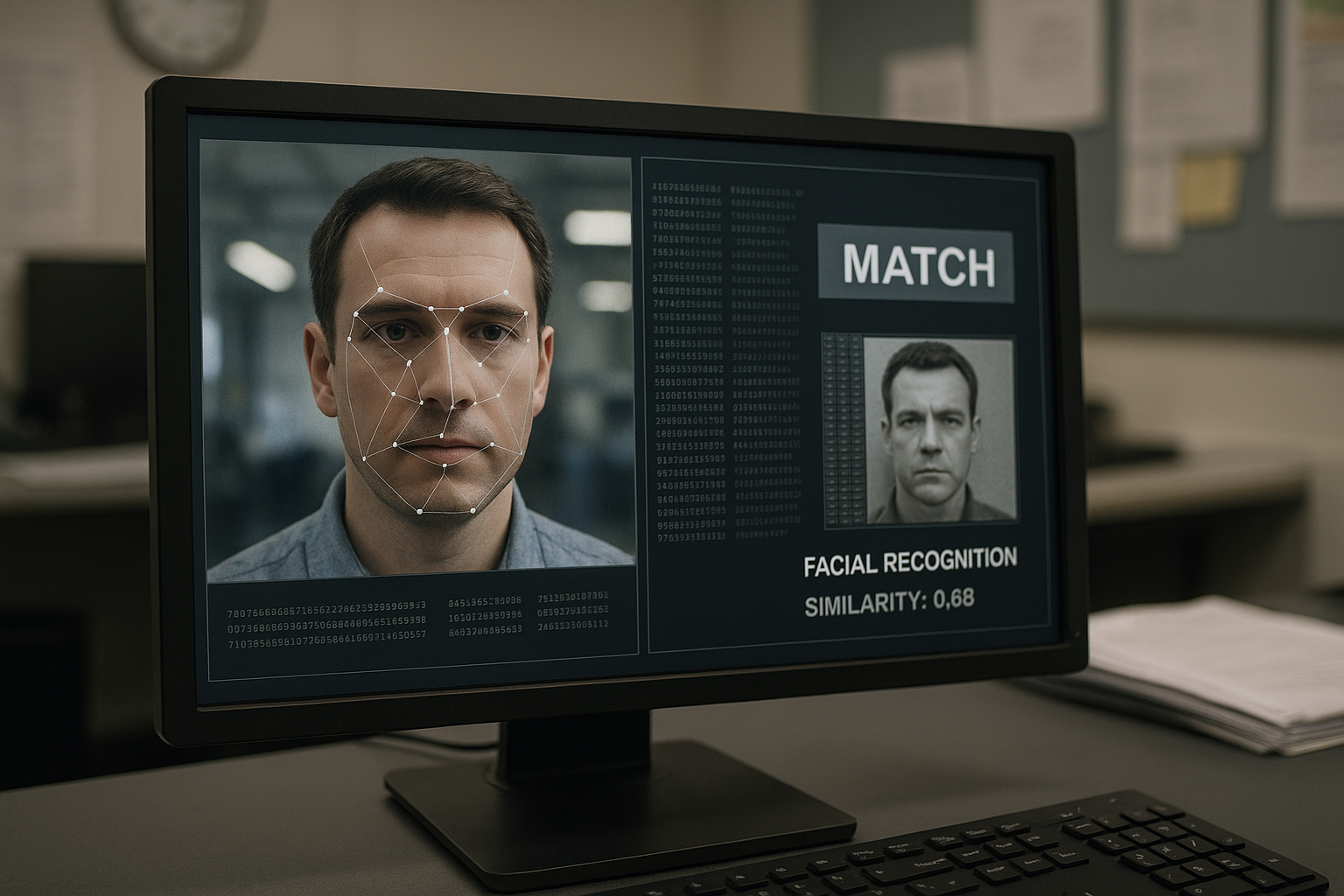
– Similarity score above 0.6 indicates potential match.
Full Story
Facial recognition technology has become a hot topic, particularly regarding its deployment in law enforcement. Professor Pete Fussey, an authority on advanced surveillance techniques from the University of Southampton, outlines the operation of Live Facial Recognition (LFR) technology, which can be distilled into three main phases.
Initially, law enforcement agencies identify specific individuals for scrutiny and assemble a list of these persons, based on various criteria. According to Professor Fussey, “That profile could be based on a type of offense, a court order or just people the police want to talk to.” The assembled database typically comprises images, frequently sourced from custody records.
The second phase involves a technical process where both images from the database and current images captured by the surveillance vans are transformed into unique codes derived from biometric features of the individual’s face. This method is akin to the Face ID feature found on Apple iPhones. Fussey elaborates, “It measures parts of your face that don’t change over time, like the distance between your eyes, and also the relationships between your features, like the size of your eyes compared with your mouth.”
In the final stage, the police establish a similarity threshold, which ranges from 0 to 1. Generally, a similarity score of approximately 0.6 prompts the system operator to consider the presence of a potential match. The confidence in the match increases with the score, indicating the system’s accuracy in identifying individuals within its database.