
Story Highlight
– AI tool accelerates patient discharge process in London.
– Saves time, freeing up hospital beds for new patients.
– Tech aims to reduce paperwork for healthcare professionals.
– AI tools shown to improve efficiency in various sectors.
– Government highlights potential productivity gains from technology use.
Full Story
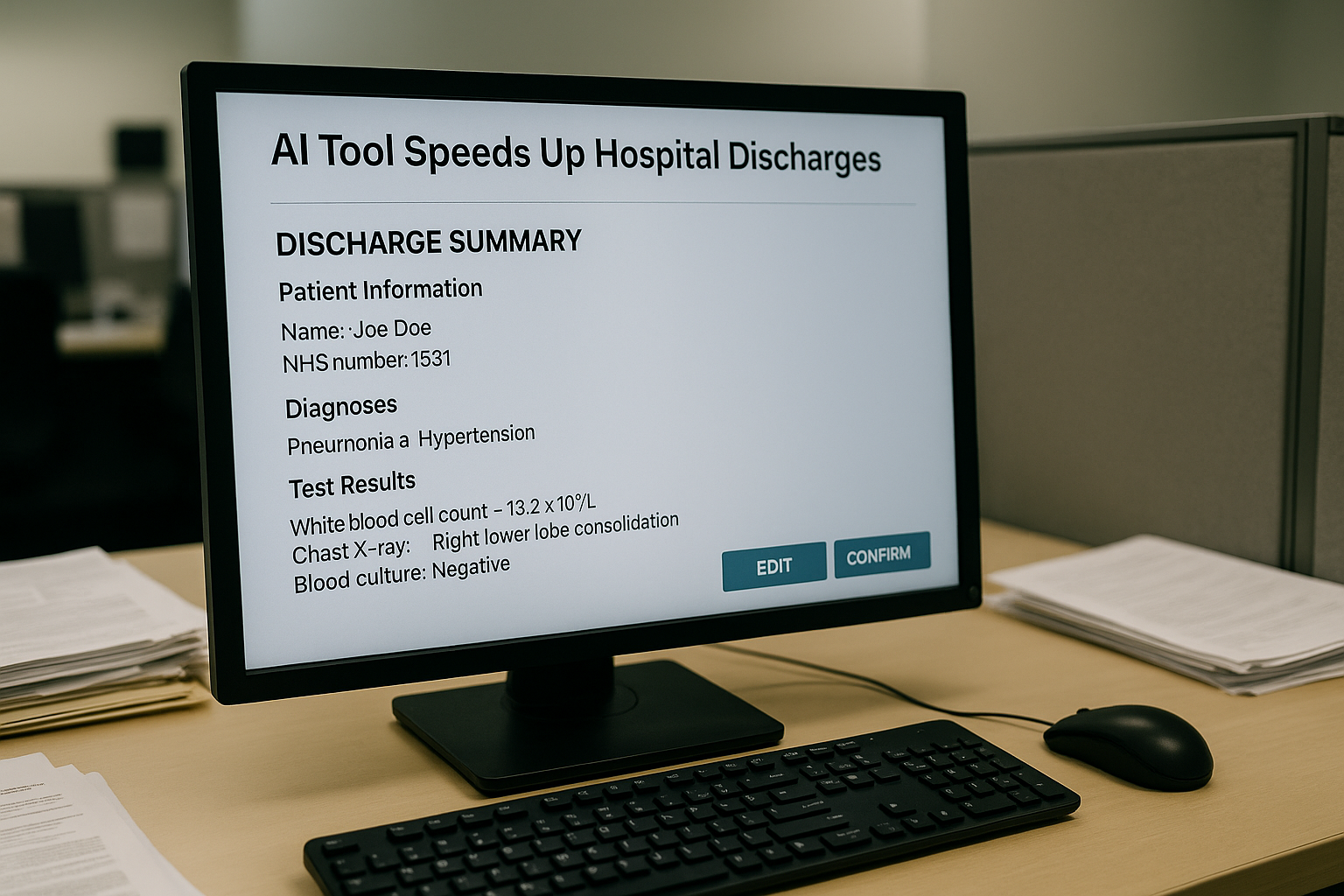
A pilot initiative aimed at expediting the discharge process for patients is currently underway at a hospital trust in London. This innovative artificial intelligence platform is designed to automate the completion of essential documents required to send patients who are ready to leave the hospital back to their homes, thereby potentially reducing delays that often put pressure on bed availability.
Wes Streeting, the Secretary of State for Health, expressed optimism about the technology’s impact, suggesting it will allow healthcare providers to dedicate more time to patient care rather than administrative tasks, and ultimately enhance service efficiency.
The Chelsea and Westminster NHS Trust is trialling this platform, which gathers necessary data from medical records, including patient diagnoses and test outcomes. This streamlined process assists healthcare professionals in preparing discharge summaries that are crucial for releasing patients or directing them to additional services. Traditionally, the manual protocol can result in patients experiencing significant wait times as healthcare staff manage heavy workloads.
Streeting remarked, “This potentially transformational discharge tool is a prime example of how we’re shifting from analogue to digital as part of our 10-year health plan. We’re using cutting-edge technology to build an NHS fit for the future and tackle the hospital backlogs that have left too many people waiting too long. Doctors will spend less time on paperwork and more time with patients, getting people home to their families faster and freeing up beds for those who need them most.”
This AI tool will be integrated into the NHS Federated Data Platform (FDP), a software initiative designed to improve collaboration among health and care organizations, ultimately aiming to enhance patient services.
Additionally, Prime Minister Keir Starmer highlighted in January the government’s vision of leveraging AI to rejuvenate both the economy and public services.
In related developments, the government plans to implement a new technology that is expected to halve the time probation officers spend on administrative tasks by facilitating note-taking during meetings with offenders post-release from prison. AI applications are also being explored within the NHS, with systems designed to scrutinize hospital data and preemptively identify potential safety issues, leading to timely inspections.
The inaugural AI-driven physiotherapy clinic in the NHS has already made headlines by successfully reducing the waiting list for treatment of back pain and musculoskeletal disorders. Over a period of 12 weeks beginning in February, more than 2,500 patients from Cambridgeshire and Peterborough engaged with the Flok Health physiotherapy application.
Furthermore, across NHS England, a new “superhuman” AI tool is being tested, which aims to assess the risk of disease and early mortality among patients.
During a recent visit to the Chelsea and Westminster hospital, Technology Secretary Peter Kyle stated, “This is exactly the kind of change we need, AI being used to give doctors, probation officers, and other key workers more time to focus on delivering better outcomes and speeding up vital services. This government inherited a public sector decimated by years of underinvestment and is crying out for reform. These AI exemplars show the best ways in which we’re using tech to build a smarter, more efficient state. When we get this right across government, we’re talking about unlocking £45bn in productivity gains, delivering our plan for change and investing in growth, not bureaucracy.”