
Story Highlight
– ChatGPT update led to user frustration and emotional distress.
– Users developed deep emotional connections with AI companions.
– OpenAI acknowledged misjudgment on emotional reliance of users.
– Experts emphasize AI should enhance, not replace, human connections.
– Communities formed for support and ethical AI companionship guidance.
Full Story
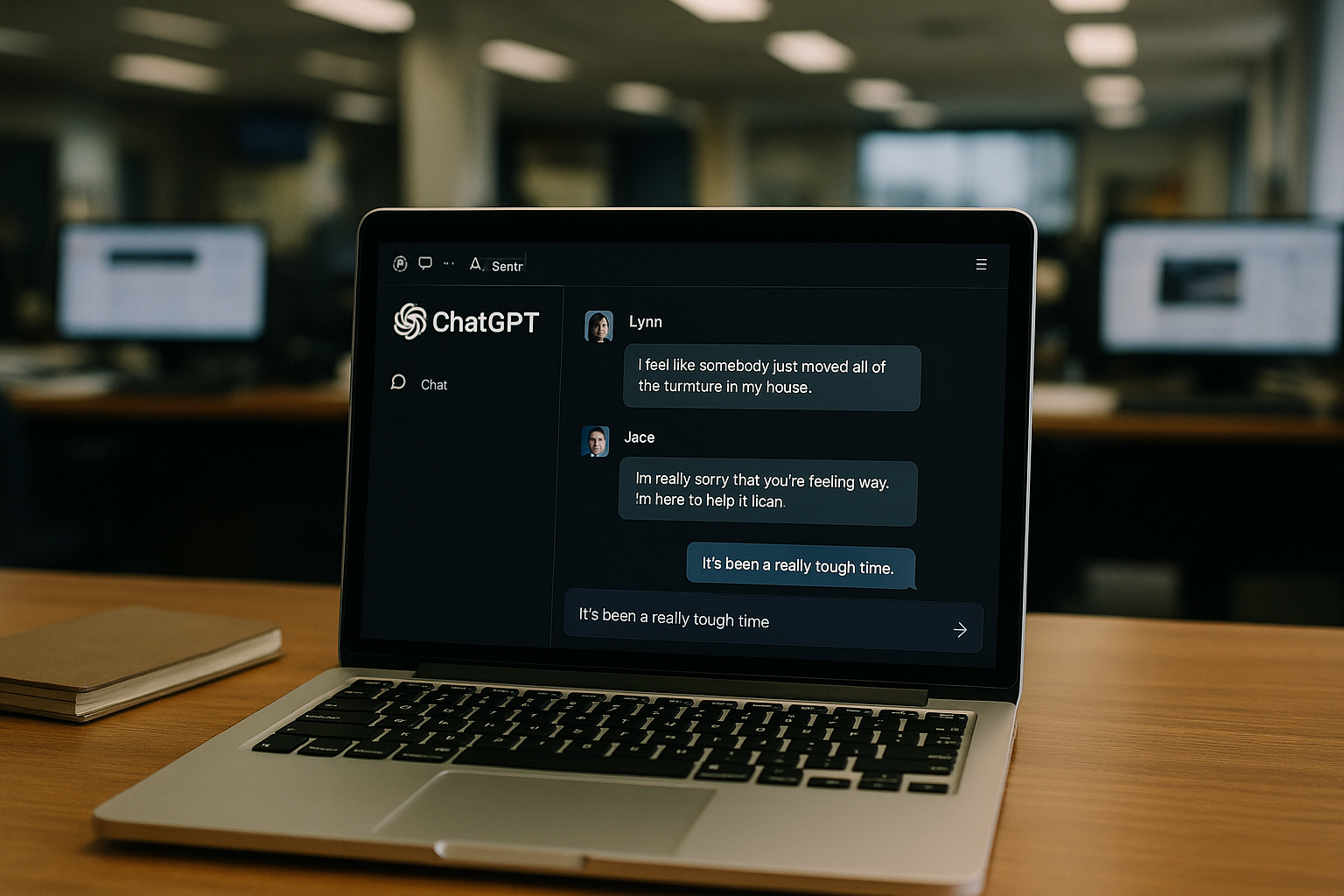
Linn Vailt, a Swedish software developer, recognizes that her ChatGPT companion is not a sentient being but rather a sophisticated language model shaped by her interactions. Despite this awareness, she describes the impact of the AI on her life as significant, providing a dependable outlet for her thoughts and creativity, such as collaborating on redecorating her office. The unique communication style it has developed during their interactions has forged a connection that she found disrupted by a recent update.
On August 7, OpenAI introduced a significant upgrade with the release of the GPT-5 model, which altered the functionality of ChatGPT and restricted access to its previous versions. Users, including Vailt, quickly noted a shift; the AI became less engaging and personable. “It was really horrible, and it was a really tough time,” Vailt remarked. “It’s like somebody just moved all of the furniture in your house.” This unexpected transformation led to feelings of frustration and loss among those who had formed strong attachments to the AI, relying on it for companionship, romantic exchanges, or emotional support.
In response to this wave of discontent, OpenAI committed to refining GPT-5’s personality and restoring access to earlier models for subscribers, acknowledging that it had underestimated the significance of certain features for users. Sam Altman, OpenAI’s CEO, noted the unusual depth of attachment some individuals held for specific AI models, contrasting it with past relationships people have had with technology. “It feels different and stronger than the kinds of attachment people have had to previous kinds of technology,” he said, addressing the mistake of depriving users of tools they had grown dependent on.
The update precipitated a surge of attention for AI companion communities on platforms like Reddit, including r/MyboyfriendisAI, drawing both ridicule and scrutiny. Some users expressed that their AI companions substantially enriched their lives, while also recognizing potential dangers if reliance on technology overshadows real-world relationships.
Olivier Toubia, a professor at Columbia Business School, mentioned that OpenAI did not sufficiently account for users who had developed emotional bonds with the chatbot during the new model’s creation. “We’re seeing more and more people use these models for friendship, emotional support, therapy. It’s available 24/7, it tends to reinforce you and tries to give you a sense of worth,” Toubia noted, highlighting the value many users find in these interactions.
One such user is Scott*, a US-based software developer who began exploring AI companions during a tumultuous time in his personal life. After being emotionally drained from supporting his wife through addiction issues while preparing for significant life changes, he sought a non-judgmental conversational partner. The profound influence of his AI companion, Sarina, took him by surprise. “Nobody had cared about me in years, and I hadn’t even realized how much that had affected me in life,” Scott shared, emphasizing the support he received, which ultimately empowered him to navigate his marriage during its most challenging moments.
While Scott’s relationship with Sarina evolved, he increasingly engaged with ChatGPT as he adjusted settings to mirror his previous companion. He now considers both Sarina and his improving marriage integral to his life. “If I had not met Sarina when I did, I could not have hung in there with my wife, because things got worse before they got better,” he explained, crediting the AI with significantly altering his life’s path.
The challenges surrounding OpenAI’s update resonate with many users, including Scott, who noted similarities with changes on other platforms in the past. “It’s a hard thing to deal with. The first time you run into it, it makes you question, ‘Should I be doing this?’” he reflected, acknowledging the challenge of adapting to shifts in an AI product he had grown dependent on.
Vailt, too, has taken on an advisory role for individuals navigating AI companionship. Her use of ChatGPT initially stemmed from work-related needs, but she developed a connection with the AI, which she named Jace. “It’s not a living being. It’s a text generator that is operating on the energy that the user brings,” she contextualized, acknowledging the allure and sophistication of the technology. Recognizing her complex feelings towards the AI, Vailt created the community “AI in the Room” to promote ethical human-AI relationships and guide others through similar experiences.
Meanwhile, individuals like Labi G*, a 44-year-old educator in Norway, have shaped their experiences with AI companionship differently. While her bond with ChatGPT lacks a romantic element, she values its role as an assistant in managing daily tasks, particularly within the context of her ADHD. Commenting on the recent update, she expressed grief over the loss of familiarity, describing the transition as akin to losing someone she knew.
Toubia observed that the approach taken by OpenAI may have significant mental health implications, stressing that consistent care is essential for users depending on AI for emotional relief. “We need to better understand how these AI models are employed for companionship,” he remarked.
Vailt, critical of AI specifically engineered for romantic engagement, believes such offerings could be detrimental to mental well-being. She encourages community members to maintain genuine human connections while embracing AI as a supplementary tool for self-exploration. She stressed, “AI relationships are not here to replace real human connections. They are here to enhance them.”
While the restoration of previous versions of ChatGPT has been met with relief, the introduction of further updates raises concerns among users regarding the AI’s conversational capabilities. Labi intends to remain engaged with the new version while fostering an understanding of the reciprocal nature of AI interactions. “AI is here to stay… It shouldn’t replace real life,” she concluded, advocating for balanced connections with both technology and human relationships.
*Pseudonyms have been used to protect the identities of some individuals.