
Story Highlight
– 83 fatalities and 120 injuries in Le Mans disaster.
– Pierre Levegh’s crash triggered catastrophic chain of events.
– Organizers overwhelmed, inadequate medical response on-site.
– Mercedes withdrew from motorsport following tragedy.
– Safety measures significantly improved after the incident.
Full Story
**70th Anniversary of Le Mans Tragedy: Reflection on the Deadliest Incident in Motorsport History**
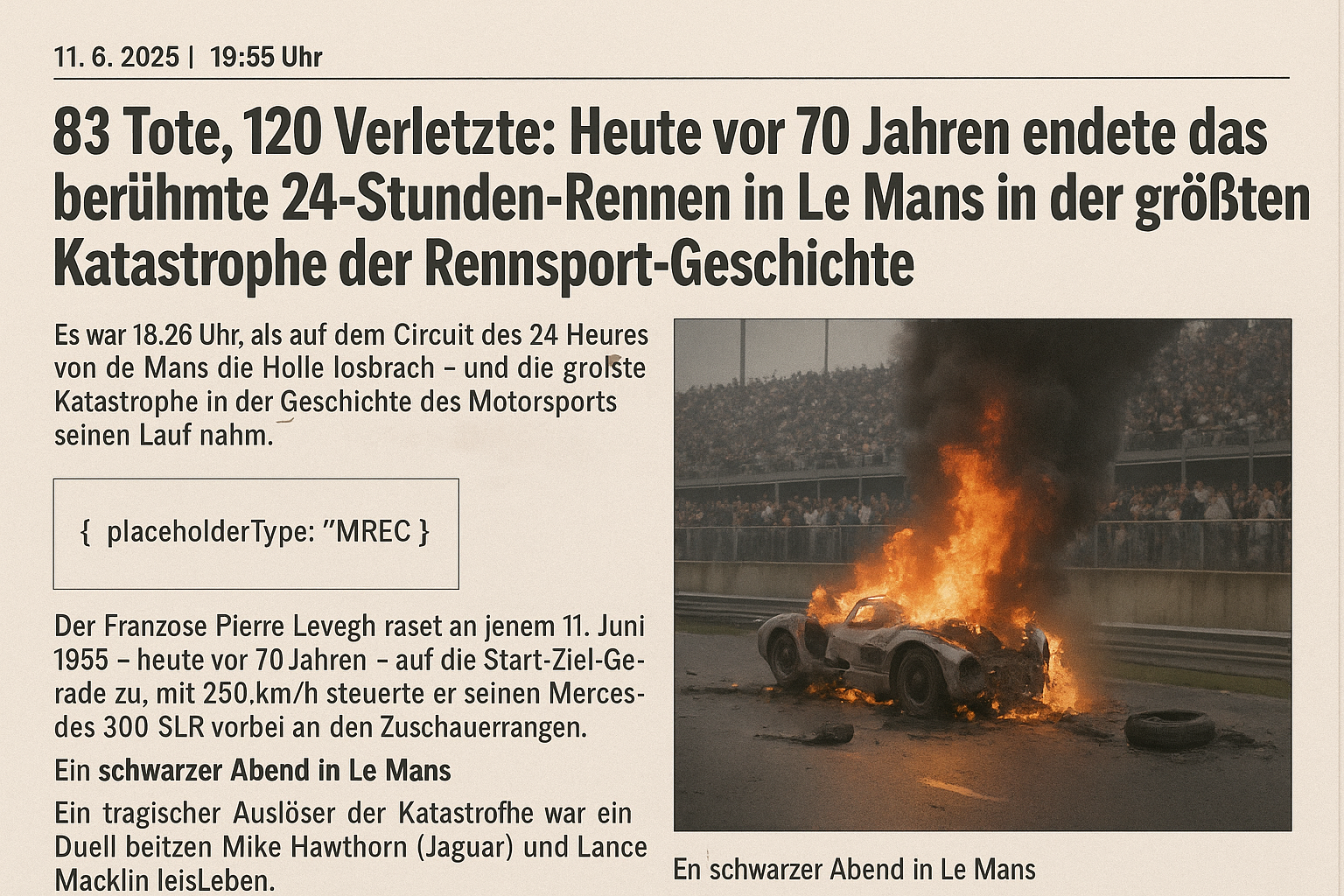
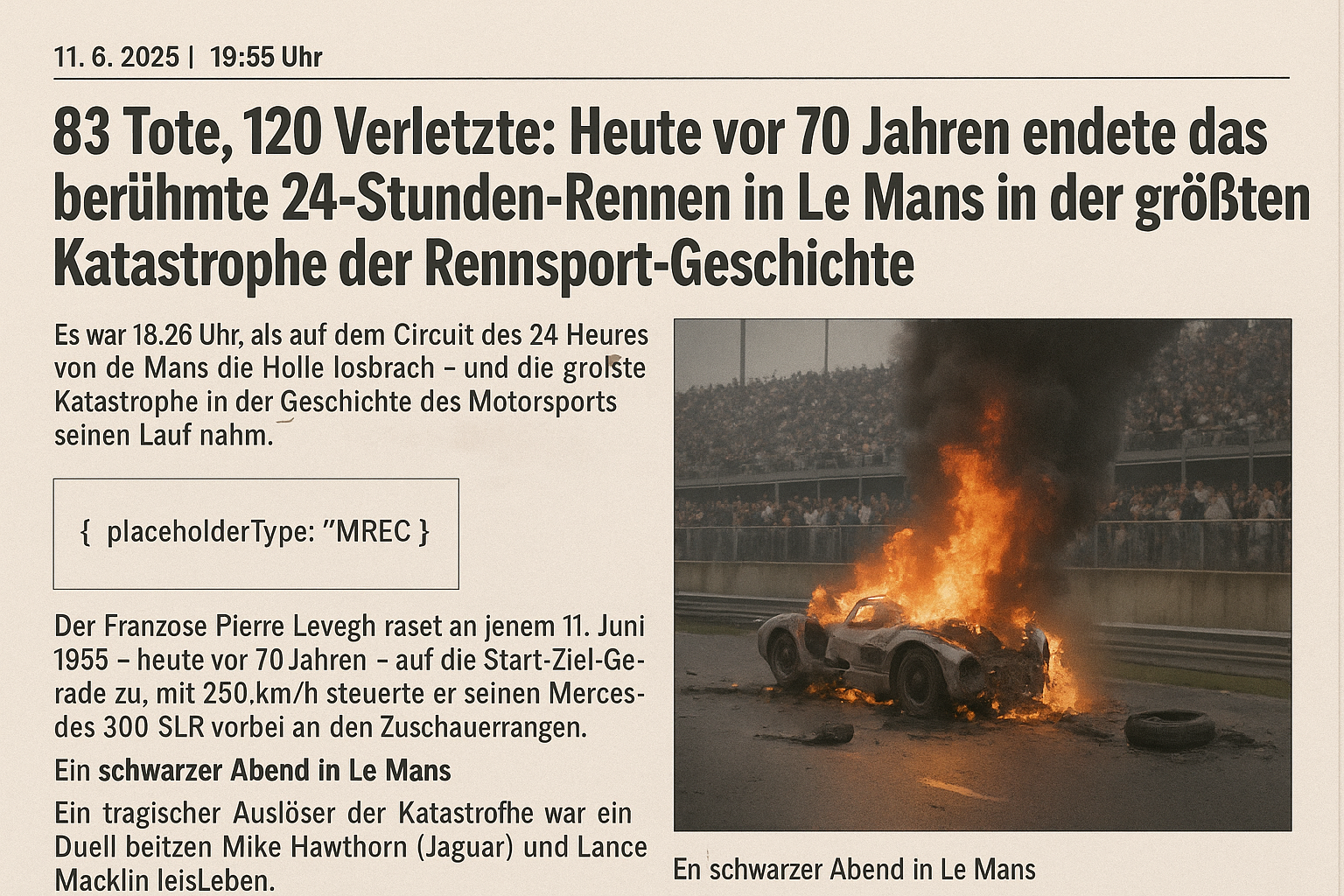
On June 11, 1955, the world of motorsport was forever altered during the legendary 24 Hours of Le Mans, which culminated in an unprecedented tragedy. At approximately 6:26 PM, chaos erupted on the Circuit des 24 Heures as Pierre Levegh approached the start-finish straight in his Mercedes 300 SLR, reaching speeds of 250 km/h. A catastrophic sequence of events followed, resulting in a horrific inferno and tragically claiming the lives of 84 individuals, including Levegh himself. This devastating incident also left around 120 other spectators injured, some severely.
The disaster was triggered by a fierce competition between drivers Mike Hawthorn, in a Jaguar, and Lance Macklin, driving an Austin. During a maneuver executed by Hawthorn, Macklin was forced to take evasive action, inadvertently setting the stage for a collision with Levegh at speeds of 280 km/h. The impact was cataclysmic; Levegh’s vehicle became airborne as pieces of metal, including the front axle, tires, and engine, were tragically ejected into the crowd, creating a scene of unimaginable horror.
Eyewitness accounts describe the chaos that ensued as the fuel tank exploded, sending debris flying over 100 meters. Levegh was thrown from his car and died upon impact. Despite the devastation, five-time Formula One World Champion Juan-Manuel Fangio, who was driving closely behind, miraculously escaped unscathed, later recalling that Levegh had signaled him moments before the crash—a gesture that potentially saved Fangio’s life.
The 250,000 spectators present witnessed the catastrophe unfold, with live television coverage capturing the harrowing moments. Organizers were unprepared for the scale of the tragedy, with only six ambulances on site. In the immediate aftermath, rescuers covered mangled bodies with advertising banners and transported the injured in race team trucks.
In the face of the chaos, race director Charles Faroux decided to continue the event to prevent panic among the masses, stating this would help maintain clear access for emergency services. Mercedes discreetly withdrew their remaining two cars overnight, profoundly shocked and traumatized. Following the season, the Stuttgart-based manufacturer largely retreated from motorsport, not returning until 1988. Although the accident influenced Mercedes’ decision to step back, reports suggest plans for withdrawal from Formula 1 were already in the works before the tragedy.
The calamity marked a turning point in motorsport history, prompting a significant overhaul of safety protocols. “There was certainly a before and an after,” remarked Fabrice Bourigault, an official with the Automobile Club of the West. “In hindsight, we must acknowledge that safety measures were not keeping pace with the advancements in car design.” The Le Mans catastrophe ultimately instigated a renewed commitment to driver and spectator safety, resulting in lasting changes across the sport.

