Story Highlight
– Andy Burnham discusses Labour leadership speculation amidst questions.
– He emphasizes supporting Labour, not seeking a “personality contest.”
– Burnham needs to become an MP to challenge Starmer.
– Critics point out Burnham’s past leadership campaign failures.
– He outlines ambitious policy proposals for Labour’s future.
Full Story
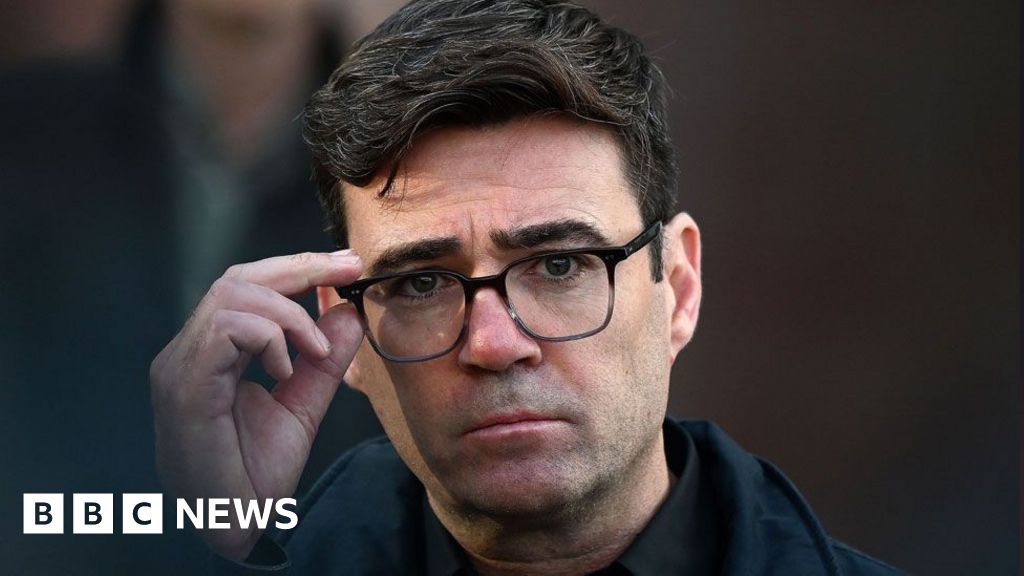
Greater Manchester Mayor Andy Burnham has indicated that the decision regarding potential changes in Labour leadership rests with the party’s MPs. Speaking with the BBC, he acknowledged receiving “honest” inquiries from Labour MPs about the possibility of him contesting for the leadership against Prime Minister Sir Keir Starmer, while emphasizing his disinterest in participating in a “personality contest.”
Burnham, who successfully secured a third term as mayor in May, underscored the need for Labour to formulate a comprehensive plan addressing national issues, particularly in countering the emerging Reform UK party. He expressed his willingness to assist the Prime Minister in developing new policies for the government.
As he is not currently a member of Parliament, Burnham would need to secure a parliamentary seat through a by-election and resign as mayor to initiate a leadership challenge against Starmer. However, there are currently no scheduled by-elections, and uncertainty looms over his potential candidacy should such an opportunity arise.
During a phone-in session on BBC Radio Manchester, Burnham responded to ongoing speculation regarding his political ambitions. His comments followed an earlier interview with the Daily Telegraph, where he was queried about returning to Westminster to lead the party. When asked if MPs had approached him about a leadership bid, he confirmed: “People have contacted me throughout the summer – yeah.”
Responding to suggestions that pursuing leadership could be the most significant gamble of his political career, Burnham remarked: “Whenever Westminster has gone into a moment I’ve somehow been drawn into it.” He reiterated, however, that the ultimate decision regarding the leadership is one for the party in Westminster, stating, “This is ultimately a matter for the party… I’m here to support the party in whatever way I can.”
Housing Secretary Steve Reed earlier supported Burnham’s right to express his views but reminded him of his previous commitment to serve his full term as mayor. Reed characterized the discussions around Labour leadership as mere “tittle tattle,” asserting that Sir Keir has revitalized the party, leading to a historic general election victory. “Our job now is to talk to the country, not ourselves,” Reed added, highlighting the need for addressing the public’s concerns rather than engaging in internal debates.
Critics have pointed out Burnham’s unsuccessful attempts to lead the Labour party in the past when he was an MP, including losing to Ed Miliband in 2010 and to Jeremy Corbyn in 2015, the latter contest where he finished second with a significant margin of defeat.
This latest round of speculation regarding Burnham’s future arises just ahead of Labour’s autumn conference, following tensions within the party triggered by the resignation of Deputy Leader Angela Rayner and the dismissal of Peter Mandelson as the UK’s ambassador to the U.S. Discontent exists among Labour MPs over the government’s performance and the rising prominence of Reform UK in opinion polls.
In an interview with the Telegraph, Burnham highlighted a “climate of fear” within Number 10 and proposed an array of policies aimed at revitalizing the nation. He called for elevated council tax on high-value homes in London and the South East, a £40 billion investment for building council houses, tax relief for lower earners, and reintroducing a higher tax rate for top earners.
These proposals follow his remarks to the New Statesman, where he suggested that Labour needs to undergo “wholesale change” to tackle what he described as an “existential” threat. Advocating for what he terms “aspirational socialism,” Burnham has laid out a vision prioritizing greater public ownership over housing, energy, water, and transport services—key initiatives during his tenure as mayor included the public takeover of bus services.
In the same New Statesman interview, he expressed a readiness to collaborate with various factions, including the Liberal Democrats and former Labour leader Jeremy Corbyn, who is in the process of establishing a new left-wing party. In contrast, Labour MP Callum Anderson criticized Burnham’s economic outlook, arguing that effective leadership requires recognition of fiscal responsibility and credibility with bond markets, emphasizing, “Real change requires fiscal discipline, not wishful thinking.”