Story Highlight
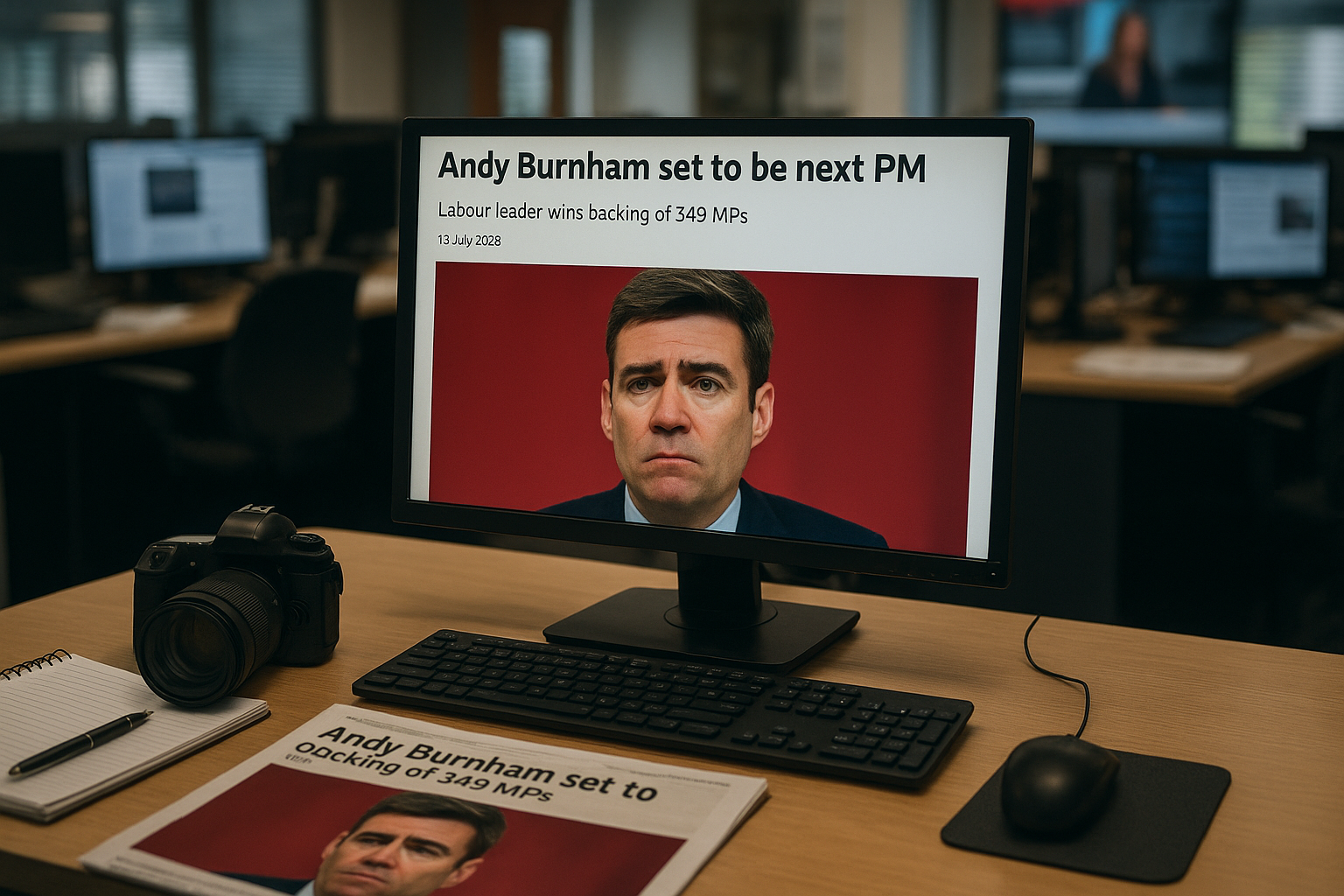
– Andy Burnham confirmed as Labour leader with 349 nominations.
– He aims to become prime minister on July 20.
– Support comes from across the Labour Party spectrum.
– Burnham previously ran for leader in 2010, 2015.
– Maintains low media presence while focusing on social media.
Full Story
Andy Burnham is poised to be confirmed as the new leader of the Labour Party following a significant show of support from party MPs. A total of 349 MPs have now nominated Burnham, indicating a strong likelihood he could assume the role of prime minister by July 20. This new backing comes after he attracted an additional 27 Labour MPs in just two days of nominations, making it impossible for any rival candidates to mount a challenge against him.
While his leadership bid appears firmly on track, Burnham still needs the endorsement of three affiliated organizations, including at least two trade unions, though this is anticipated to be a mere formality. The former mayor of Greater Manchester participated in an online hustings on Monday, fielding questions as the sole candidate in this format.
Burnham’s ascent follows his recent return to Westminster after winning the Makerfield by-election just three weeks ago. Upon receiving the support of 322 MPs on the first day of nominations, he expressed gratitude, describing it as indicative of a “shared belief that Britain needs a new approach to politics.” He added, “That is the circuit breaker I am offering: power out of Westminster, an economy rewired for ordinary people, and good growth in every postcode.”
Leadership candidates within Labour require the nominations of 20% of the party’s MPs, which translates to 81 out of 403. With such overwhelming support, Burnham faces no rivals, unlike his previous attempts in 2010 and 2015 when he lost to Ed Miliband and Jeremy Corbyn, respectively. This time, his path to 10 Downing Street will avoid the traditional votes among party members and trade union affiliates over the summer.
Initially, Wes Streeting, the former health secretary under Keir Starmer, was viewed as a potential contender but quickly endorsed Burnham following the resignation of Sir Keir. Another former minister, Al Carns, also opted out of the race, leaving Burnham unchallenged.
Despite his popularity, some within the party are urging Burnham to clarify his policy proposals. Since his departure from Westminster in 2017 to serve as mayor, he has been elected three times but has had limited interaction with many of the MPs who joined the ranks after his departure. Critics have also pointed out his cautious approach to media engagements during his leadership campaign, as he has avoided taking questions from journalists following his speeches and has primarily communicated through social media, including a recent Q&A session on Reddit.
As Burnham prepares to lead the Labour Party, his focus on addressing living costs will be paramount, with advisers emphasizing the urgency of this issue in the immediate term.