
Story Highlight
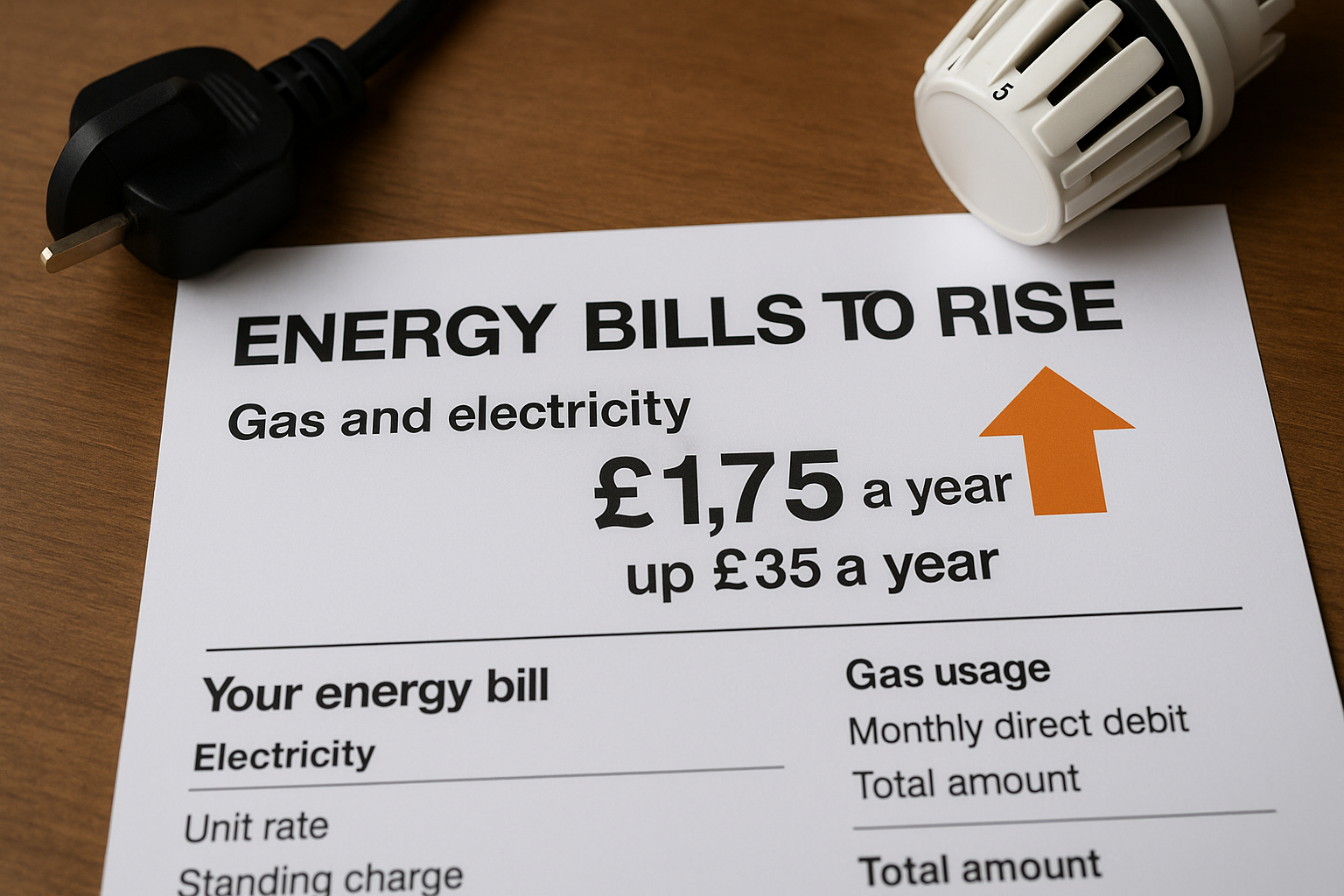
– Gas and electricity prices rise 2% starting October.
– Typical household energy bill now £1,755 annually.
– Extra support for low-income households through Warm Home Discount.
– Campaigners warn of another winter with high energy costs.
– Fixed-price deals recommended to save on energy bills.
Full Story
Gas and electricity prices are set to increase by 2% for millions of households following the latest announcement from energy regulator Ofgem. This rise, slightly exceeding analysts’ predictions, will see the average household, using a typical amount of energy, face an annual cost of £1,755—an increase of £35 from the current price cap. The new rates will take effect from the beginning of October, leading to what campaigners describe as another winter burdened by high energy expenses.
Ofgem’s cap specifies the maximum prices for energy units that can be billed to households across England, Scotland, and Wales. Households can estimate their specific increase by adding £2 for every £100 spent annually on energy.
This price adjustment occurs amid rising costs in other essential areas. The British Retail Consortium reports that food prices are climbing at their fastest rate since February last year, with notable increases in the costs of items such as chocolate, butter, and eggs.
Although the energy cap determines the maximum unit price, the overall bill varies based on individual consumption levels. The updated cap is based on wholesale energy market trends and will remain in place for three months. This recent rise, however, also reflects the unexpectedly high costs associated with balancing the energy network and the additional support measures previously announced by the government, effective this winter.
For those on means-tested benefits, a £150 Warm Home Discount will be automatically applied to their bills. Previously, some households were ineligible due to property size, but this restriction is now being removed. All energy bill-payers will contribute to financing this support through increased standing charges, which will rise by approximately 4% for electricity and 14% for gas, with daily gas charges shifting from 29p to 34p.
Consumer advocacy group Which? suggests it may be beneficial for consumers to explore fixed-price energy deals, while warning them to remain cautious of exit fees that could negate any financial advantages. More than a third of bill-payers are currently on fixed agreements, unaffected by the cap. Tim Jarvis, Ofgem’s director general of markets, described this trend as indicative of a “healthier market.” He acknowledged that despite the rise in costs, there are strategies to save money, such as opting for monthly direct debit payments rather than standard credit billing.
With around 20 million households paying via direct debit, and 8 million on standard credit with another 6 million using prepayment meters, some households are still grappling with considerable energy debts that accumulated during previous periods of elevated pricing. Simon Francis, coordinator of the End Fuel Poverty Coalition, highlighted the enduring financial strain many families face, stating, “The average family is still paying hundreds of pounds more than they did just a few years ago.”
In community responses, Parc Primary School in Cwm Parc, Rhondda Valley, is actively assisting families in difficulty with both everyday expenses and energy bills. Partnered with the Fuel Bank Foundation charity, the school provides vouchers to low-income families for energy payments. Leanne Gough, the school’s family engagement officer, noted, “We’ve got a high level of need, and over the last couple of years we’ve seen that more and more. People are really struggling.” She added that while vouchers can offer immediate relief, many families are hesitant to ask for assistance.
The government has pledged to support vulnerable families by enhancing the Warm Home Discount system following its earlier change of direction on winter fuel payments. Energy minister Michael Shanks emphasized the push for increased domestic production of clean energy as a means to reduce prices. Energy UK, the body representing energy suppliers, argues that the expansion of the Warm Home Discount should be temporary, advocating for a focus on long-term support targeting those most in need.
Criticism has emerged from the Conservative Party, claiming that rising energy bills are a result of government policy decisions rather than fluctuations in wholesale prices. Liberal Democrat leader Ed Davey has stated that “the last thing” families and pensioners require this winter is an increase in energy costs.

