
Story Highlight
– The new concession system classifies manufacturers into four groups.
– Ducati is in Group A, while Honda and Yamaha are in Group D.
– Engine development for 2025/2026 has been frozen, affecting three manufacturers.
– Increased investments from Honda and Yamaha for competitiveness.
– Discussion on budget cap for cost control in MotoGP.
Full Story
In November 2023, a new concession system was introduced for MotoGP manufacturers, categorising them into four groups based on their accumulated championship points. This system aims to restrict the development capabilities of leading brands while providing more leeway for less successful manufacturers to catch up technologically. Ducati has been placed in Group A, while Group B remains vacant. KTM and Aprilia are assigned to Group C, with Honda and Yamaha in Group D. The overall hierarchy among the teams has not significantly changed.
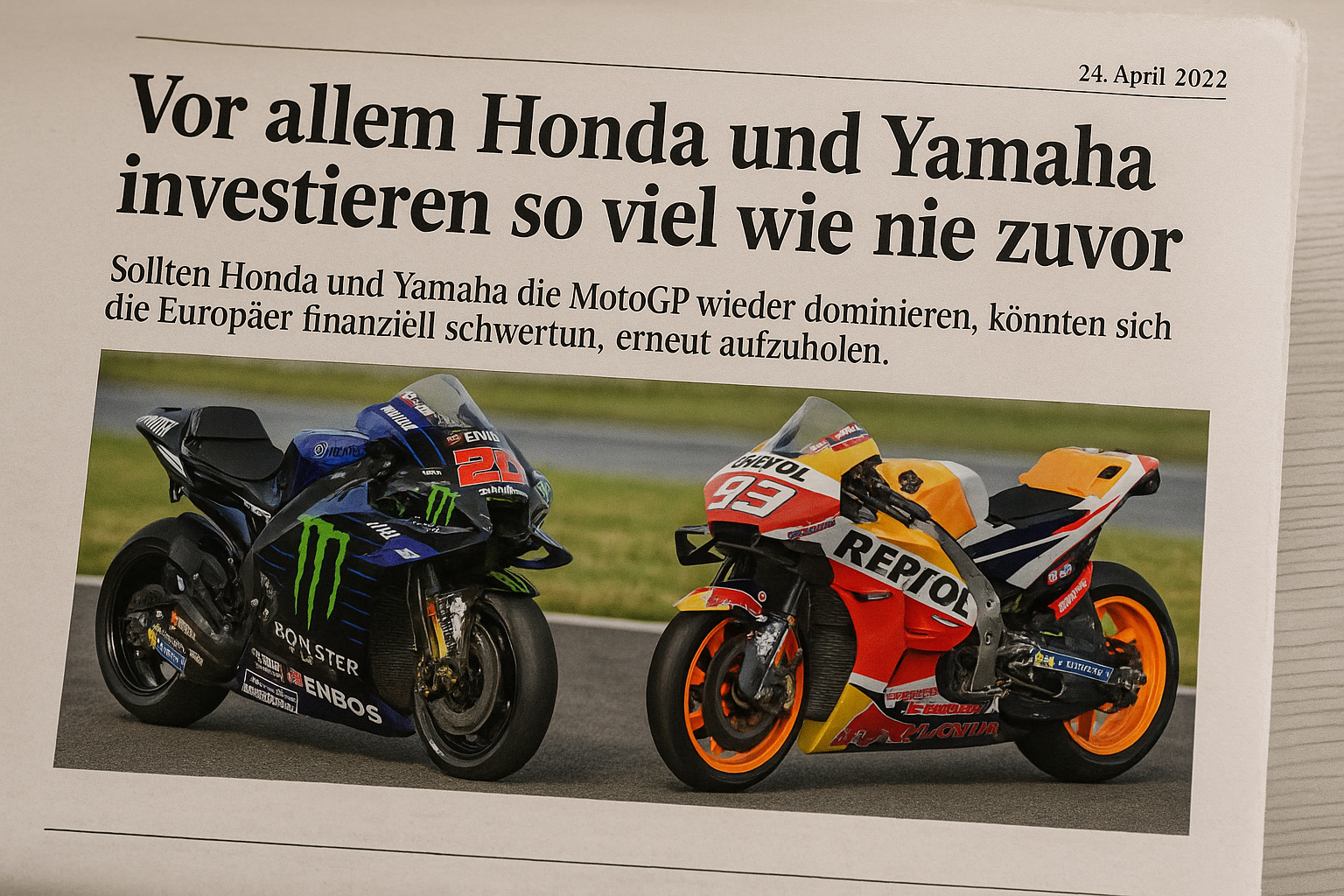
Additionally, engine development has been frozen for the 2025 and 2026 seasons, allowing resources to be directed towards the new 850cc engine planned for 2027, concentrating efforts on its development. However, this freeze applies only to Ducati, KTM, and Aprilia, with Honda and Yamaha permitted to continue their engine development freely. In recent years, both Japanese manufacturers have drastically increased their investments, with Honda establishing a development division in Italy.
Currently, Honda and Yamaha are allocating substantial resources to regain their competitive edge in the MotoGP arena. In contrast, the budgets of the three European brands are considerably lower, which may have longer-term repercussions. If Honda and Yamaha reclaim dominance, they would move into Concession Group A, gaining additional development opportunities, but whether they would have the financial capacity to match their European counterparts remains a critical question.
This situation raises concerns that the newly implemented concession system, which was designed to support the Japanese manufacturers at the behest of MotoGP promoter Dorna Sports, may inadvertently instigate an unhealthy cost spiral. Pit Beirer, KTM’s motorsport director, expressed, “Yes, it is naturally a waste of time to look back, but our wish would have been to slow down the development pace of the leaders rather than provide more tools to those trailing behind.”
Beirer advocates for the establishment of a budget cap in the sport, emphasising that increased resources result in higher expenditures. For instance, Yamaha is currently working on a new V4 project. This involves developing a V4 engine alongside its existing inline-four cylinder and encompasses a completely new motorcycle design with updated chassis, aerodynamics, swing-arm, and more. With the impending reduction in capacity to 850cc in 2027, Yamaha will need to develop yet another new engine and motorcycle.
“The investments being made are incredible,” Beirer noted. “And of course, they will become stronger through these investments. We will all be challenged to keep pace.” He identified this as a potential catalyst for escalating costs.
Efforts to control expenses within the regulations, such as limiting the number of engines allowed per season and restrictions on private testing and fairing updates, are currently in place. Nevertheless, discussions surrounding a budget cap similar to that in Formula 1 have surfaced in recent months. Beirer believes this would be a crucial advancement for MotoGP, stating, “I think we need to consider cost sustainability and price caps, as seen in Formula 1. This has allowed even smaller teams to survive.”
He stressed the urgency of addressing this issue as the new regulations and the Liberty Media agreement stand firm. “We need to think about implementing a cost cap now,” he stated, emphasising the need to prevent extravagant developments that have already seen remarkable technological advancements in MotoGP.
Conversations regarding a potential Concorde Agreement, akin to that in Formula 1, have also begun among the manufacturers. They have expressed their desire to the Dorna for a fairer distribution of the financial resources generated by MotoGP. Reports indicate that Carmelo Ezpeleta, head of Dorna, was less than enthusiastic about this proposal from the manufacturers. The manufacturers are seeking a document that ensures a more equitable division of commercial revenue among teams and are requesting ownership or greater guarantees regarding their starting positions, which are currently temporarily leased from Dorna.

