
Story Highlight
– Researchers analyzed manifestos from major UK political parties.
– Labour’s 2017 manifesto had the boldest poverty plan.
– Conservative scores declined consistently across three election cycles.
– Green Party had highest scores, but lacked feasibility.
– 72% of Brits disapprove of current poverty tackling efforts.
Full Story
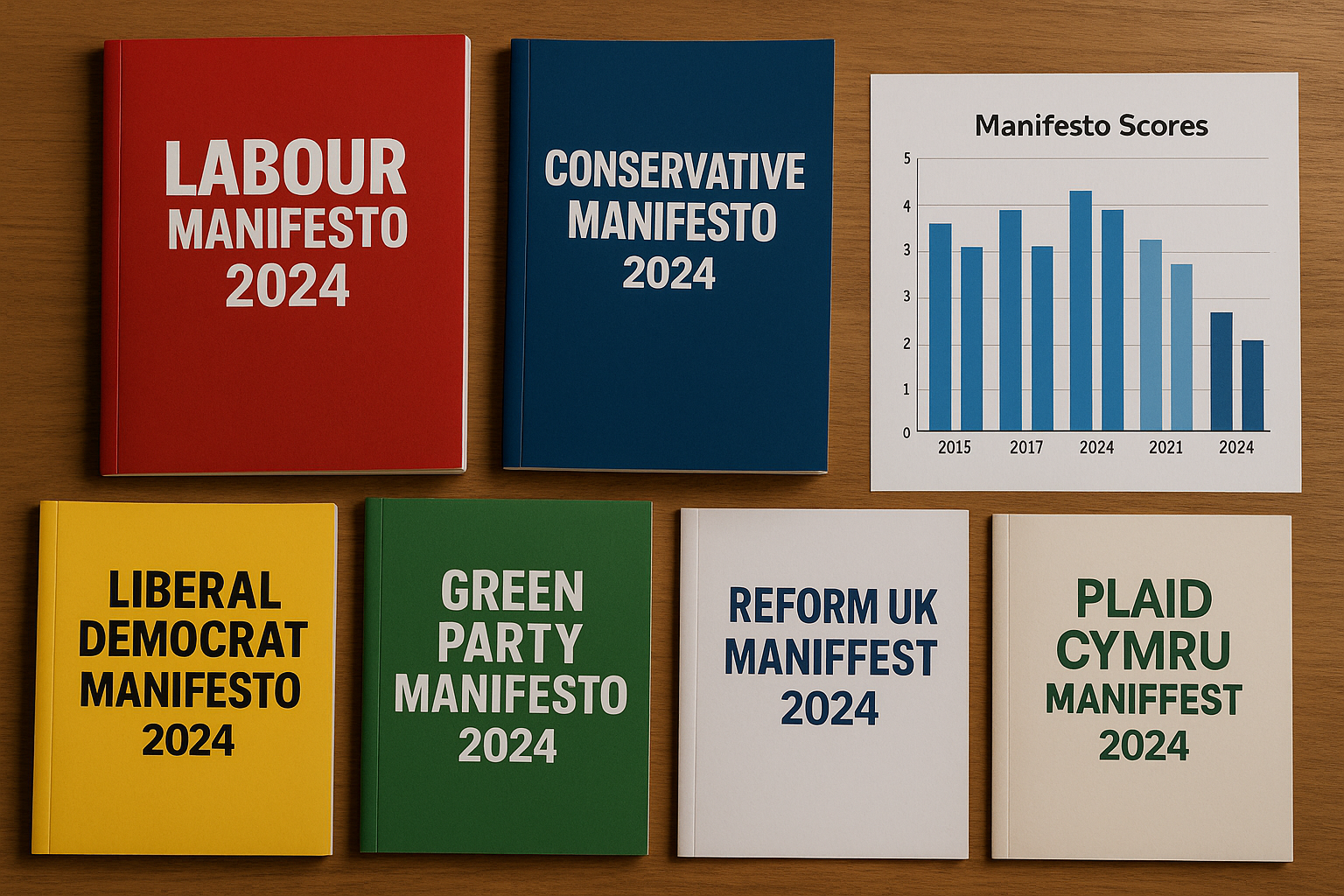
An analysis of political manifestos from major UK parties has highlighted ongoing concerns about poverty reduction efforts and policy ambitions over recent years. The Labour, Conservative, and Liberal Democrat party manifestos from 2014, 2017, and 2024 were scrutinized, with the Green Party reviewed twice and Plaid Cymru once. The UK Independence Party’s (UKIP) manifesto was assessed in 2015, while Reform UK was scrutinized in 2024. However, the manifestos from the Scottish National Party and Northern Irish parties were excluded from the study due to the early calling of the 2024 election and the absence of documentation.
A team of 29 scholars from 23 universities in the UK undertook the evaluation, focusing on policy elements that significantly influence poverty, including crime, justice, education, employment, and social security. Dr. Lee Gregory, an associate professor in social policy at the University of Nottingham and Chair of ASAP UK, remarked that the Labour manifesto of 2017 demonstrated a notable commitment to tackling poverty, articulating strategies that while not revolutionary, presented innovative solutions to existing approaches.
Dr. Gregory emphasized the importance of a comprehensive perspective when addressing poverty, advocating for an integrated examination of policies relating to housing, employment, education, health, and income. He indicated that none of the parties scored above three out of five in any category, with a general decline in attention paid to poverty across the political landscape in recent years.
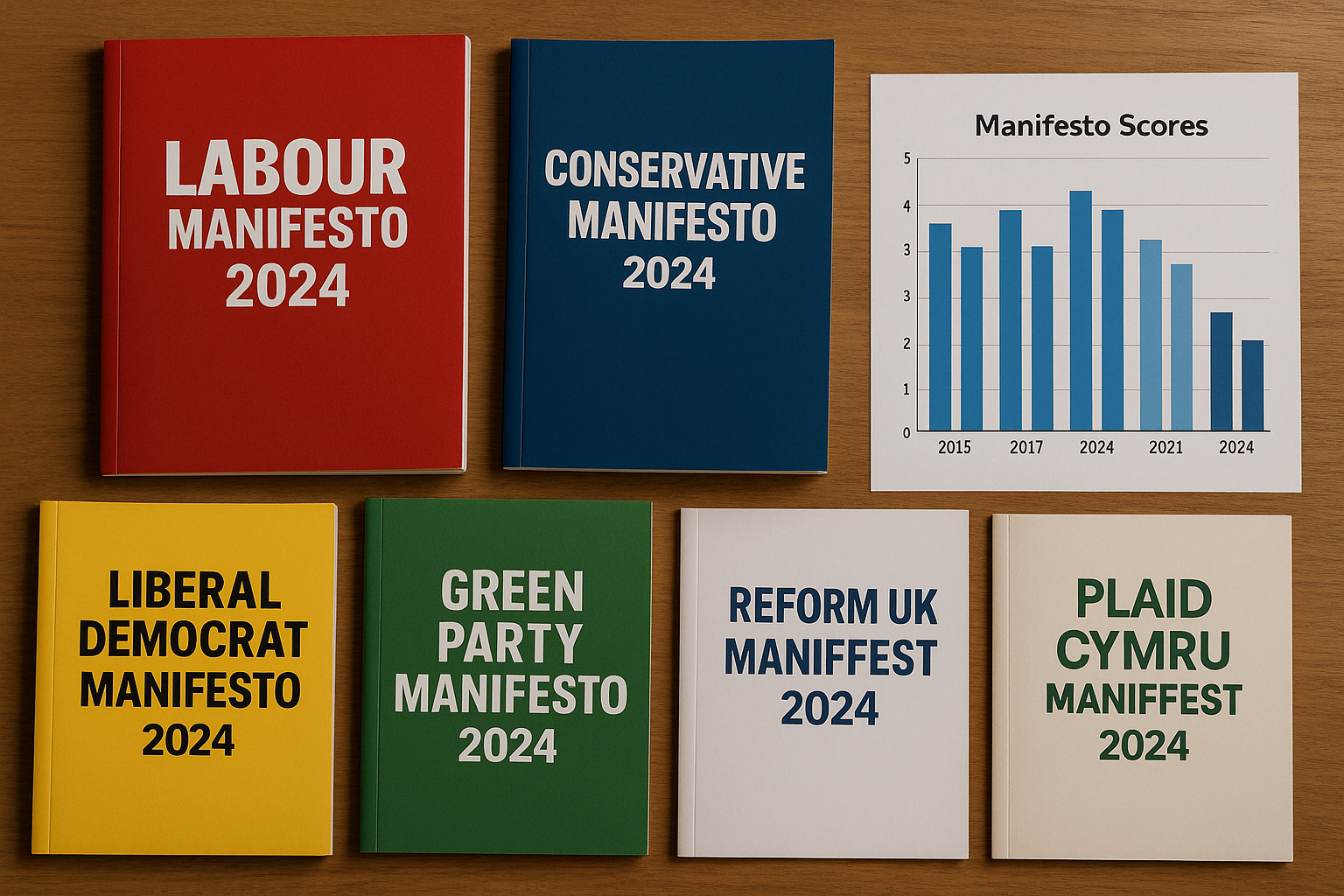
Specifically, the Conservatives’ scores decreased from 1.7 in 2015 to 1.3 in 2024, marking the lowest average among the parties. Labour’s score oscillated from 2.6 in 2015, rising to 3.6 in 2017 before dropping to 2.1 in 2024. The Liberal Democrats maintained a steady 3.2 in both 2015 and 2017 but fell to 2.9 in 2024. The Green Party consistently reported the highest ambition score, although researchers noted that some commitments were unrealistic, with a drop from 3.9 in 2015 to 3.4 this year. Conversely, UKIP scored just 1.4 in 2015, while Reform UK plummeted to 0.9 in 2024, the lowest of all assessed party manifestos. Plaid Cymru achieved a score of 2.4 in 2024.
Dr. Gregory expressed concern regarding the lack of ambition among the parties to address poverty, stating, “It’s been a consistent problem in our society for over 100 years. We’re not seeing any real progress.” He called for a renewed, more radical evaluation of how poverty is tackled in the UK, suggesting a reassessment of the underlying systems and institutions that have not proven effective thus far.
Recent findings from the Big Issue revealed that 72% of the British public disapprove of Keir Starmer’s government regarding poverty alleviation, a significant increase from 54% earlier this year. Labour’s plans for cuts to benefits could potentially escalate poverty levels, as indicated by government estimates, and Starmer’s team has yet to eliminate the controversial two-child limit on benefits, despite reversing previous proposals to cut winter fuel payments.
The Big Issue also launched a new report on 25 June advocating for the establishment of legally binding targets to eliminate poverty in the UK. Arriaga-Garcia, a representative of the organization, noted, “It’s really about right and wrong,” stressing the necessity for both voters and campaigners to demand substantial change from political parties.
The call for action highlights the urgent need for more effective and ambitious policies to address the persistent issue of poverty in the UK.

