Story Highlight
– Paris quiets as residents vacation in August.
– Jveuxdusoleil app helps find sunny terraces.
– Founded by Jean-Charles Levenne in 2020.
– Bistros in France have drastically declined in number.
– App aims to revive traditional terrace culture.
Full Story
In August, the normally vibrant city of Paris experiences a notable lull as many residents escape to coastal locales for their traditional month-long holiday. The streets grow quieter, with many businesses shuttering and activity dwindling. For those who remain in the city, a quintessentially Parisian endeavor emerges: the search for the ideal sun-drenched terrace for an evening apéritif. Locating the perfect spot outside a café can depend on a leisurely stroll or a timely message from a friend. This year, however, a digital innovation has gained traction, highlighting a distinctly French adaptation of the old Apple mantra: “there’s an app for that.” The application, named Jveuxdusoleil, assists users in tracking the sun’s trajectory through the city’s intricate layout to identify ideal sunny locales for enjoying coffee on outdoor terraces.
Jveuxdusoleil, which translates to “I want sun,” was developed by Jean-Charles Levenne in 2020 as part of a personal project to learn app development while addressing his own challenges in finding sunlit areas amid Paris’s shadows. The app employs sun positioning algorithms combined with building-height information sourced from the open-source map platform OpenStreetMap, allowing it to indicate which terraces receive sunlight while obscuring those that are shaded. Users can contribute by suggesting new locations or reporting inaccuracies, such as areas previously thought sunny that are unexpectedly shadowed by trees.
While the app is functional in various cities, it has a pronounced focus on Paris, which Levenne believes has a higher need for such a service due to its narrow streets and tall buildings. “This app is working worldwide but it has originally been focused on Paris because there is more need than in other French cities,” he explained. “With narrow streets and tall buildings, it’s not always easy to find a sunny spot.”
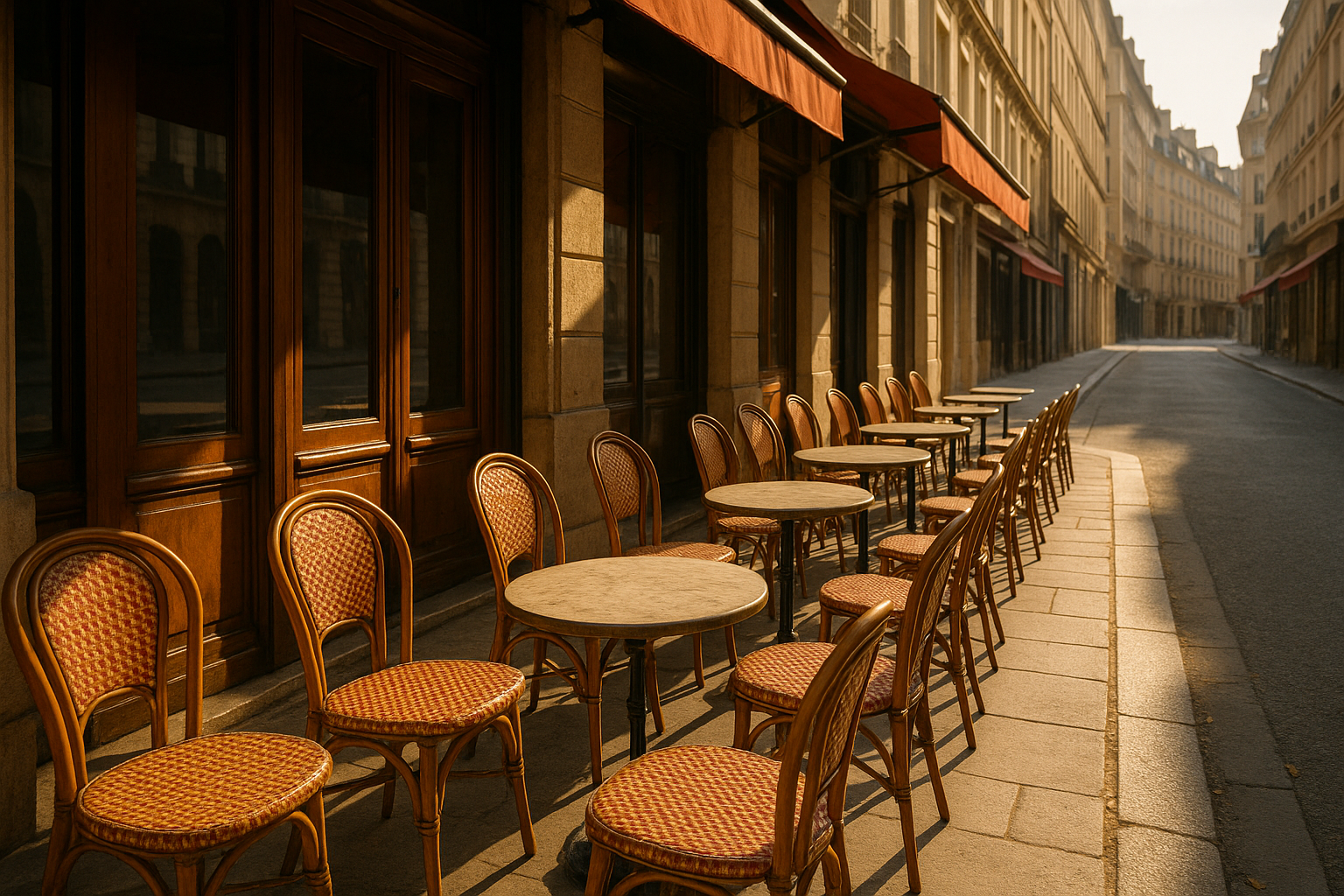
Terraces in Paris serve as prime venues for observing the city’s life. Typically, chairs are aligned opposite each other at small bistro tables, facing the street so patrons can watch the bustle of life around them. France’s cultural norms surrounding tipping alleviate pressure to quickly vacate tables for profit, allowing diners to linger over an espresso for hours. This has transformed terraces into an informal extension of one’s home.
Pierrick Bourgault, a noted photographer and journalist with extensive knowledge of French bistro culture, articulated the significance of terraces in Parisian life. “The terrace is emblematic of a certain art de vivre,” Bourgault noted. “You’re not alone in an enclosed space. It’s a bit like being in the street, with one foot inside and one foot outside. You’re immersed in the city, and the spectacle of life.”
Since its inception, Jveuxdusoleil’s user base has steadily grown, with over 1,300 active users noted during a week of interviews with Levenne, who has since transitioned from tech to captaining a yacht in the Balearic Islands. Notably, usage surges during the spring, as Parisians yearn for sunlight following notoriously gloomy winters. This year saw the app peak at nearly 20,000 visitors in a single week in early March, following a particularly overcast winter with extensive stretches devoid of sunlight in Paris.
Despite Levenne’s investment in maintaining the app, it remains a passion project, incurring hosting costs but yielding no profit. “In fact, it costs me money to host the servers,” he remarked.
A Parisian photographer revealed the app’s appeal lies in its simplicity. With a straightforward interface featuring just one slider for time and sunlight, Jveuxdusoleil stands out as a minimalist tool in the digital era.
While awareness of Jveuxdusoleil varies, with some younger Parisians unfamiliar with it, its existence reflects a merging of technology with bistro culture at a pivotal moment. According to an official inventory, the number of bistros in France has plummeted from around 500,000 in 1900 to under 40,000. In Paris, the decline has been more dramatic, with numbers falling from about 5,000-6,000 in the 1970s to just over 1,000 today. A coalition of bistro proprietors succeeded in gaining national recognition, and since 2018, they have been advocating for Unesco World Heritage status for these establishments.
Bourgault attributes this decline to various pressures, including the impacts of modernity and shifts in social dynamics. Historical data indicates that the prevalence of bistros has decreased from one café per 100 residents to one per 2,000. The rise of cars and highways has diverted foot traffic away from bistros, while technological advancements provide alternatives to social interaction, such as food delivery apps. The 1941 law restricting the establishment of new cafes further stifles growth amid rising real estate costs in cities like Paris.
Ironically, Bourgault suggests that an application could potentially rejuvenate the bistro culture of Paris. “With its geographical visualization, the app situates you in the concrete world – it reminds us that we’re on earth, it reminds us that there’s a sun that moves,” he explained. “We know we are not two artificial intelligences… exchanging digital protocols. We talk to each other, and without a shadow of a doubt, we know it is real.”