
Story Highlight
– Sir Keir Starmer criticizes Israel’s Gaza City plans.
– Netanyahu’s security cabinet approved plans for Gaza takeover.
– Humanitarian crisis in Gaza worsens amid hostilities.
– Calls for UK government to stop arms sales to Israel.
– UN warns military takeover could endanger civilians and hostages.
Full Story
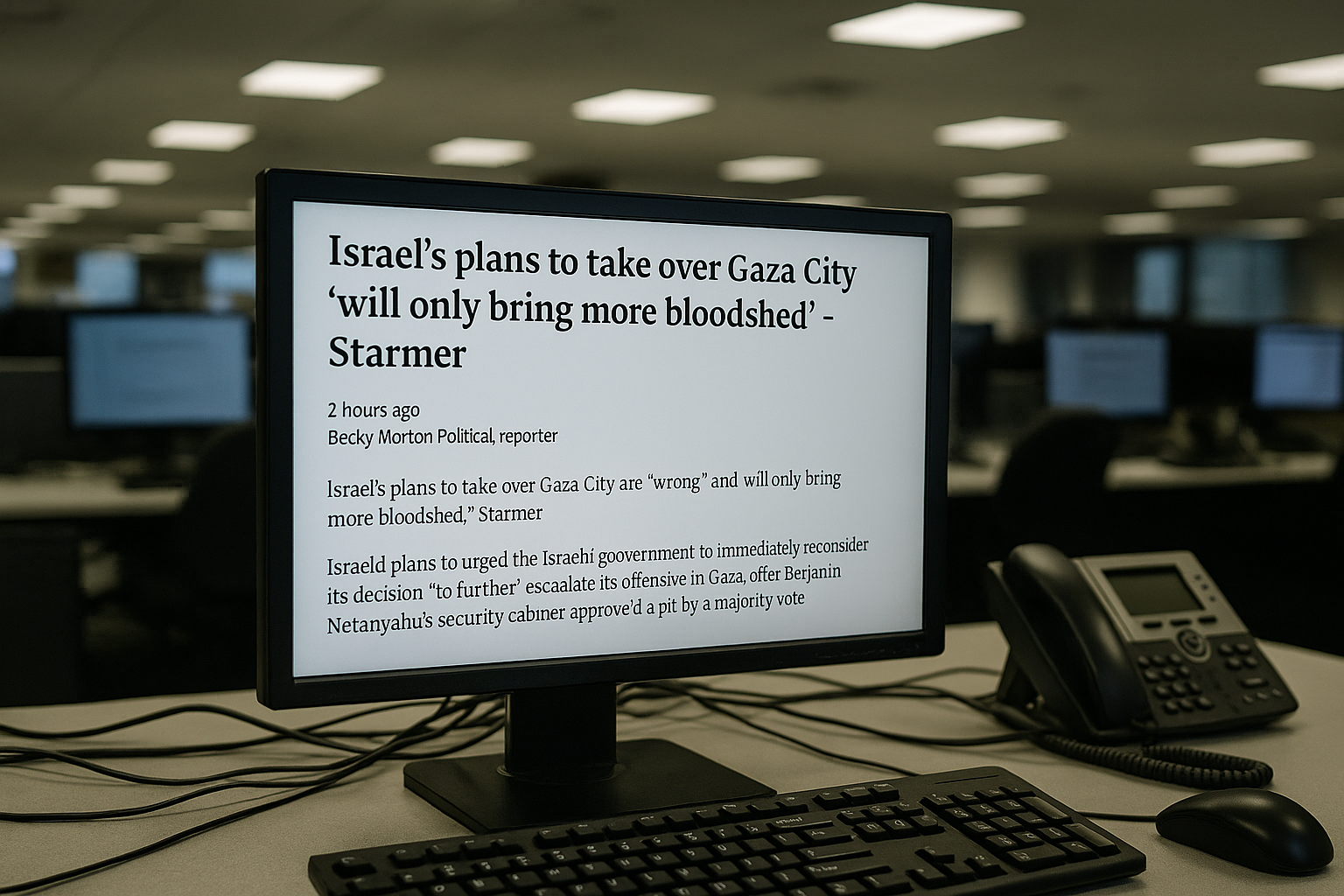
Plans by Israel to seize control of Gaza City have been condemned as “wrong” by Labour leader Sir Keir Starmer, who warned that such actions would likely lead to increased violence. This statement comes after Israeli Prime Minister Benjamin Netanyahu’s security cabinet voted to intensify military operations in Gaza, specifically targeting the region’s largest city.
Netanyahu has previously expressed ambitions to gain full control of the Gaza Strip, but the approved measures are concentrated on Gaza City itself. Concerns have been raised by both army leaders and families of hostages, who fear the proposed offensive could jeopardize the lives of approximately 20 hostages believed to be alive.
In his remarks, Sir Keir stated, “This action will do nothing to bring an end to this conflict or to help secure the release of the hostages. It will only bring more bloodshed.” He emphasized the urgent need for a ceasefire, an increase in humanitarian aid, the release of all hostages held by Hamas, and a negotiated solution to the enduring crisis. He reiterated that Hamas must not play a role in Gaza’s future and should disarm.
Liberal Democrat leader Sir Ed Davey characterized the plans as “utterly abhorrent,” suggesting they could lead to ethnic cleansing. He expressed that the initiative would devastate the lives of countless Gazans, whose homes and communities have already suffered. Davey urged the UK government to take immediate and substantial action, calling for an end to arms exports to Israel and sanctions against Netanyahu and his cabinet.
Calls for decisive measures have also come from the Green Party and the Scottish National Party (SNP), both urging the UK Prime Minister to reconvene Parliament from its recess to address these issues more vigorously. SNP Westminster leader Stephen Flynn has argued that mere condemnation is inadequate, asserting that urgent action is necessary to halt what he described as genocide.
Green Party foreign affairs spokesperson Ellie Chowns condemned Netanyahu’s intentions and labeled them as potential war crimes that would result in severe civilian suffering. She stressed the need for the UK to go beyond mere expressions of discontent.
Israel has rejected accusations of genocide amid growing international scrutiny. Meanwhile, in a meeting at Chevening House, US Vice-President JD Vance and Foreign Secretary David Lammy discussed the dire situation in Gaza as well as the ongoing conflict in Ukraine. Vance, while acknowledging the UK’s recent announcements regarding Palestinian statehood, noted the absence of any plans for the US to recognize such a state under current conditions.
Last week, the UK indicated it would consider recognizing a Palestinian state in September if Israel makes significant progress toward alleviating the humanitarian crisis in Gaza, including agreeing to a ceasefire. This development was met with disapproval from Israel, which argued that such moves would reward Hamas. The tension highlights diverging approaches to the situation between the UK and the US, with Vance commenting on the lack of a functional government for Palestinians.
The United Nations has cautioned that a comprehensive military occupation could result in “catastrophic consequences” for both Palestinian civilians and Israeli hostages. Currently, Israeli military operations cover roughly three-quarters of Gaza, where the majority of the population remains in areas not under its control.
In a statement outlining the government’s agenda for “defeating Hamas,” Netanyahu’s office introduced a five-point strategy. This plan includes objectives such as disarming Hamas, ensuring the return of hostages, demilitarizing the Gaza Strip, establishing security oversight, and creating a civil administration that excludes both Hamas and the Palestinian Authority. Hamas has retaliated by alleging that Israel’s actions signify ethnic cleansing and a disregard for the welfare of hostages amid the expanded military campaign.

