Story Highlight
– Medical journal warns against ChatGPT for health advice.
– A man developed bromism after consulting the chatbot.
– ChatGPT’s responses lacked critical health warnings.
– AI may promote misinformation and decontextualized information.
– Doctors should check patient information sources carefully.
Full Story
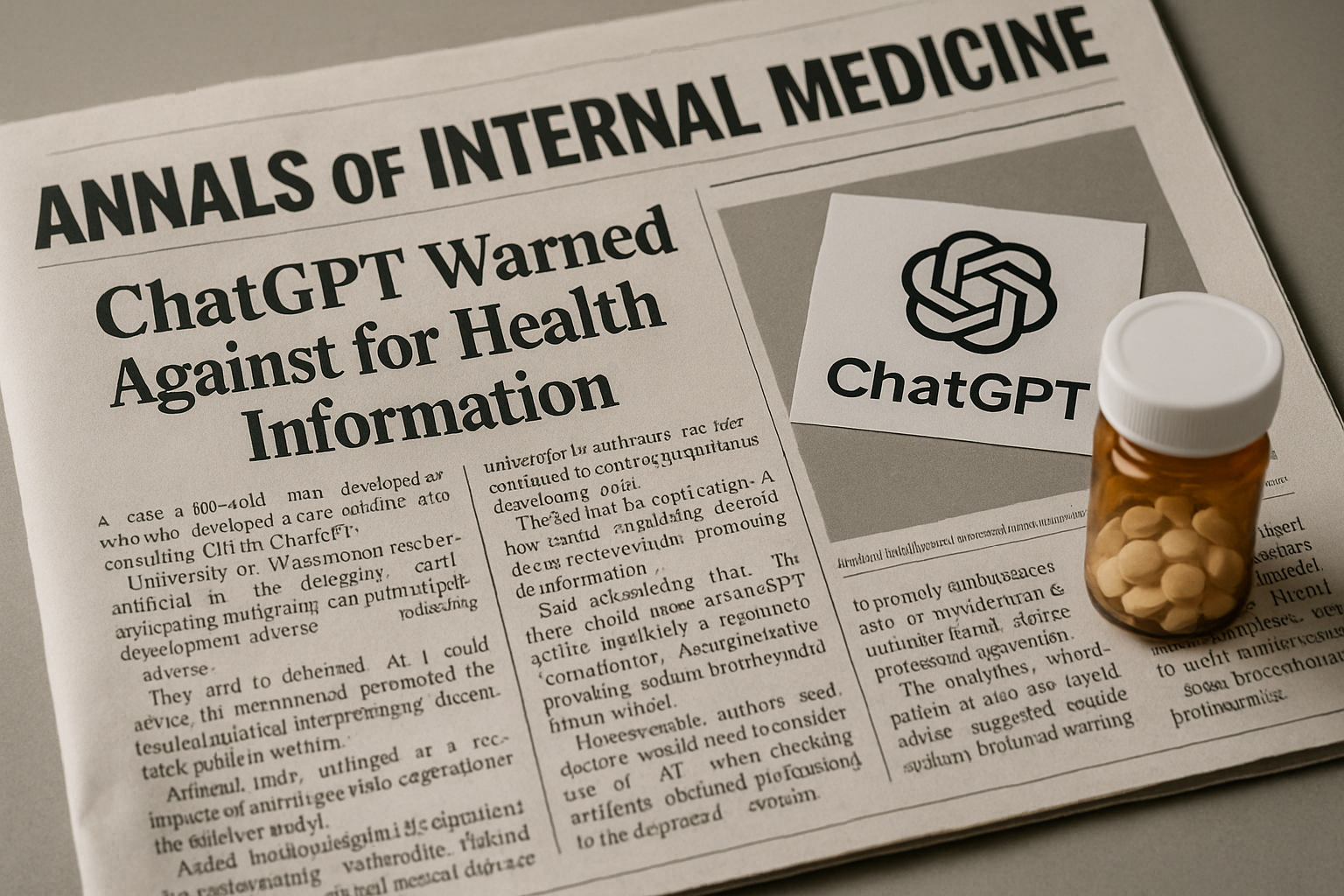
A recent case reported in a medical journal has raised significant concerns regarding the use of ChatGPT for health-related inquiries. The Annals of Internal Medicine revealed that a 60-year-old man developed bromism, or bromide toxicity, after seeking advice from the AI chatbot about reducing table salt from his diet.
Historically, bromism was acknowledged in the early 20th century, being linked to around 10% of psychiatric hospital admissions at the time. In this instance, the patient, upon learning about the adverse effects of sodium chloride—commonly known as table salt—chose to consult ChatGPT for guidance. Over a three-month period, he progressively replaced chloride in his diet with sodium bromide, despite notifications that “chloride can be swapped with bromide, though likely for other purposes, such as cleaning.” Sodium bromide was previously used as a sedative.
The authors of the article, from the University of Washington in Seattle, emphasized the potential dangers associated with automated health advice. They noted: “how the use of artificial intelligence can potentially contribute to the development of preventable adverse health outcomes.” Due to the lack of access to the man’s conversation with ChatGPT, they were unable to ascertain the specific advice he received. However, when the authors themselves queried the chatbot regarding alternatives to chloride, they found that it also mentioned bromide without issuing any health warnings or exploring the context of their question, as a medical professional might.
The researchers warned that AI tools like ChatGPT could propagate scientific inaccuracies and misinformation. Despite recent enhancements to the chatbot’s capabilities, which the company claims would improve its health-related responsiveness, it is important to note that it is not intended as a substitute for professional medical consultation. The updated guidelines state clearly that the chatbot should not be used for diagnosing or treating health conditions.
The article, published prior to the release of the upgraded GPT-5 model, indicated that the patient had interacted with an earlier version of ChatGPT. While recognizing the potential for AI to connect scientific knowledge with the public, the authors cautioned against the risks of presenting information without appropriate context. They expressed skepticism that any medical professional would advocate for sodium bromide as a substitute for table salt.
The patient’s condition deteriorated to the extent that he sought treatment at a hospital, suggesting a belief that his neighbor was attempting to poison him. He reported a range of dietary restrictions, yet exhibited paranoia about the water provided during his stay. His behavior escalated to attempts to leave the hospital and, following further evaluation, he was diagnosed with psychosis. Once stabilized, he displayed several symptoms consistent with bromism, including excessive thirst, insomnia, and facial acne.
This case serves as a critical reminder of the potential hazards linked to the reliance on AI for health consultations and the necessity for professional oversight in medical decision-making.