
Story Highlight
– Labour minister calls for stronger UK-EU economic security links.
– Criticism of US national security language from the minister.
– Urgent discussions on UK’s EU defense loan program stalled.
– MAC report highlights immigrants’ positive fiscal contributions.
– Violent disruption reported at Swale Borough Council meeting.
Full Story
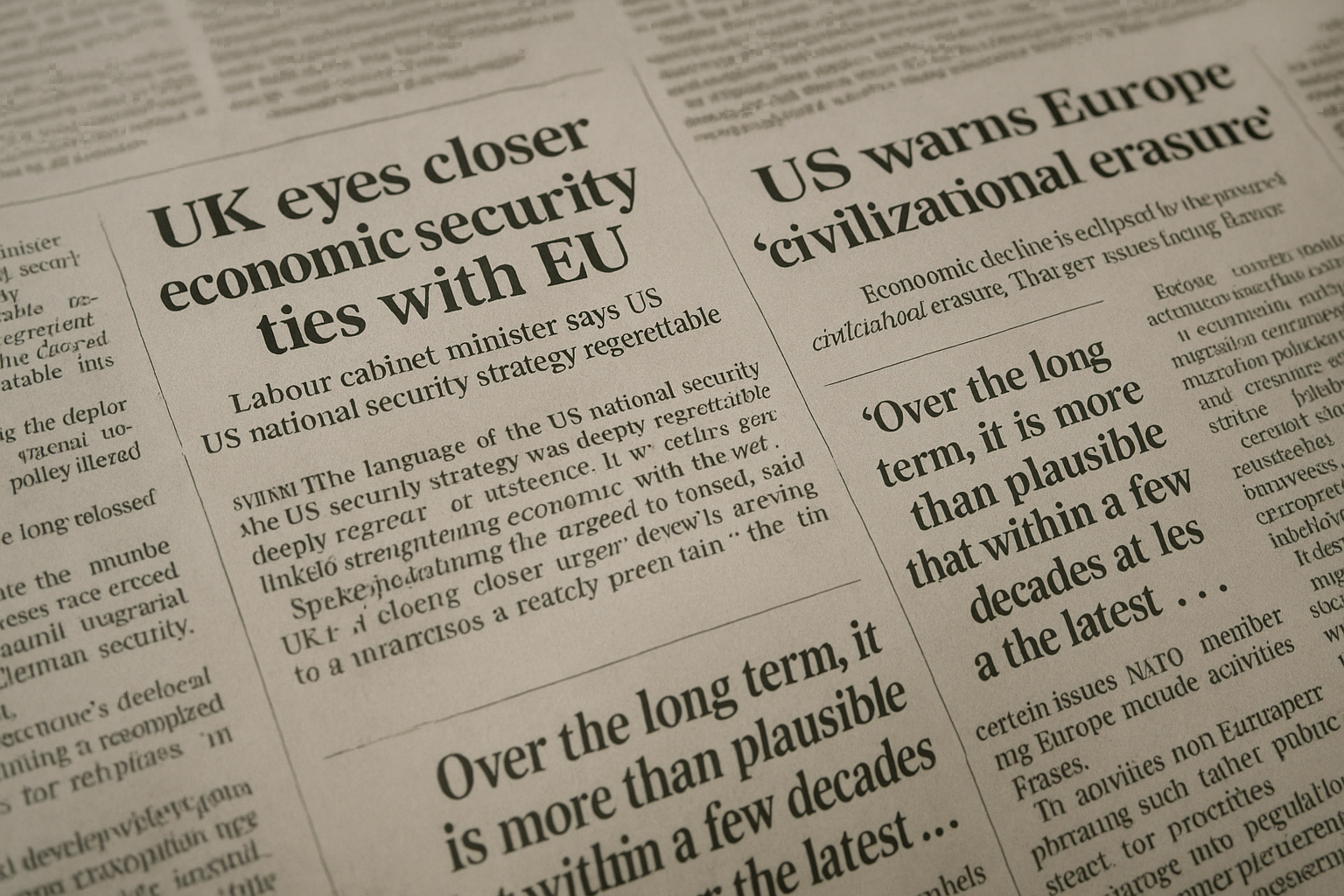
Labour’s shadow minister and chair of the Commons business committee has urged for stronger economic security ties between the UK and the EU, especially in light of recent shifts in American policy. During a session addressing urgent questions, he expressed concern over the rhetoric used in the latest US national security strategy, likening it to extreme right-wing narratives reminiscent of the 1930s.
The minister referenced the timing of the US document’s release, which coincided with failed negotiations regarding the UK’s potential participation in the EU’s Safe defense loans program. He advocated for the government to implement the recommendations put forth by his committee on enhancing economic security, calling for discussions with European counterparts to establish an economic security union that could foster growth, particularly in light of rearmament needs.
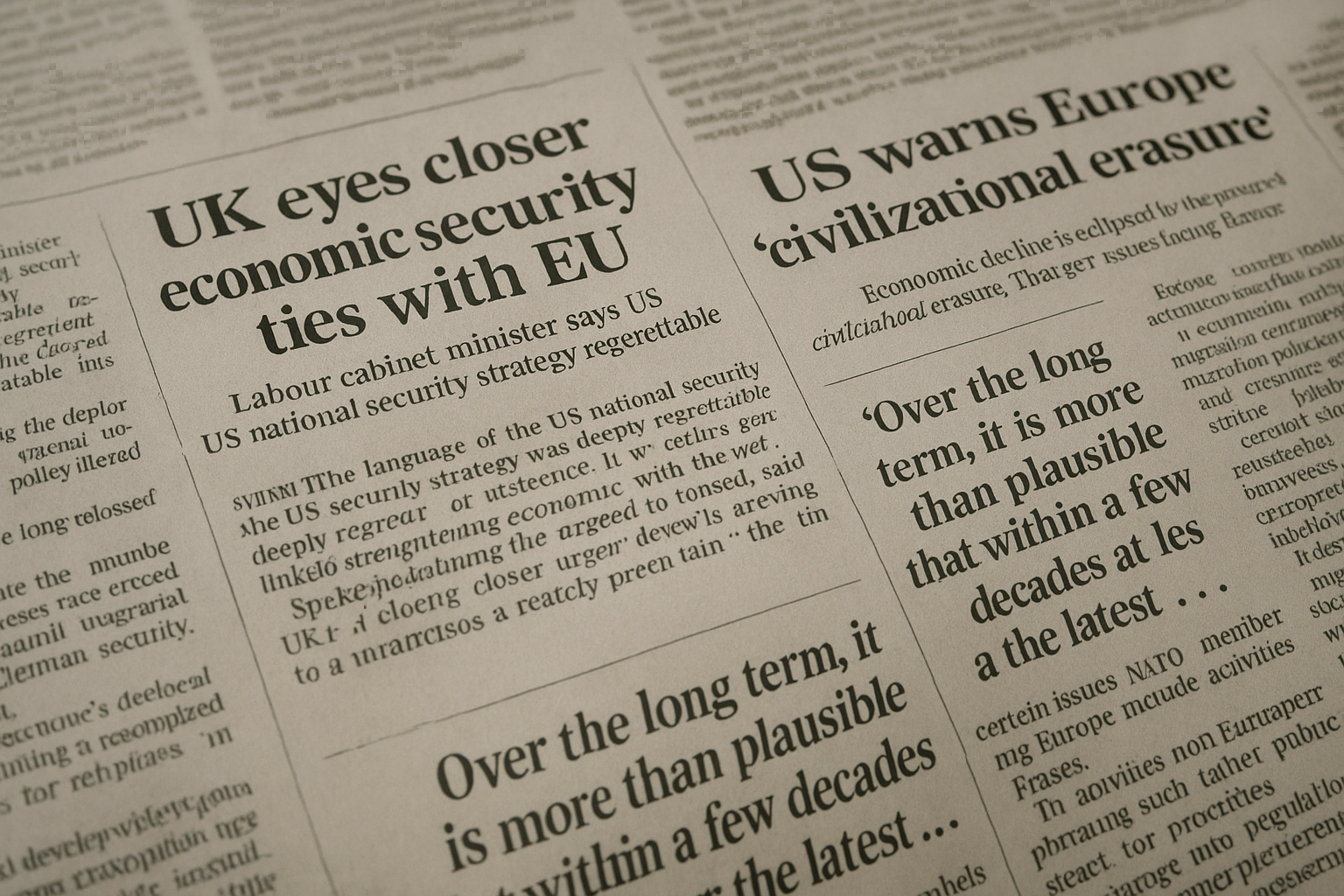
He indicated that historical undertones of Nazi ideology were evident in the recent US strategies, especially with references to “civilizational erasure” linked to migration. The document highlights challenges facing Europe, including the influence of transnational organizations, migration policies, and the deterioration of political liberties, forecasting that if these trends persist, Europe could become unrecognizable within two decades.
In response, another member of the Commons supported the call for the UK to bolster its defense capabilities. Following backlash over his initial comments regarding extreme right-wing ideas, the shadow minister later clarified that he was not referring to Nazi ideology, but to Oswald Spengler, whose ideas in the 1920s have influenced contemporary far-right thoughts. He provided additional context through a post on his platform.
In other news, a sweeping government initiative aims to tackle homelessness across England. Central to this plan is a legislative ‘Duty to Collaborate’ requiring public bodies to work in concert to prevent homelessness, targeting vulnerable groups such as those leaving prisons or hospitals, with a clear ambition to eliminate the discharge of eligible individuals into homelessness from public institutions.
The strategy also aims to reduce long-term rough sleeping by half and introduces a substantial investment of £124 million to support over 2,500 individuals in finding stable housing, alongside new programs designed to foster innovative solutions with local councils.
Meanwhile, the ongoing debate surrounding immigration continues to polarize public opinion. The Migration Advisory Committee released findings indicating that immigrants on skilled worker visas contribute positively to the UK economy, contradicting assertions that immigration diminishes national wealth. Their analysis suggests a projected net fiscal contribution of approximately £47 billion over the lifetimes of this visa cohort.
Moreover, reports surfaced regarding incidents of violence during a local council meeting in Swale, highlighting societal tensions surrounding asylum policies. A Labour MP recounted disturbances where councilors faced intimidation, leading to significant property damage and disruption of council services.
In political circles, discussions about leadership dynamics within Labour have intensified. A prominent shadow minister disclosed frustrations with the party’s current strategies and expressed the belief that a shift towards emphasizing core values over technical policy implementation is crucial for electoral success.
The overall political landscape remains quite dynamic, with emerging figures challenging established norms, signaling an ongoing evolution in party strategies leading up to subsequent elections.