Maura Higgins performs on Dancing With The Stars after neck injury
Maura Higgins needed medical help during rehearsals but went on to score 33 out of 40 for her tango with Mark Ballas on the US dance competition.

By Sophie Callaghan, Entertainment Correspondent
Published 14 Oct 2026, 13:01
What happened
Maura Higgins received medical attention after neck pain interrupted rehearsals for Dancing With The Stars, before returning to perform a tango that earned 33 points out of 40. Footage broadcast during Tuesday’s episode showed her on the floor as her professional partner, Mark Ballas, and a medic came to help.
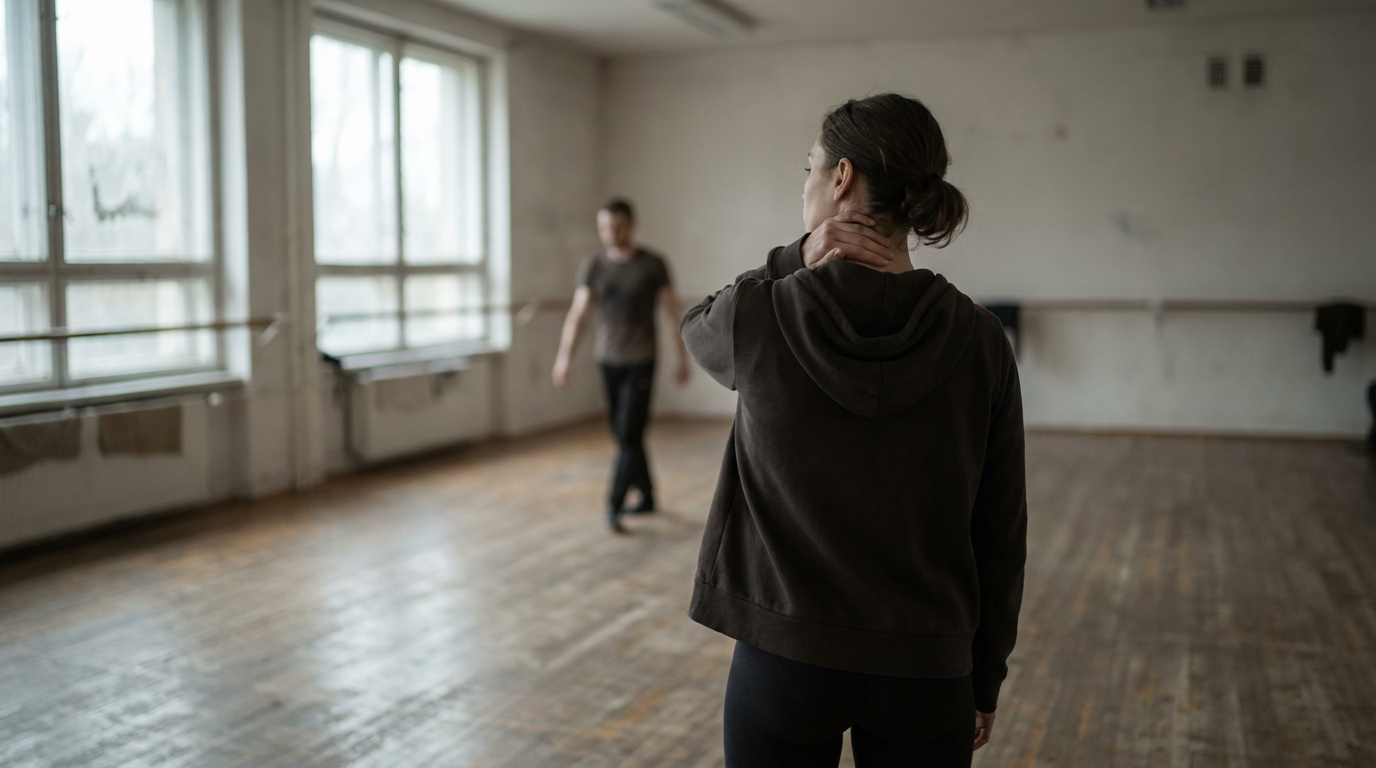
The rehearsal sequence showed Higgins reacting to discomfort and reaching towards her neck while practising. She subsequently cried out and lowered herself to the floor, keeping a hand against the back of her neck as Ballas moved to her side.
Higgins said the discomfort affected the left side of her neck and had become more troublesome. Her account described an ongoing problem rather than pain confined to that single rehearsal, with symptoms that had been troubling her for several weeks.
The pair were preparing Higgins’s fifth competitive performance, set to Rihanna’s Only Girl (In the World). Despite the interruption to training, they completed the routine during the live programme and finished the evening in second place.
Tuesday’s programme had a Super Bowl theme. Contestants danced to songs associated with previous half-time performances, bringing music from the American sporting event into the ballroom competition rather than following a single artist’s catalogue.
The background
Higgins, 35, is an Irish television personality known to British audiences through Love Island UK. Her appearance in the American dance competition has placed her alongside Ballas for a series of routines that have attracted consistently strong marks from the judges.
Her concern before this performance was that the neck problem would affect what she could deliver on the night. The rehearsal footage captured the physical difficulty, while her comments explained the separate worry of having to reproduce a prepared routine in front of the judging panel.
A ballroom tango requires the partners to maintain a defined posture while moving together through changes of direction and pace. The upper body forms part of the shape presented to the judges, making head placement relevant to the appearance of the dance as well as footwork.
That distinction became important in the assessment of Higgins’s performance. The panel praised its overall quality but also examined individual movements, including whether gestures were completed clearly and whether the position of her head preserved the intended line through her body.
The routine included a contra check, a ballroom movement involving a checked step and a shaped body position. It was this particular element, rather than a general comment about her ability to dance, that prompted one judge to focus on her neck and head alignment.
What people are saying
Bruno Tonioli responded enthusiastically to the tango, praising the energy sustained across the performance and the poise Higgins brought to it. His assessment concentrated on the impression made by the routine as a whole, giving her a positive reception after the difficulties in training.
Carrie Ann Inaba also admired the performance, but wanted greater definition in some of the movements. She felt certain actions ended prematurely, pointing to the precision of their execution as an area for improvement rather than questioning the overall appeal of the dance.
That feedback concerned how distinctly individual actions registered within the choreography. In a scored routine, completing a movement and giving it a clear emphasis can be a separate consideration from keeping the performance flowing from one step into the next.
Derek Hough praised Higgins’s presentation while identifying a specific issue in the contra check. He said her head had travelled too far backwards, disrupting the alignment with her spine. His comments combined approval of the performance with a technical correction about that position.
Hough’s observation was about the movement he had judged on the dance floor. A critique of posture assesses the visible execution of a routine; it is different from the medical assessment and treatment of a contestant experiencing pain during rehearsals.
Speaking to co-host Julianne Hough after dancing, Higgins credited the programme’s physiotherapist, Dr Gina Minchella, with helping her. She said Minchella had examined her neck and expressed appreciation for the hands-on treatment she had received before discussing how she was managing the continuing discomfort.
Higgins also described the problem as something she expected to have to manage, rather than presenting the completed performance as the end of it. Her update kept the focus on symptoms that had persisted over time, even after a successful appearance in the ballroom.
The other results
Jenna Dewan and her professional partner, Val Chemerkovskiy, achieved a season-best score with their paso doble to Lady Gaga’s Bad Romance. Their total of 36 put them above Higgins and Ballas, whose 33 points left a three-point gap to that leading mark.
Paralympian Ezra Frech and his partner, Daniella Karagach, matched the 36-point total with a salsa performed to Nelly’s Hot in Herre. They received nine points from each judge, producing an even set of marks across the panel for their contribution to the themed evening.
The contrasting routines brought a paso doble, a salsa and a tango into the same competition. Although the couples used different dance styles and music, their numerical totals provided the common measure used to compare the judges’ assessments that night.
Guillermo Rodriguez, known for his appearances on Jimmy Kimmel Live, left the competition with professional partner Witney Carson. The couple again received the lowest score of the evening, and their departure closed an episode that combined strong marks at the top with an elimination at the bottom.
What happens next
Higgins said she was stretching and trying to look after her neck as she dealt with the symptoms. That was the practical approach she described following treatment, alongside her acknowledgement that the discomfort had become increasingly difficult over the preceding weeks.
For the dancing itself, the panel’s feedback identified two distinct areas to work on: clearer completion of some movements and more controlled head placement in the contra check. Those were performance corrections, separate from the physiotherapy support she thanked Minchella for providing.
More generally, managing neck pain depends on its cause and severity, not on whether someone can complete a television routine. Stretching is an activity Higgins described for herself; it should not be read as an individual treatment plan for other people experiencing similar symptoms.
Why this matters
For UK audiences, Higgins’s participation brings a familiar Love Island personality into an American celebrity competition. The Super Bowl theme also explains the evening’s musical choices: the connection between the songs was their place in half-time entertainment, not their original suitability for ballroom dancing.
For viewers experiencing neck pain themselves, medical advice should reflect their own symptoms and circumstances. NHS guidance advises seeking GP help when neck pain or stiffness persists for several weeks; a televised performance and a judge’s technical observations are not substitutes for that assessment.
Reporting that informed this story
This article was written independently by The Daily Times from publicly available facts and headlines. No text has been copied from the outlets above.