John Torode and Lisa Faulkner buy home with more filming space
The couple have sold their £1.8m Muswell Hill home and bought a property with a larger kitchen for their YouTube cooking programme.

By Sophie Callaghan, Entertainment Correspondent
Published 17 Oct 2026, 18:00
What happened
John Torode and Lisa Faulkner have bought a new home with a larger kitchen for filming their YouTube cooking programme, following the sale of their £1.8m property in Muswell Hill, north London.
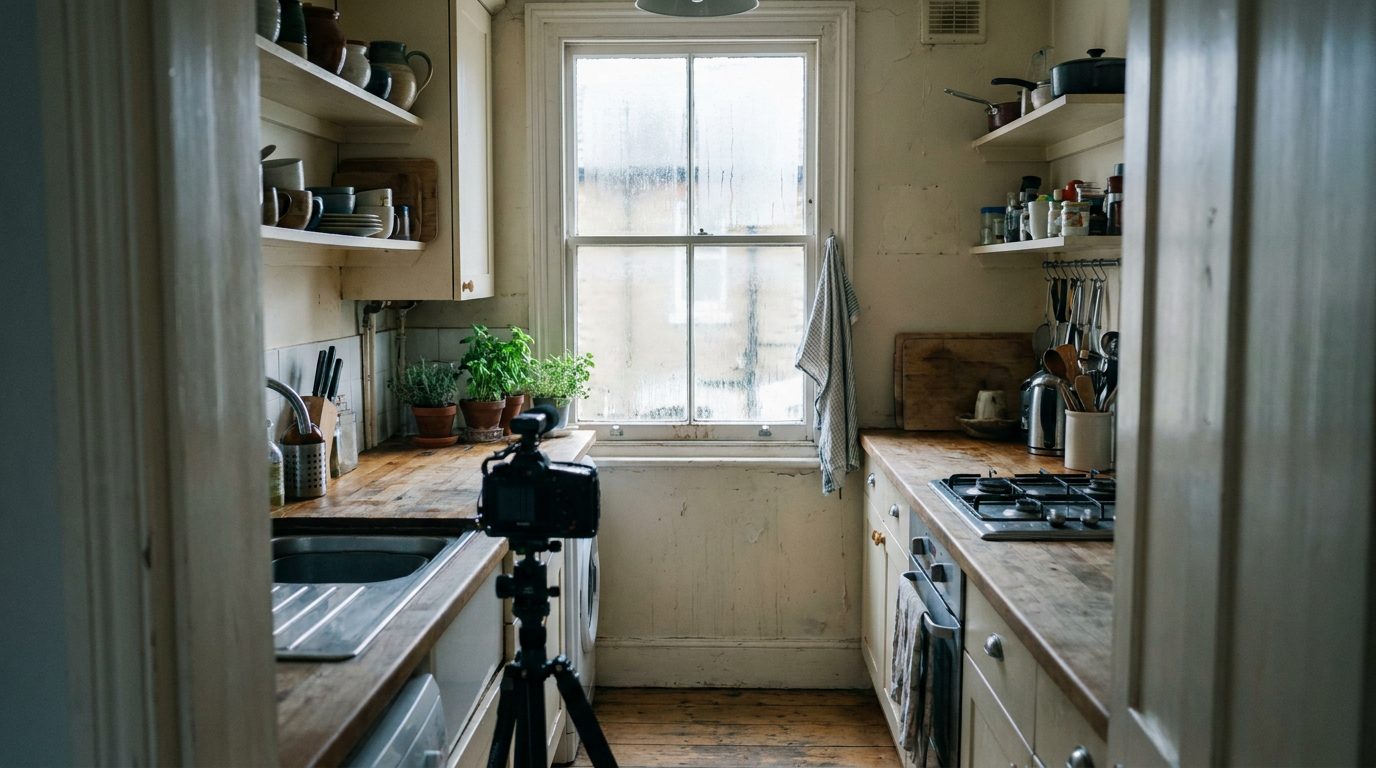
The move gives the married couple more room for a production previously based in their own kitchen. The former home's narrow layout made it difficult to accommodate everyone needed during filming, placing a practical limit on how the space could be used.
Their Muswell Hill property has five bedrooms. During the sales process, prospective buyers could see the kitchen in estate-agent photographs and visit it on organised viewings, giving them access to the domestic setting used for the couple's online programme.
Torode, a former MasterChef judge, and Faulkner are taking their cooking production into another residential setting rather than simply changing homes. The larger kitchen is intended to serve both as part of their household and as a place to make videos.
The background
The previous kitchen had a galley layout: a long, relatively narrow room in which working areas are arranged along the sides. That configuration can keep ingredients, appliances and utensils within easy reach for everyday cooking, but it offers less room for several people to move around one another.
A kitchen used for filming has different demands from one used only to prepare meals. The presenters need to cook while leaving the important actions visible to a camera. Other people involved in production also need somewhere to stand and work without interrupting the demonstration or entering the shot.
The number of bedrooms does not resolve that particular problem. A substantial house can still have a kitchen whose proportions restrict filming, because the usable space depends on the position of worktops, appliances, doors and passageways rather than the size of the property as a whole.
Cooking also ties a production to equipment that cannot easily be repositioned between shots. Sinks, ovens and hobs determine where particular tasks take place. Unlike a conversation filmed at a table, a recipe demonstration may require movement between several fixed points within the same room.
For a home-based programme, the kitchen therefore performs two jobs. It must remain a functioning domestic room while providing a workable recording environment. Those purposes overlap, but a layout that suits the household may not comfortably accommodate the additional people and equipment involved in production.
What people are saying
A person close to the couple has identified the restricted working space in the former kitchen as the difficulty. The issue was accommodating everyone needed to make the programme within its galley-shaped room.
That concern is about people as much as cooking facilities. During a recording, access to the preparation area must be shared between the presenters and those supporting the shoot. A narrow route through the room can become a bottleneck even when the appliances and work surfaces themselves are adequate.
There is also a distinction between the kitchen viewers see and the space needed beyond the camera's frame. An uncluttered view of two people cooking does not show every working position involved in producing it. The finished programme can therefore give little sense of how closely the people behind it are arranged.
How a kitchen becomes a filming space
Camera position is one consideration. A shot needs to show enough of the preparation to make the recipe understandable, whether that involves chopping ingredients, mixing a sauce or moving food to the hob. The camera must have a clear view without obstructing the person carrying out the task.
Different stages of a recipe can require different views. A wider frame establishes the presenters and their working area, while closer images help show details such as texture or consistency. Leaving room to obtain those views is a separate requirement from leaving enough counter space to cook.
Lighting creates another set of demands. Food, hands and work surfaces need to remain visible as the presenters move. Windows and overhead lights can produce reflections or shadows, so the position of the cooking area relative to the camera matters as well as the overall brightness of the room.
Sound is equally practical. Extractor fans, running water and appliances can compete with speech during a demonstration. A recording setup needs to capture the explanation clearly while preserving the ordinary activity of cooking; more floor space alone does not address every aspect of that task.
Recipes also involve waiting periods that do not necessarily match the length of the finished video. Baking, cooling and simmering separate the preparation from the result. Making a clear programme involves organising those stages so that viewers can follow the method even when they do not watch every minute in real time.
Space outside the main preparation area can be useful for ingredients, utensils and completed dishes. Keeping those items accessible reduces the need to cross the working area repeatedly. It also helps distinguish what is needed for the current step from what will be used later in the recipe.
What happens next
The new property's larger kitchen is intended to become the setting for the couple's YouTube filming. Moving a home-based production involves establishing how the room works on camera, as well as transferring the household's cooking equipment and everyday possessions.
For any kitchen production changing location, testing camera angles and sound helps determine where demonstrations can take place. A room may offer more space while presenting different distances between preparation surfaces and appliances. The filming arrangement has to work with those physical features.
Continuity within a recipe remains important when recording in a new setting. Viewers need to understand which ingredients are being used, what has already been prepared and how each stage connects to the next. A different room changes the backdrop, but not that basic requirement of instructional cooking.
YouTube provides an on-demand route to the programme rather than requiring viewers to watch at a fixed broadcast time. Videos can be paused or revisited, allowing someone following a recipe to stop at a preparation stage and return to the explanation when ready to continue.
Why this matters
For UK viewers cooking along at home, useful filming makes a practical difference: clear views of ingredients and techniques can help turn a demonstration into instructions they can follow. The working arrangement behind the camera contributes to that clarity, even though it is largely outside the audience's view.
For households considering a kitchen's suitability for work as well as cooking, the relevant distinction is between total space and usable layout. Access, sightlines and room to move all affect what can be done there. The same room can function comfortably for a household yet become restrictive when it also serves as a production space.
Reporting that informed this story
- Daily Mail: John Torode and wife Lisa Faulkner splash out on new property with bigger kitchen to film their YouTube show after selling £1.8m North London home
- Daily Mail: Axed MasterChef judge John Torode and wife Lisa Faulkner sell their £1.8m Muswell Hill home where they film popular YouTube cooking show
This article was written independently by The Daily Times from publicly available facts and headlines. No text has been copied from the outlets above.