Pakistan beat Sri Lanka to win tri-series after Fakhar Zaman century
Fakhar Zaman made 127 before Arafat Minhas and Hasan Nawaz helped Pakistan complete a chase of 326 in the Lahore final.

By Tom Brennan, Sports Writer
Published 31 Oct 2026, 18:00
What happened
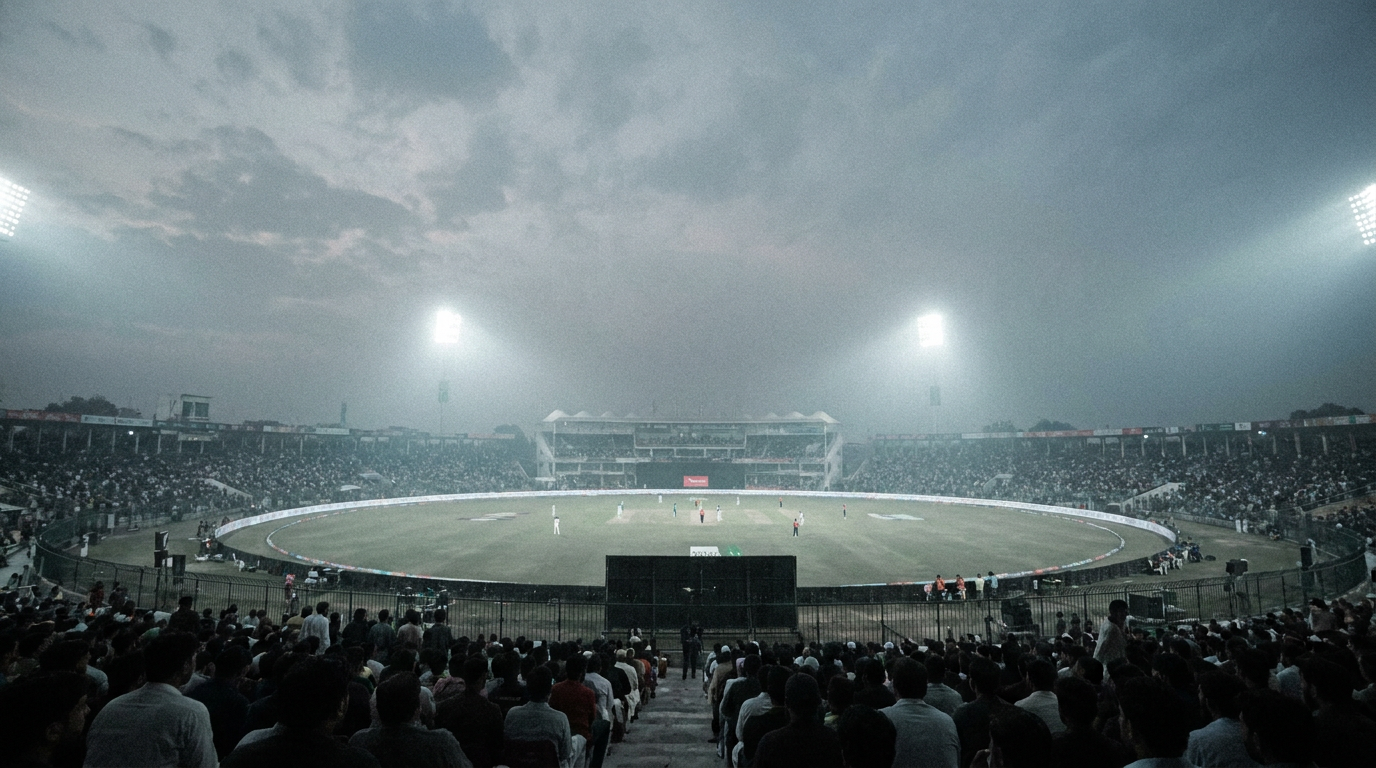
Pakistan won the one-day international tri-series final against Sri Lanka by three wickets on Saturday, completing their pursuit of 326 in the 49th over at Gaddafi Stadium in Lahore. Shaheen Afridi struck the winning six after two late wickets had interrupted the chase.
Fakhar Zaman supplied the largest contribution to Pakistan’s innings, scoring 127 from 99 deliveries. His dismissal still left the hosts needing 106, making the lower middle order responsible for turning his century into a tournament-winning performance.
Arafat Minhas and Hasan Nawaz then added 94 together. Minhas, 21, scored 61 from 31 balls, including four sixes, while the 24-year-old Nawaz helped sustain the partnership through a period when Sri Lanka were restricting boundaries.
The finish was not straightforward. With only two runs needed, Pakistan lost both Minhas and Faheem Ashraf. Afridi’s subsequent hit beyond the boundary ended the contest with an over to spare, avoiding a final-over examination of the remaining batters.
Earlier, Kamindu Mendis had scored 131 as Sri Lanka reached 325 for eight. His innings provided the foundation for a substantial target, but Pakistan’s bowlers prevented the closing overs from producing the acceleration that had looked possible much earlier.
Avishka Fernando helped establish an opening partnership of 87. Pavan Rathnayake later made 77 and shared a stand worth 146 with Mendis in fewer than 20 overs, putting Sri Lanka in position to attack during the final stretch of their innings.
After 41 overs, Sri Lanka had reached 255. They added another 70 over the remaining nine overs but lost six wickets in that period, a sequence that limited the benefit of having two established batters together earlier in the innings.
Afridi removed Mendis and Dasun Shanaka with full deliveries, while Haris Rauf used shorter bowling to take two late wickets. Before that intervention, Pakistan had relied on Salman Agha’s occasional off-spin for their first two breakthroughs.
The background
The tournament also involved England, who were eliminated before the final. Sri Lanka had already demonstrated their batting strength against them, successfully chasing 430 in a match in which Shanaka played a prominent attacking role.
Pakistan also entered the final with a recent setback against their opponents to overcome. Sri Lanka had bowled them out for 110 four days earlier. This time, the winning target was nearly three times that total, requiring a much more substantial batting effort.
Mendis’s century marked a personal breakthrough in the 50-over format. It was his first ODI hundred, seven years after his debut, and his score more than doubled his previous best. His earlier success had been particularly striking in Test cricket, with five centuries in his first eight matches.
Rathnayake finished the tri-series with 427 runs at an average of 106.75. His tournament included two centuries against England, followed by his half-century in the final. That average reflects runs per dismissal rather than runs per appearance, a distinction that matters when assessing a batter’s tournament return.
For Pakistan, Minhas had already made a major contribution with a different skill. His left-arm spin brought six wickets against England at the beginning of the competition. His bowling proved expensive in the final, but his batting gave him another route to influencing the result.
Fakhar brought experience of a previous major final: he had been central to Pakistan’s victory over India in the 2017 Champions Trophy decider. In Lahore, he again produced a century in a match that determined the destination of a trophy.
How the chase developed
Pakistan’s reply began with two early losses. Maaz Sadaqat fell to Dilshan Madushanka after attempting a drive, and Babar Azam was caught without scoring, Rathnayake completing a juggling catch at a wide slip position.
That dismissal extended Babar’s run without a half-century to nine innings. Playing at his home ground, he was unable to provide the substantial contribution Pakistan needed, leaving Fakhar and Saad Baig together with the score at 14 for two.
Baig reached his first international half-century from 52 balls, only hours before his 20th birthday. He went on to make 74 before Maheesh Theekshana caught him off his own bowling, ending an innings that had helped repair the damage caused by the opening wickets.
Sri Lanka had opportunities to remove Fakhar much sooner. Madushanka dropped him on six, while Theekshana failed to hold chances when he had 69 and 106. Those reprieves allowed Pakistan’s leading scorer to continue well beyond his first fifty.
Fakhar reached his hundred from 84 deliveries. Across his completed innings, he scored at a little over 128 runs per 100 balls, comfortably above the initial required rate of 6.52 an over. That pace helped compensate for Pakistan’s early setbacks.
Madushanka eventually bowled Fakhar, and Dunith Wellalage dismissed Agha when the batter attempted a sweep. Those wickets restored pressure on Pakistan, whose next partnership had to balance the need to preserve wickets against a target that still demanded sustained scoring.
The boundary shortage lasted more than 10 overs before Minhas drove Shanaka through the covers. Pakistan later needed 46 from the final 30 balls, equivalent to 9.2 runs an over. A 15-run over against Shanaka then shifted the immediate calculation in the hosts’ favour.
What people are saying
Inside the ground, Minhas’s attacking strokes drew an enthusiastic response from the crowd. The final took place under floodlights before a full stadium, with the younger batter’s power providing a late focal point for the home supporters.
Four of Minhas’s scoring shots accounted for 24 runs, almost two-fifths of his innings. His overall rate was close to two runs a ball, giving the spectators a markedly different finish from the extended stretch without a boundary that preceded his attack.
What happens next
The result completes the three-team competition with Pakistan as winners and Sri Lanka as runners-up. The three-wicket margin means Pakistan had seven batters dismissed when they passed the target; the winning boundary ended the match immediately rather than requiring the remaining deliveries to be bowled.
The final also leaves distinct statistical landmarks for two younger Pakistan players: Baig’s first international fifty and Minhas’s combination of a six-wicket performance earlier in the tournament with a decisive batting contribution in the final. Neither achievement depended on the established top order completing the chase.
Why this matters
For UK followers assessing England’s opponents, Sri Lanka’s performances offer a measure of the batting they faced: Rathnayake’s two hundreds and the successful pursuit of 430 came before another total above 300 in the final. England’s elimination preceded a decider shaped by that same batting strength.
For viewers following one-day cricket, the result illustrates why a target alone does not describe the difficulty of a chase. Pakistan needed both a century at the top and late acceleration further down the order; Sri Lanka’s missed catches and closing-overs wickets materially changed how much each side had to do.
Reporting that informed this story
- The Guardian UK: Pakistan win tri-series final as Fakhar Zaman century denies Sri Lanka in thrilling chase
- The Guardian UK: Pakistan v Sri Lanka: tri-series cricket one-day international final – live
This article was written independently by The Daily Times from publicly available facts and headlines. No text has been copied from the outlets above.