Enhertu approved for NHS breast cancer patients in England
About 1,000 women a year with incurable HER2-low breast cancer can receive Enhertu after a reversal of the decision to refuse NHS access.

By Hannah Whitfield, Health Correspondent
Published 17 Sept 2026, 07:01
What happened
Doctors in England can prescribe Enhertu on the NHS from Thursday for women with HER2-low advanced breast cancer, following an agreement that overturns an earlier rejection on cost grounds. About 1,000 women each year are expected to benefit from the decision.
The treatment can extend survival by almost seven months on average, while some patients have lived as much as three years longer. Those figures describe different levels of benefit: the longer survival experienced by some patients is not the expected outcome for everyone receiving the medicine.
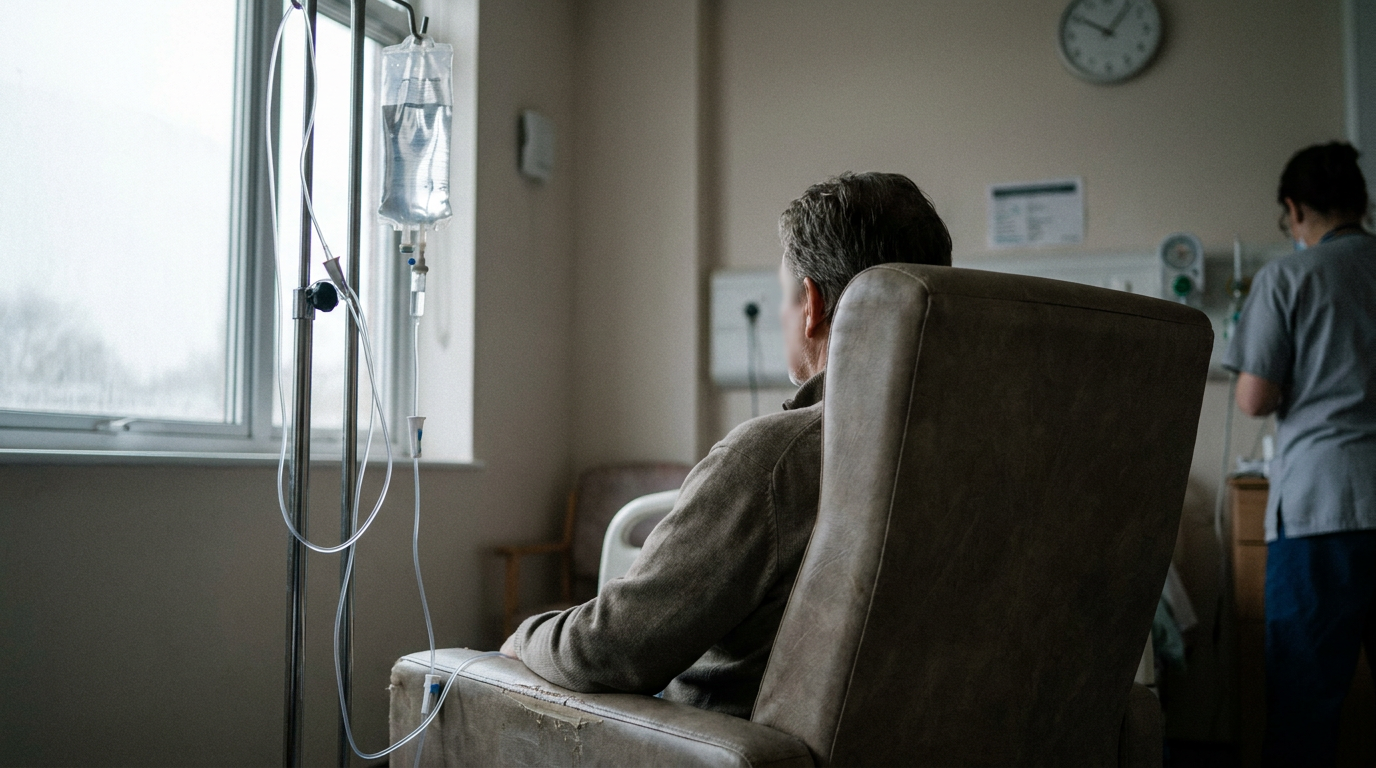
Enhertu is also known as trastuzumab deruxtecan and is administered by infusion. The decision concerns a particular form of breast cancer that has reached an incurable stage, rather than access for everyone diagnosed with the disease. Treatment at this stage aims to give patients more time; it does not offer a cure.
Ministers and the manufacturers have reached a commercial agreement allowing NHS access. The National Institute for Health and Care Excellence, known as NICE, has changed its recommendation after rejecting the treatment in 2024 because it considered the benefits insufficient to justify the cost to the health service.
The background
Access has differed across the UK for several years. Scotland began providing Enhertu for these patients through the NHS in 2023. The medicine is also available in 26 other European countries, making its absence in England a central concern for patients seeking another treatment option.
Charities and women living with advanced breast cancer began campaigning for wider access after the 2024 rejection. Their efforts included a Westminster protest in July that year, when campaigners painted their breasts to draw attention to their demand for NHS funding.
For some of those involved, campaigning meant using time they wanted to spend with their families. Jeannie Ambrose was 53 when she spoke publicly two years ago about wanting to continue living and her frustration at having to fight for treatment while facing an incurable illness.
Ambrose died in January this year. Her friend Kate Wills, who also has HER2-low metastatic breast cancer, has remembered her as someone who would have welcomed access while remaining angry about the length of the wait. Their experience has shaped the response to the new decision.
Breast Cancer Now says thousands of people went without access during the delay and many died. The charity is marking the change as the result of sustained campaigning, while stressing the loss felt by families whose relatives did not live to see it.
How the funding decision changed
The reversal follows changes to the way NICE assesses whether medicines represent an appropriate use of NHS resources. A UK trade agreement with the United States, under which the government agreed to spend 25% more on medicines, was a major factor in that change.
NICE uses a measure called a quality-adjusted life year, or QALY, to assess treatment benefits. It brings together the length of life a medicine can add and the quality of that time, allowing assessments to consider more than survival alone when comparing the costs and benefits of care.
The upper cost-effectiveness threshold has risen from £30,000 to £35,000 for each additional QALY. That figure is an assessment benchmark, not the price of an individual prescription or the amount a patient is charged. Raising it allows a higher cost for a given level of health benefit.
A separate change introduced at the end of August altered how NICE measures patients’ quality of life. Together, the higher threshold and the revised measurement approach shifted the assessment sufficiently for Enhertu to receive a positive recommendation.
The two manufacturers, Daiichi Sankyo and AstraZeneca, have not substantially reduced their prices since the original rejection. The outcome therefore reflects changes in how the treatment’s benefits and costs are judged, rather than a large price cut alone, even though a commercial agreement forms part of the decision.
Enhertu costs around £10,000 per patient each month in the United States. That is not an NHS price: the health service can negotiate lower charges. The distinction matters because an overseas price does not determine what a treatment costs the NHS or whether NICE recommends it.
What people are saying
Health Secretary Yvette Cooper welcomed the recommendation and credited the patients and charities who continued pressing for access. She said the treatment could make a substantial difference to patients’ lives and that NHS patients would now be able to benefit from it.
Claire Rowney, chief executive of Breast Cancer Now, called for wider reform involving the government, NICE, NHS England and pharmaceutical companies. Her concern is that people with metastatic breast cancer should not have to devote months or years of their remaining lives to campaigning for medicines that might extend survival.
For Wills, 51, the announcement prompted tears of relief. Her cancer has spread to her bones and lungs, but she continues to hold a demanding job alongside family life. She described the previous inability to obtain a potentially life-extending treatment as deeply painful.
Wills has a son and daughter in their teens and early 20s. She had focused on living long enough for her youngest child to finish school. Access to Enhertu has allowed her to contemplate later family milestones, including seeing her children form relationships and marry.
Helen Knight, NICE’s director of medicines evaluation, welcomed the commercial resolution while acknowledging that many families would experience the decision as coming too late. She also emphasised NICE’s responsibility to balance the benefits of new medicines against the need to preserve resources for other essential NHS care.
Both manufacturers welcomed the recommendation. AstraZeneca also urged closer working across the healthcare system to make access quicker and fairer in future, placing the decision within a broader debate about how patients obtain new treatments after they have been developed.
What happens next
Wales is expected to follow England shortly. The NICE guidance does not automatically extend to Northern Ireland, while Scotland already provides the treatment. The position across the four nations therefore remains different, despite the expansion of access announced this week.
In England, prescribing now moves into clinical care. An NHS funding recommendation makes the medicine an option for the relevant patient group; it is not an instruction that every person with advanced breast cancer should receive it. Individual treatment decisions remain a matter for patients and their cancer teams.
Why this matters
For affected households, treatment by infusion means access involves appointments for administration rather than simply collecting tablets. Discussions with cancer teams can now include an NHS-funded medicine that was previously outside the available options for this group in England.
For the wider UK health service, the decision illustrates the practical effect of changing the rules used to assess medicines. A treatment can cross the funding threshold when the valuation of health benefits changes, with consequences both for patients seeking longer lives and for the allocation of NHS spending.
Reporting that informed this story
- Daily Mail: 'Life-changing' breast cancer drug now available for women with incurable disease in major U-turn by NHS drug chiefs
- The Guardian UK: Women in England with incurable breast cancer to get life-extending drug on NHS
- BBC News: New hope for breast cancer patients as life-extending drug now on NHS in England
This article was written independently by The Daily Times from publicly available facts and headlines. No text has been copied from the outlets above.