Tottenham goal drought goes on as VAR rules out Kudus equaliser
Mohammed Kudus had an equaliser disallowed for offside against Andy Robertson as Tottenham trailed Aston Villa, with both clubs seeking a first league win.

By Tom Brennan, Sports Writer
Published 19 Sept 2026, 13:00
What happened
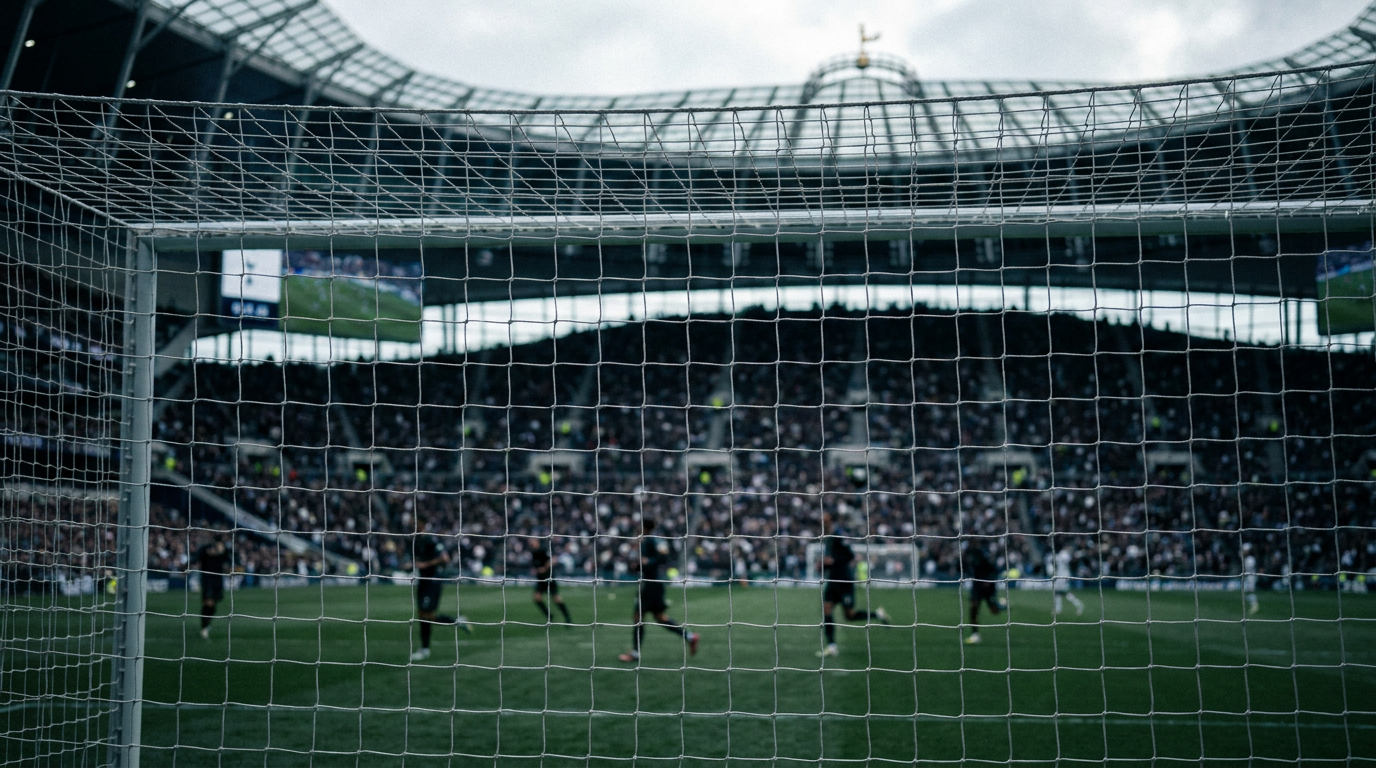
Tottenham Hotspur’s search for their first Premier League goal of the season continued after a video review ruled out a potential equaliser from Mohammed Kudus against Aston Villa. Andy Robertson was offside in the build-up, leaving the hosts behind in a match both teams entered seeking their first league victory.
Kudus had come on at half-time as Roberto De Zerbi changed his midfield in pursuit of a breakthrough. His apparent goal briefly offered Tottenham a way back into the contest, but the offside decision removed it from the score and extended a league scoring drought already beyond seven hours.
The setback followed a difficult first half in which Tottenham conceded while Micky van de Ven was off the pitch. The defender subsequently continued with visible swelling below an eye. Pedro Porro also suffered an injury, adding another complication to the home side’s afternoon.
At the other end, Tottenham goalkeeper Antonin Kinsky intervened at close range to prevent Jackson getting a shot past him. Kinsky needed medical attention after contact with the forward’s boot during the challenge.
Villa also threatened through a quick break that ended with Jackson shooting narrowly wide. On another counter-attack, Emiliano Buendía carried the ball past two Tottenham players and found Manzambi, whose opportunity passed without a shot.
The background
The match brought together two clubs still trying to register a league win this season. For Tottenham, the additional problem was a complete absence of league goals, making their attacking changes significant beyond the immediate task of recovering against Villa.
De Zerbi’s side had applied pressure and created chances during the opening half-hour. Villa initially defended deep, allowing Tottenham to advance before looking to exploit the space available when possession changed hands.
That approach gave the contest a clear tactical shape: Tottenham had to find a route through a compact defence, while Unai Emery’s visitors sought opportunities to move forward quickly. Villa’s first-half breakthrough came during the interruption to Van de Ven’s involvement.
The interval brought changes from both benches. Tottenham introduced Kudus for Fernandes, while Villa replaced Aaron Wan-Bissaka with Matty Cash. The visitors therefore altered their personnel at right-back as the hosts adjusted the balance further forward.
Choosing an additional creative outlet can change the demands on the players behind him. When a team commits more players to supporting an attack, those remaining must cover the spaces exposed if the move breaks down. Villa’s second-half breaks made that defensive task particularly relevant for Tottenham.
Rodrigo Bentancur stopped one Villa attack with an interception. In another passage, John McGinn advanced past Sandro Tonali before going down under Bentancur’s challenge; Villa appealed for a free-kick, but play continued.
How the offside decision works
Offside is assessed at the moment a team-mate plays or touches the ball, rather than when the receiving player eventually reaches it. A player’s position earlier in a move can therefore determine whether a later finish counts, even when the scorer’s own position is not the issue.
Being in an offside position does not, by itself, constitute an offence. The player must become involved in active play, whether by interfering with play, affecting an opponent or gaining an advantage in circumstances covered by the law. Here, the decisive offside involved Robertson rather than Kudus.
The comparison normally involves the ball and the second-last opponent. A player in the opponents’ half can be in an offside position if a playable part of the head, body or feet is nearer the goal line than both. Hands and arms do not count for that assessment.
Video assistant referees check goals for offences within the relevant attacking phase. That allows a review to identify a problem before the final touch, rather than considering only the act of putting the ball into the net.
When a goal is disallowed for offside, the defending side receives an indirect free-kick. The cancelled finish contributes nothing to the score, so it cannot end a team’s scoring drought or alter the points available from the match.
What people are saying
The home crowd’s reaction changed when the equaliser was ruled out, with disappointment following the initial celebration. Supporters had already shown agitation and frustration by half-time, when Tottenham were behind despite their early pressure.
Villa’s players had made their own appeal during the earlier incident involving McGinn and Bentancur. Their request for a free-kick was unsuccessful, a separate refereeing decision from the offside review that subsequently kept Tottenham from drawing level.
De Zerbi’s response to the first-half deficit came through his substitution rather than a change to the scoreline: Kudus had been warming up during the interval before entering the match. The replacement put another attacking option into Tottenham’s effort to recover.
Emery’s adjustment followed Cash’s half-time warm-up with a fitness coach. His introduction gave Villa a different right-back for the second period, while the team continued to produce opportunities through rapid attacks into Tottenham’s half.
What happens next
Tottenham continued to press after the disallowed finish. Robertson delivered a free-kick towards the far side, but Villa goalkeeper Suzuki dealt with it, preventing that set-piece from providing the home side’s breakthrough.
Jackson had also received a yellow card shortly after the restart for interfering with a Tottenham free-kick following an offside decision. A caution leaves a player at risk of dismissal for another cautionable offence during the same match, making discipline a further consideration as play continues.
For Tottenham, recovering the result requires valid goals: one to draw level from the position described, and a further scoring advantage to move ahead. Creating chances alone does not change that requirement, and the overturned finish left their immediate task intact.
The points system gives the recovery effort a practical distinction. A Premier League win earns three points, a draw one and a defeat none. An equaliser would therefore change the potential return for both clubs, but would not itself secure the first victory either was seeking.
League positions also take account of goal difference and, where necessary, goals scored when teams are level on points. A scoring drought can consequently affect more than an individual match, although the immediate priority here remained the contest against Villa.
Why this matters
For supporters following the match in the UK, the distinction between an apparent goal and one that survives review is central to understanding the live score. Celebrations can precede the completion of a check, with an earlier attacking action determining the outcome.
The game also illustrated why attacking substitutions have consequences across a team. Adding creativity can improve the options around the opposition penalty area while increasing the defensive workload behind the ball — a balance Tottenham had to manage while chasing Villa.
Reporting that informed this story
This article was written independently by The Daily Times from publicly available facts and headlines. No text has been copied from the outlets above.