Buckingham Palace staff given alcohol awareness training
Royal household staff received training from Alcohol Change UK covering drinking habits, workplace safety and how to respond to intoxicated colleagues.

By Marcus Odell, Political Correspondent
Published 30 Sept 2026, 07:01
What happened
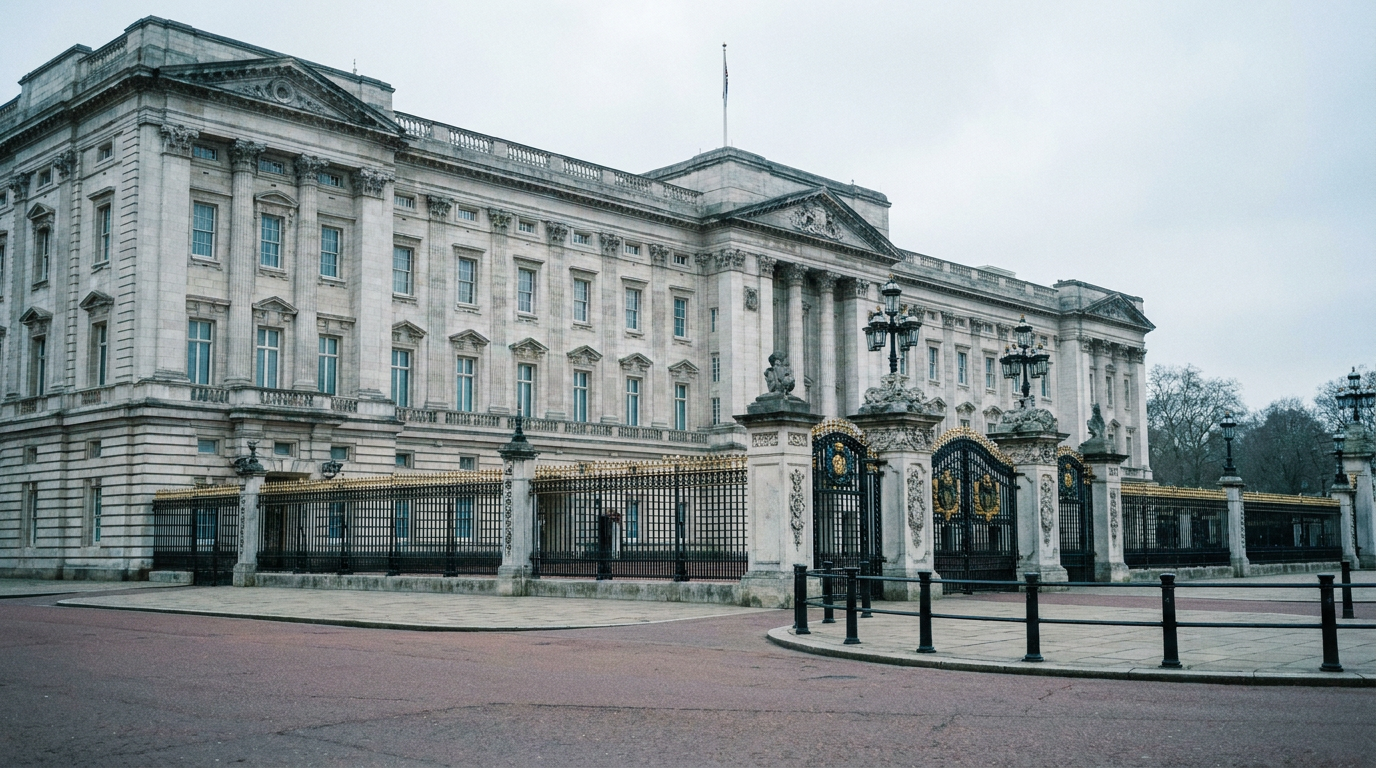
Buckingham Palace employees have received alcohol awareness training covering excessive drinking and how to respond when a colleague is intoxicated. Alcohol Change UK delivered the sessions through consultants invited to work with the royal household.
The training took place several years ago within a wider programme of staff wellbeing activities arranged by the household’s human resources department. Richard Piper, the charity’s chief executive, identified the royal household as one of the employers that had requested its educational work.
Topics included mindful drinking and a pattern sometimes called “grey area drinking”: consuming excessive amounts without being dependent on alcohol. The sessions also addressed alcohol at work as a safeguarding concern, bringing the welfare of colleagues into the discussion alongside individual drinking habits.
That approach places two different responsibilities within workplace education. Employees may need information to assess their own alcohol consumption, while those working alongside them may need to recognise when someone’s condition creates a problem requiring help or intervention.
The background
The royal household’s wellbeing programme provides the setting for the training. Human resources departments deal with staff welfare as well as employment procedures, so alcohol education can sit alongside other initiatives aimed at helping employees manage issues that affect their working lives.
A separate incident involving palace employees occurred in December 2024, when a staff Christmas celebration ended in disorder at an All Bar One venue on Victoria Street in London. A palace maid, then aged 24, was arrested after the disturbance.
Staff had first gathered for drinks at Buckingham Palace. Around 50 subsequently went to the bar to continue celebrating. The woman was alleged to have attempted to punch the manager and to have thrown glasses despite efforts to calm her.
Those details concern alleged conduct by an individual during an evening out. An arrest is not a finding of guilt: it forms part of the criminal justice process, while any determination of an offence is a separate matter.
The movement from palace drinks to a nearby bar also illustrates the different settings involved in staff socialising. An occasion can begin at a workplace and continue elsewhere, with colleagues remaining together after leaving their employer’s premises. Alcohol-related welfare concerns can therefore arise beyond the place where people do their jobs.
What people are saying
Piper has described the charity’s work with employers as an opportunity to improve workplace policies. His emphasis is on health, individual circumstances and inclusion, rather than treating alcohol consumption as a simple division between acceptable and unacceptable personal behaviour.
He has also drawn attention to employees who do not drink. In explaining that concern, he put the proportion of non-drinkers at more than 20% of the population, compared with roughly 6% who are vegetarian. His comparison highlights a group whose preferences need consideration when organisations plan activities.
Piper has argued against making people feel uncomfortable for choosing sobriety. In a workplace setting, that issue is distinct from excessive consumption: an employee can experience pressure around alcohol even if they never drink, particularly when participation in a social occasion appears to depend on it.
His safeguarding emphasis adds a further dimension. A colleague affected by alcohol may require assistance, while others nearby may also be exposed to risk. Looking at both sides means the question is not solely how much one person has consumed, but what their condition means for the people around them.
Understanding the drinking patterns
“Grey area drinking” is a descriptive expression rather than a precise measure of consumption. Its relevance to the palace sessions lies in the distinction between drinking excessively and being dependent: the absence of dependence does not, by itself, make a pattern of consumption harmless.
Dependence concerns a person’s relationship with alcohol, including difficulty controlling its use. Intoxication concerns its effects at a particular time. The two are not interchangeable, and someone does not have to be alcohol-dependent to become impaired during an evening or create a workplace safety concern.
Mindful drinking focuses attention on decisions about alcohol, including when, why and how much someone consumes. Rather than assuming that drinking follows automatically from a social situation, it encourages a deliberate choice. That makes it relevant to habitual occasions as well as individual episodes of heavier consumption.
Alcohol can affect judgement, coordination and responses. At work, those effects matter because tasks often depend on reliable decisions and awareness of other people. The practical consequences differ between roles: handling equipment presents different risks from making decisions, dealing with visitors or supporting a colleague.
These distinctions help explain why awareness training can address more than a single dramatic incident. A person’s longer-term habits, their condition during a particular shift and the social expectations within a team are separate issues, even though each can feature in an employer’s approach to alcohol.
What happens next
The organisational route described by Piper is through workplace policy. Education gives employees information; policy establishes how an employer expects concerns to be handled. A session about alcohol is therefore different from the procedures used when a manager faces an immediate welfare or conduct issue.
In general, workplace rules can distinguish between offering support and responding to behaviour that puts others at risk. Those functions serve different purposes. Assistance addresses an employee’s needs, while a safety response deals with the immediate situation and any effect on colleagues or the public.
A further distinction concerns diagnosis. Colleagues and managers can notice behaviour or difficulties at work, but identifying alcohol dependence is a health matter. Keeping those roles separate allows a workplace concern to be addressed without turning an observation about someone’s conduct into a medical label.
For an individual considering their drinking, the next step may also differ according to the problem. Reflecting on habits is not the same as obtaining treatment for dependence. General education can introduce that difference, but it does not replace individual assessment or care from a health professional.
Inclusion operates through another set of everyday decisions: the way gatherings are organised, the drinks offered and whether employees are expected to explain abstinence. These arrangements affect whether non-drinkers can take part comfortably, independently of any procedure for dealing with intoxication.
Why this matters
For UK employees, the subject extends beyond drinking during working hours. Alcohol consumed beforehand can still affect someone at work, making fitness to carry out a task a practical consideration even when no drinking takes place on the premises.
For employers, workplace education also offers a way to discuss alcohol before a concern becomes personal. Explaining expectations to a whole team can establish a shared understanding without singling out an individual, while leaving room for private conversations when someone needs support.
Reporting that informed this story
This article was written independently by The Daily Times from publicly available facts and headlines. No text has been copied from the outlets above.