Trump defends oil revenues as US petrol reaches $4.27 a gallon
Donald Trump says the US is benefiting from oil revenues during the Iran war, while promising relief for motorists facing higher fuel bills.

By Daniel Okafor, Technology Correspondent
Published 28 Oct 2026, 07:00
What happened
Donald Trump has defended the financial benefits of American oil production during the war with Iran as US motorists face an average petrol price of $4.27 a gallon. Speaking in Lubbock, Texas, on Tuesday night, the president argued that higher earnings from oil were benefiting the country despite the cost to drivers.
The American Automobile Association puts the national diesel average at $6.35 a gallon. That is 17 cents below the record of $6.52 reached at the end of September, but it leaves diesel substantially more expensive than petrol, with implications for businesses that depend on road transport.
Regular petrol averaged $2.81 a gallon in January. The latest figure represents an increase of $1.46, or about 52%. On those national averages, buying 10 US gallons now costs $14.60 more than it did in January, illustrating the additional expense for motorists purchasing the same quantity of fuel.
Trump linked the earnings of American producers to the conflict in the Middle East, referring to the seven months since the war began. He said oil production and the money being made from it had reached unprecedented levels, presenting the industry's performance as an economic benefit of the conflict.
The background
The Texas visit also highlighted the administration's dealings with Venezuela. In January, Trump ordered American forces to capture Venezuelan President Nicolás Maduro and put Maduro's deputy, Delcy Rodríguez, in charge. That intervention preceded an agreement giving the United States access to a share of Venezuelan oil.
Trump announced the agreement in August, granting the US a fifth of Venezuela's oil. The arrangement includes processing more Venezuelan crude in Texas refineries, linking the administration's foreign policy to the state's refining industry as well as its oil producers.
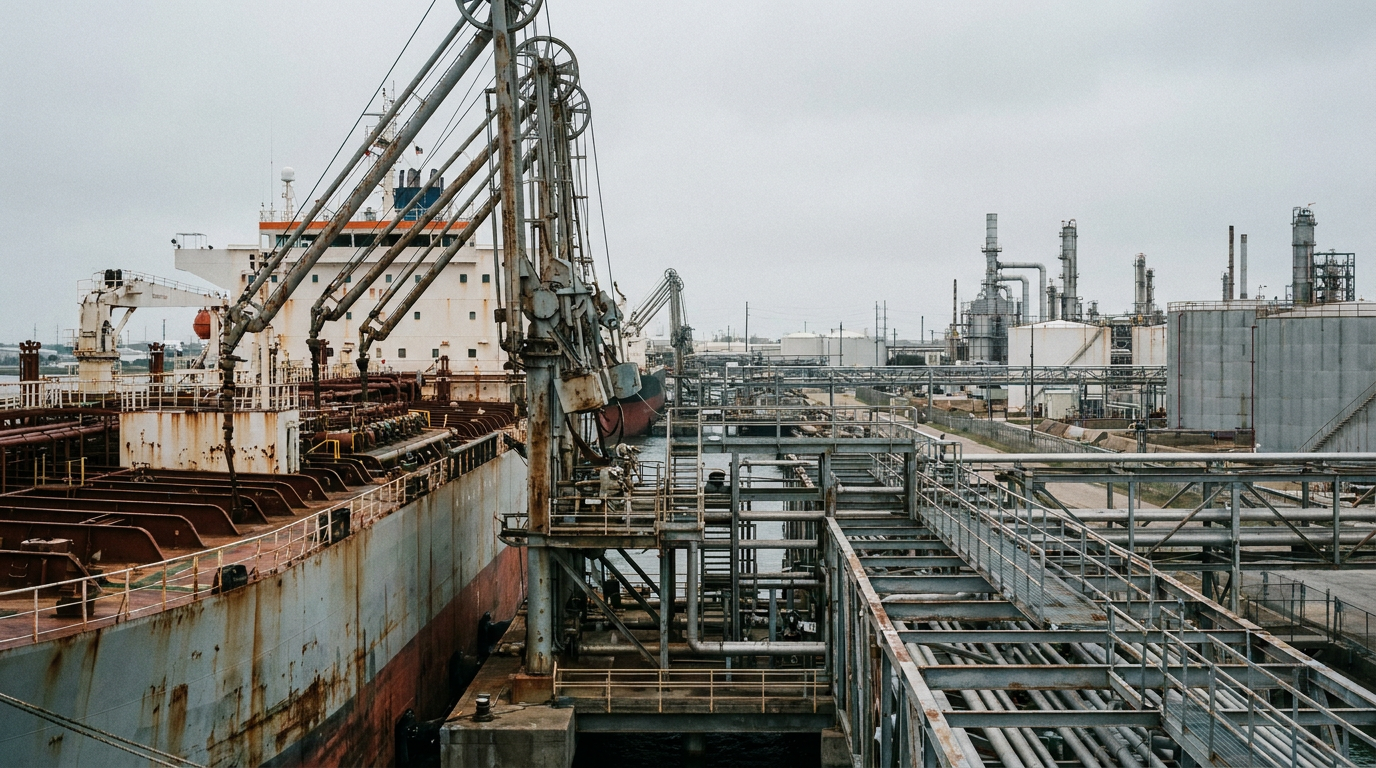
The first shipment under the agreement arrived on Tuesday. At an earlier rally in Corpus Christi, Trump appeared at the port with the oil tanker Angerona docked nearby. Secretary of State Marco Rubio briefly joined him onstage as the president celebrated the delivery.
Trump said the oil on the ships was being supplied at no cost to American taxpayers. That was a claim about the terms on which the crude was being provided, rather than a retail price for the petrol or diesel that could eventually be produced from it.
The current petrol average remains below the US record of $5.02 a gallon reached in June 2022, during Joe Biden's presidency. It is 75 cents short of that peak, although a comparison with the record does not capture the increase motorists have experienced since January.
Across Trump's second term, the national petrol average has been $3.473 a gallon, compared with $3.471 during Biden's presidency, based on AAA figures. Those averages are almost identical, but they cover different periods and smooth out the rises and falls drivers encounter when filling up.
What people are saying
At Lubbock, Trump addressed criticism that celebrating oil earnings overlooked the effect on people paying more for fuel. He said motorists were his priority and predicted that pump prices would fall quickly. His response combined a defence of producers' revenues with an assurance of relief for consumers.
The president singled out Texas and Louisiana when discussing demand for American oil. He said the Middle East was obtaining supplies from those states and described the income being generated as exceptional. His argument focused on the receipts associated with production rather than on household purchasing power.
In Corpus Christi, he presented the Venezuelan shipment as a success for his administration's oil policy and connected it to the earlier military intervention. The tanker provided a visible setting for that argument: overseas crude arriving at a Texas port for an industry with facilities to process it.
The fuel-price increases are also putting pressure on Republican candidates across the United States. Petrol is a frequent purchase for many households, making changes at the pump a readily visible part of the economic backdrop against which candidates are campaigning.
How oil prices reach the forecourt
Oil production earnings and affordable fuel are different measures of economic performance. A producer selling crude can receive more money when the market price rises, while a customer buying petrol faces a larger bill. Both effects can occur at the same time without either cancelling out the other.
Crude oil must be refined before it can be sold as road fuel. The retail price also reflects processing, storage, transport, distribution and taxes. Even oil acquired on favourable terms still has to pass through that chain, so the acquisition cost alone does not determine what motorists pay.
Petrol and diesel have separate supply-and-demand conditions. Refineries produce a range of fuels, and the availability and demand for each product influence its wholesale price. A fall in crude prices therefore need not produce an identical reduction in petrol and diesel prices, or one that happens simultaneously.
National production also does not insulate consumers from international markets. Oil and refined fuels are traded across borders, connecting domestic prices to demand and supply elsewhere. A country can earn more from energy exports while its own households and businesses pay more for energy products.
For British readers, the units require care. American forecourts quote prices per US gallon, whereas British retailers display prices per litre; a US gallon is also smaller than an imperial gallon. The dollar figures therefore cannot be compared directly with a British pump price without converting both volume and currency.
What happens next
Trump's promise of rapid reductions will be tested by subsequent prices paid by motorists. The national average measures conditions across the country rather than the bill at any individual filling station, where local competition, transport costs and taxes can produce different prices.
The Venezuelan arrangement brings another distinction into focus: access to crude is not the same as an immediate increase in available road fuel. Refinery capacity, the characteristics of the oil and the processing required all affect how a delivery can be turned into products for sale.
Changes in wholesale costs can also take time to reach the forecourt. Fuel already held in storage or bought under earlier supply arrangements can affect the timing of retail adjustments. A market movement and the price displayed to a driver are related, but they are not necessarily simultaneous.
Why this matters
For UK motorists, developments in the international oil market can affect the cost of filling up even when the political decisions originate in Washington. Sterling's value against the dollar also matters because oil is priced internationally in dollars, adding an exchange-rate influence to British fuel costs.
The exposure extends beyond private cars. Diesel costs affect freight and delivery businesses, while more expensive transport can feed into the costs of supplying goods. Whether businesses absorb those increases or pass them on helps determine how an oil-price rise reaches household budgets beyond the forecourt.
Reporting that informed this story
This article was written independently by The Daily Times from publicly available facts and headlines. No text has been copied from the outlets above.