Ukraine says Starlink restored after limits disrupted missions
Ukraine says its satellite links can again support high-speed military operations after restrictions disrupted drones and combat missions.

By Robert Aldridge, Senior Reporter
Published 24 Oct 2026, 18:00
What happened
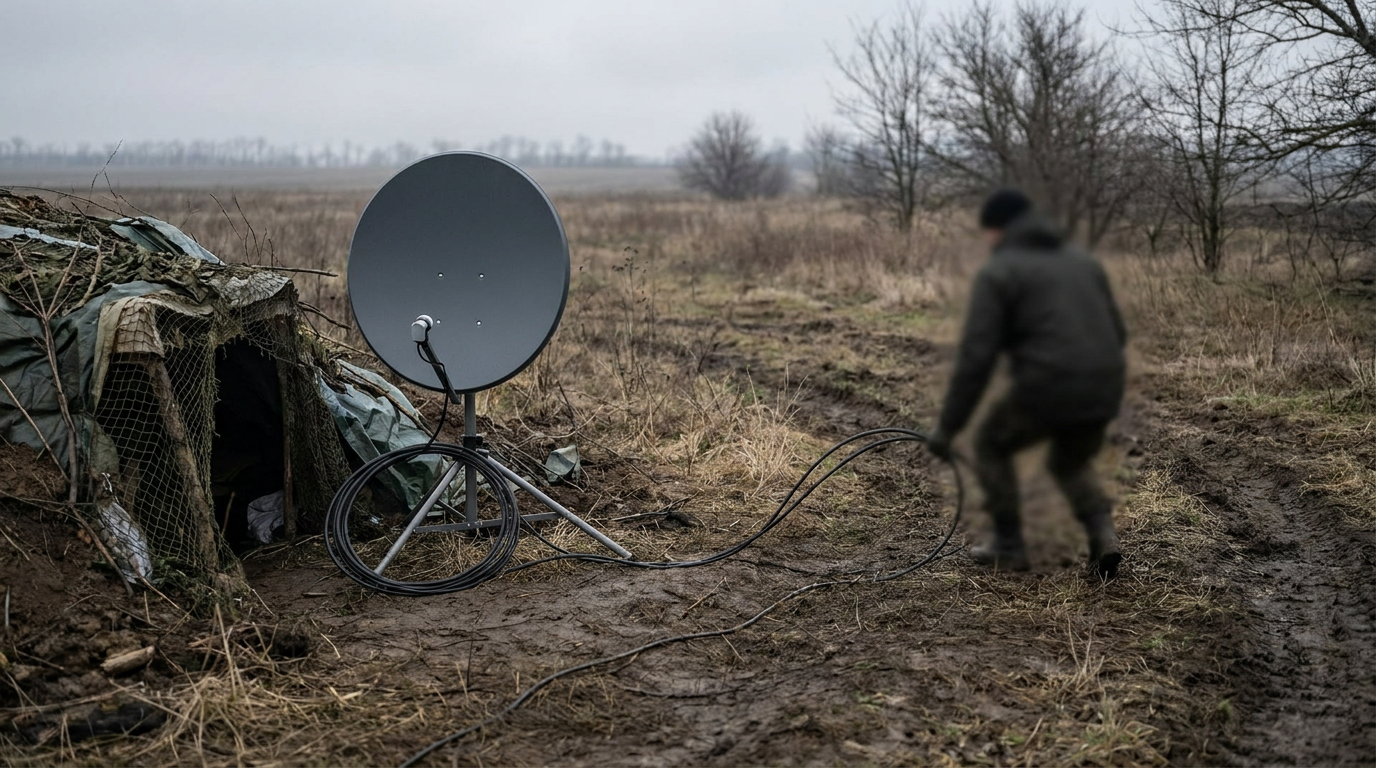
Ukraine says its military can again use Starlink reliably after restrictions on the satellite network disrupted combat missions and drone operations. Defence Minister Yevhenii Khmara said on Saturday that connections now worked at travelling speeds above 400km/h, a substantial increase on the limit that had affected forces earlier this month.
The Ukrainian government announced the recovery 10 days after access was suddenly restricted. The disruption affected military operations for about a week, with several combat missions failing after terminals became subject to a movement-speed limit of about 160km/h, or 100mph.
That threshold concerned how fast a terminal was travelling, rather than how quickly it could download information. Ukraine said drones lost their connections when moving at 161km/h or more. For remotely operated aircraft, losing a communications link can interrupt the flow of commands and information between the aircraft and its operators.
President Volodymyr Zelenskyy thanked US allies for restoring a system used in Ukrainian air defence and the movement of supplies near the front. Khmara said the improvement mattered to soldiers, drone operations, logistics and military communications, describing a recovery across several connected areas of battlefield activity.
Starlink terminals are made by Elon Musk’s SpaceX. The equipment involved in the restrictions is managed by the US government, placing the dispute at the intersection of a privately developed satellite network and American military support for Ukraine.
The background
Ukraine uses both Starlink and Starshield, its more secure, military-focused counterpart. The services support drone piloting and other operations within Ukraine, where units depend heavily on satellite communications in remote battlefield locations. Their importance extends beyond individual weapons to the exchange of information needed to organise military activity.
The network comprises about 10,000 satellites in low Earth orbit. Satellite internet connects terminals on the ground, or aboard moving equipment, to spacecraft overhead. This provides a means of communicating away from fixed local connections, helping explain why the service has become so widely used across Ukraine’s armed forces.
The distinction between a movement restriction and an internet speed restriction is important. A connection may still function for equipment that remains below a permitted travelling speed while becoming unusable for a faster platform. The recent limit therefore had particular implications for aircraft, rather than simply making all users’ internet connections slower.
Access also has geographical limits. Russia is not authorised to use Starlink, and the network does not operate for Ukrainian long-range missiles or drones sent deep into Russian territory to attack oil refineries. Restoring high-speed connections within Ukraine is therefore separate from providing satellite coverage for those cross-border missions.
The restrictions emerged during a wider disagreement between US President Donald Trump and Zelenskyy over Ukrainian attacks on Russia’s oil infrastructure. Kyiv regards those facilities as important targets because oil revenue helps finance Moscow’s war. Trump has argued that the attacks have increased global fuel prices.
The dispute also involves US policy towards Russian energy. With American midterm elections due next month, Trump has waived some sanctions on Russia and agreed a deal to import Russian diesel into the United States. Ukraine and its European allies have criticised that approach.
What people are saying
Kyiv accused Trump last week of instructing Musk to impose limits on the satellite services. Trump denied giving such an instruction, then said Musk had restored access. Those statements leave the accusation and denial distinct from the operational improvement subsequently announced by Ukraine’s defence minister.
Musk suggested that the Pentagon could have been responsible for the problems, pointing to US military control of Starshield. His intervention highlighted the different roles involved: SpaceX supplies the technology, while the US military controls the more secure service used alongside civilian Starlink.
Zelenskyy also said Washington had threatened to stop sharing intelligence unless Ukraine ended its attacks on Russian oil facilities. Trump denied making that threat. Intelligence sharing is a separate form of support from satellite connectivity, but both became points of contention in the same diplomatic dispute over Ukraine’s targeting decisions.
The argument about energy prices has a wider context. Ukrainian attacks on Russian oil infrastructure have affected global fuel markets, but the main cause of this year’s price increases has been the Iran war. That distinction matters when assessing Trump’s criticism of the refinery strikes and Kyiv’s argument for continuing them.
Fighting continues
Russia’s defence ministry said on Telegram on Saturday that its air defences had intercepted 616 Ukrainian fixed-wing drones. It described attacks across several regions, including Russian-annexed Crimea. The figure is a Russian military account of the fighting, rather than a Ukrainian assessment of the operation’s results.
Sergey Aksyonov, Crimea’s Moscow-backed governor, said power cuts caused by a drone attack had led to restrictions on electricity and water. His account described consequences for essential services as well as the military exchanges, with disruption to power supplies affecting the provision of water.
Ukrainian authorities, meanwhile, said their forces had hit a manufacturer of missile components, a chemical plant and an aircraft at a military airfield inside Russia during the previous 24 hours. Those reported targets extended beyond the oil facilities at the centre of the disagreement with Washington.
Ukraine also reported extensive Russian attacks on Friday, recording 88 air strikes involving 309 glide bombs, alongside 10,270 one-way attack drones. The figures underline the scale of aerial operations continuing as Ukraine restores a communications service used by its own forces and air-defence operations.
What happens next
The immediate operational change is the ability to maintain satellite connections at speeds above 400km/h. That capability moves Ukrainian users well beyond the threshold that interrupted faster-moving drones. Khmara’s announcement indicates that the network can once again support the high-speed activity affected by the restrictions.
Geographical authorisation remains a separate condition governing use of the service. A terminal’s ability to connect while moving quickly does not itself change where the network works. For Ukrainian operations, the distinction separates restored battlefield connectivity from the communications arrangements needed for attacks deep inside Russia.
The next scheduled political milestone is the US midterm election next month, approaching amid the disagreement over Russian diesel imports, sanctions and fuel prices. The restoration addresses Ukraine’s immediate connectivity problem; the competing American and Ukrainian positions on attacks against Russia’s oil industry concern a broader question of war strategy.
Why this matters
For UK readers, the energy dispute has a practical connection to household and business costs. Changes in global fuel prices can feed through to transport and distribution expenses. The refinery attacks are one influence on those markets, although the Iran war has been the larger driver of increases this year.
The episode also illustrates how access conditions can affect military equipment already in service. Hardware alone does not guarantee an uninterrupted connection: movement limits, geographical permissions and control of the network all matter. In Ukraine, a change to one of those conditions disrupted missions despite forces already possessing the satellite terminals.
Reporting that informed this story
- The Guardian UK: Ukraine’s military says Starlink satellite connection stable after recent restrictions
- BBC News: Ukraine says Starlink connection 'now stable' after network limits
This article was written independently by The Daily Times from publicly available facts and headlines. No text has been copied from the outlets above.