María Corina Machado returns to Venezuela after months in exile
The opposition leader appeared at Mass in Lara state as she returned to a country governed by her rival Delcy Rodríguez with US backing.
By Robert Aldridge, Senior Reporter
Published 25 Oct 2026, 18:01
What happened
María Corina Machado has returned to Venezuela, bringing the opposition leader back into a political contest transformed by the removal of Nicolás Maduro and Washington’s decision to support his former deputy. Her arrival on Sunday ended more than 10 months abroad, but left her facing a government headed by her longstanding rival, interim president Delcy Rodríguez.
Machado, 59, announced her presence in a brief message on X at lunchtime. She appeared in Barquisimeto, the capital of Lara state, around 220 miles west of Caracas. Her public appearance took place away from the national capital, at the Sanctuary of the Divine Shepherdess.
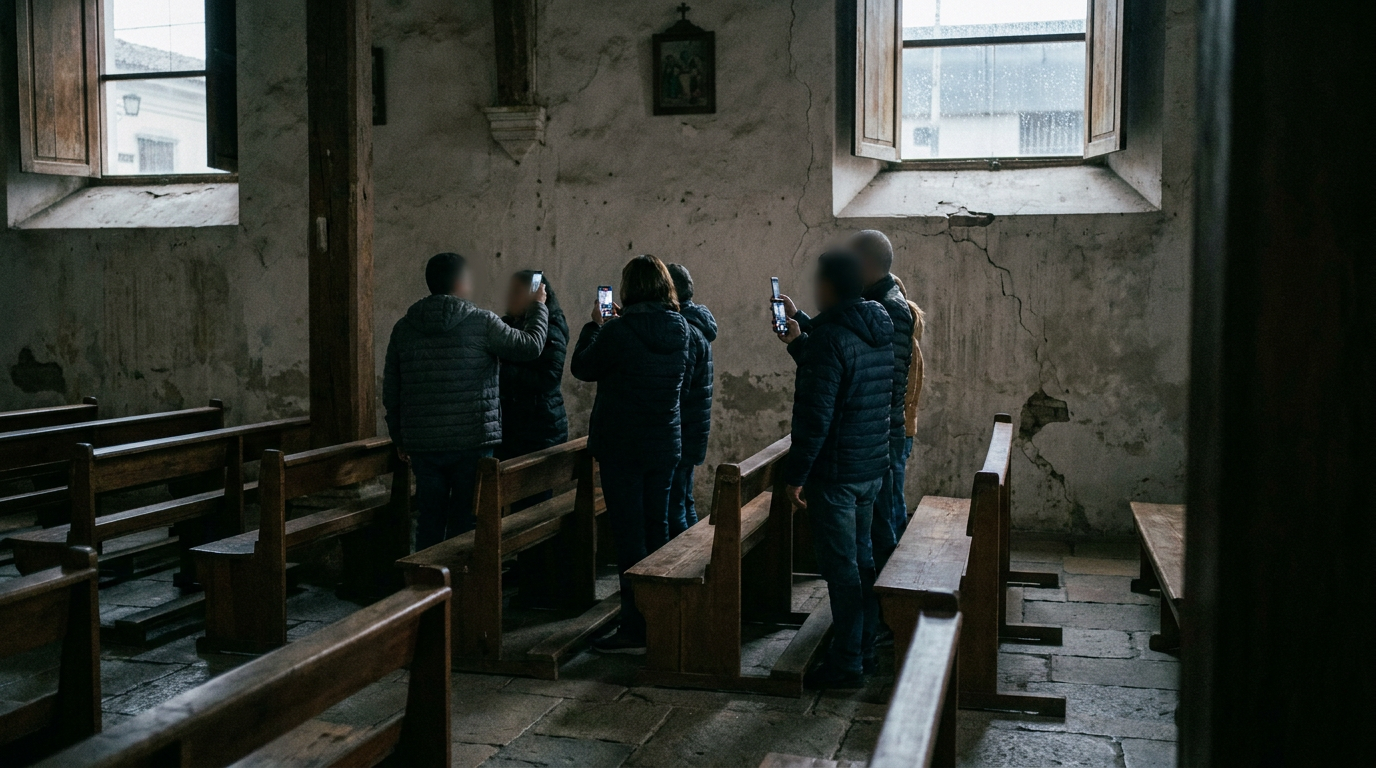
Photographs and video showed her attending Mass and being greeted by supporters inside the church. People gathered closely around her, some embracing her or taking her hands, while others held up mobile phones. The scenes brought her back into direct contact with supporters after an extended absence from the country.
Edmundo González, the former presidential candidate and a close Machado ally, also announced that she was back. González remains in exile himself. His response went beyond welcoming her arrival: he said he intended to return soon, potentially bringing both leading figures in the opposition’s 2024 election campaign back to Venezuela.
The background
Machado established her claim to lead the opposition through an independently organised presidential primary in 2023. She secured more than 90% of the votes in a contest conducted outside the electoral authority controlled by Maduro’s government. That result made her the opposition’s chosen contender, rather than giving her a position within the state.
Maduro’s administration subsequently prevented her from standing for office, citing allegations involving fraud and tax offences. Machado rejected the accusations and maintained that the action against her was politically motivated. The ban meant her primary victory did not translate into a place on the ballot for the presidential election the following year.
González stood against Maduro in her place in 2024. The government-aligned electoral authority declared Maduro the winner, but did not publish the detailed voting tallies behind that announcement. The opposition challenged the result and put copies of tally records online to support its contention that González had won.
Those records mattered because election tallies allow individual polling-station results to be compared with the overall outcome. Publishing a national total alone does not provide the same opportunity to scrutinise how it was reached. The dispute therefore concerned both who had won and whether the official declaration could be checked against the underlying votes.
Maduro retained power despite the opposition’s challenge. Machado’s movement is widely regarded as having defeated him at the ballot box, making the unresolved 2024 contest central to its demand for democratic change. The opposition’s electoral claim preceded the later US intervention; it was not created by Washington’s decision to remove Maduro.
Machado left Venezuela in December 2025 to receive the Nobel peace prize in Norway. The award recognised her peaceful resistance to authoritarian government. Her departure came only weeks before US forces seized Maduro in January, removing the president whom her movement had sought to defeat through an election.
US President Donald Trump did not respond by backing Machado to assume the presidency. Instead, his administration supported Rodríguez, who had served as Maduro’s vice-president. She was sworn in as interim president and subsequently signed an oil agreement with the United States, establishing a working relationship between Washington and Venezuela’s new leadership.
Machado nevertheless praised Trump’s operation against Maduro and later presented him with her Nobel medal. Her support for the US action has therefore existed alongside Washington’s support for her domestic opponent. Removing Maduro and placing the opposition in government proved to be separate developments, rather than successive stages of the same transfer of power.
Her time abroad also included repeated efforts to get home. In September, an adviser said she had been denied entry on seven occasions over the preceding weeks. Attempts to return also followed the devastating earthquake that struck Venezuela’s northern coast in June. Sunday’s appearance followed those unsuccessful efforts.
What people are saying
González welcomed Machado’s arrival as an important moment for Venezuelans and portrayed her as the figure who would lead the next phase of political change. His pledge to follow her home linked his own return to the opposition’s wider objective of advancing political freedom, rather than describing it simply as a personal homecoming.
Machado’s spokesperson, David Smolansky, placed elections at the centre of the response from her team. He characterised her return as progress towards a democratic transition and called for a presidential contest in the near future that would be free, fair and open to verification. That emphasis directly addresses the dispute over the previous election’s results.
Smolansky also thanked Trump, US Secretary of State Marco Rubio, the US government, Congress and allied governments for their support. The breadth of that acknowledgement showed the opposition continuing to address both the American executive and legislators, even while Rodríguez remained the Venezuelan leader supported by the Trump administration.
Asked about Machado on Sunday, Trump said he had not known about her return. He spoke warmly of her, referred to the Nobel medal she had given him and expressed concern for her safety. He also offered a positive assessment of his administration’s dealings with Venezuela, retaining his favourable view of the relationship established since Maduro’s removal.
What happens next
Machado has previously said she would seek the presidency if another election were held. That makes a future vote the route to office she has publicly identified. Her arrival allows her to pursue that ambition from within Venezuela, while the question of participation remains important given the government action that excluded her from the last presidential contest.
A presidential primary and a national election serve different purposes. The first can choose a movement’s candidate; the second determines who holds public office under the country’s electoral arrangements. For Machado, the large majority she won among opposition primary voters is a political mandate to lead her movement, not a substitute for winning a presidential ballot.
The opposition’s stated demand also extends beyond holding a vote. A verifiable election requires results that can be examined and checked, alongside the freedom to campaign and compete. Its focus on those conditions reflects a dispute in which the official winner was announced while the detailed figures needed to test that result were withheld.
González’s promised return is another prospective step. As the candidate who stood in 2024, he carries the opposition’s claim about that election, while Machado has declared an interest in a future presidential race. Their respective positions connect the argument over the previous result with the campaign for a new contest.
Why this matters
Venezuela’s oil agreement with the United States gives the political dispute an economic dimension beyond the country. Oil is traded internationally, and changes in supply and trading relationships can affect the market in which UK businesses and consumers buy fuel.
For UK readers following US foreign policy, the distinction is also important: Washington’s removal of Maduro did not bring his electoral opponents to power. Machado now returns to challenge an interim administration drawn from his government and backed by the United States.
Reporting that informed this story
- The Guardian UK: Exiled opposition leader María Corina Machado returns to Venezuela
- BBC News: Venezuelan opposition leader María Machado returns after months in exile
This article was written independently by The Daily Times from publicly available facts and headlines. No text has been copied from the outlets above.