Ed Sheeran addresses Gaza on stage after tour support acts withdraw
The singer spoke emotionally in Philadelphia after Macklemore’s removal from his tour prompted other musicians to withdraw and protesters to gather.

By Sophie Callaghan, Entertainment Correspondent
Published 20 Sept 2026, 07:01
What happened
Ed Sheeran addressed the suffering of civilians in Gaza during an emotional concert appearance in Philadelphia on Saturday, changing his approach to discussing the conflict publicly after a dispute over the removal of Macklemore from his tour.
The British singer-songwriter, 35, spoke at Lincoln Financial Field on his first return to the stage since the rapper lost his place as an opening act. Sheeran became tearful as he discussed his response to the controversy surrounding his Loop Tour.
At the beginning of the concert, he explained that he had previously sought to keep political commentary separate from his performances. He now regarded the human suffering involved as something he needed to address, rather than a subject he could continue to keep outside his public life.
His remarks included condemnation of the attack at Israel’s Nova music festival on 7 October. He acknowledged its impact on Jewish people and placed that suffering in the context of a much longer history of persecution and trauma.
Turning to Gaza, Sheeran condemned the extent of the destruction and the civilian deaths, particularly those of children. He described the devastation as beyond justification and out of proportion, setting out a position he had previously chosen not to express publicly.
He also raised the treatment of Palestinians in the West Bank. That extended his intervention beyond the fighting in Gaza to conditions in another Palestinian territory, which he said should not be ignored.
At the end of the performance, Sheeran returned to the subject for a different reason: to apologise to audience members who had expected an evening devoted to music. He specifically acknowledged families attending with children, while explaining that he had felt personally compelled to speak at the start.
The background
The dispute developed after Macklemore, 43, whose real name is Benjamin Haggerty, was removed from the tour’s support line-up following his public advocacy for Palestinian freedom. His departure brought the decisions of stadium owners and the tour promoter into the controversy.
Macklemore subsequently gave his account of a conversation with Sheeran about Robert Kraft. Kraft owns Gillette Stadium in Massachusetts through the Kraft Group, making the venue’s position relevant to whether the rapper could appear there as part of the tour.
According to Macklemore, Sheeran told him that Kraft would not permit him to perform at the stadium. The rapper also said Sheeran had described pressure involving other stadium owners, with the continuation of Sheeran’s own shows dependent on removing Macklemore from the bill.
That account alleged consequences for more than a single support appearance. Macklemore’s description was of a choice between retaining him and preserving access to multiple venues. The allegation about coordinated pressure came from Macklemore’s account of what Sheeran had told him.
In an Instagram statement on Tuesday, Sheeran placed responsibility for removing the rapper with the promoter. He said the decision had not been his own. His explanation therefore distinguished his position as the headline performer from the authority exercised over the tour’s arrangements.
The distinction matters in the organisation of large concerts. A headline artist is the public face of a show, but promoters and venue operators have separate roles in making it happen. A dispute over who can perform can consequently involve several parties rather than one musician acting alone.
Tuesday’s statement also set out Sheeran’s earlier position on public comment. He said he held personal views about the conflict but had deliberately kept them private, believing audiences came to his concerts for music rather than political discussion. Saturday’s address marked a departure from that stated approach.
What people are saying
Finneas, the musician and brother of Billie Eilish, withdrew from his planned appearances on the tour. In explaining his decision, he argued that performers should be able to defend people facing oppression without losing the opportunity to appear on stage.
Other withdrawals broadened the disruption beyond Macklemore and Finneas. Aaron Rowe and the band Lukas Graham pulled out, as did Beoga, the folk group with a longstanding role backing Sheeran. The departures therefore affected both scheduled opening performers and musicians with an established connection to the headline act.
Roger Waters, the Pink Floyd co-founder, criticised Sheeran on social media. His objection centred on Sheeran’s failure to challenge Macklemore’s removal, placing the response to the booking decision alongside the wider argument about whether musicians should speak publicly about the conflict.
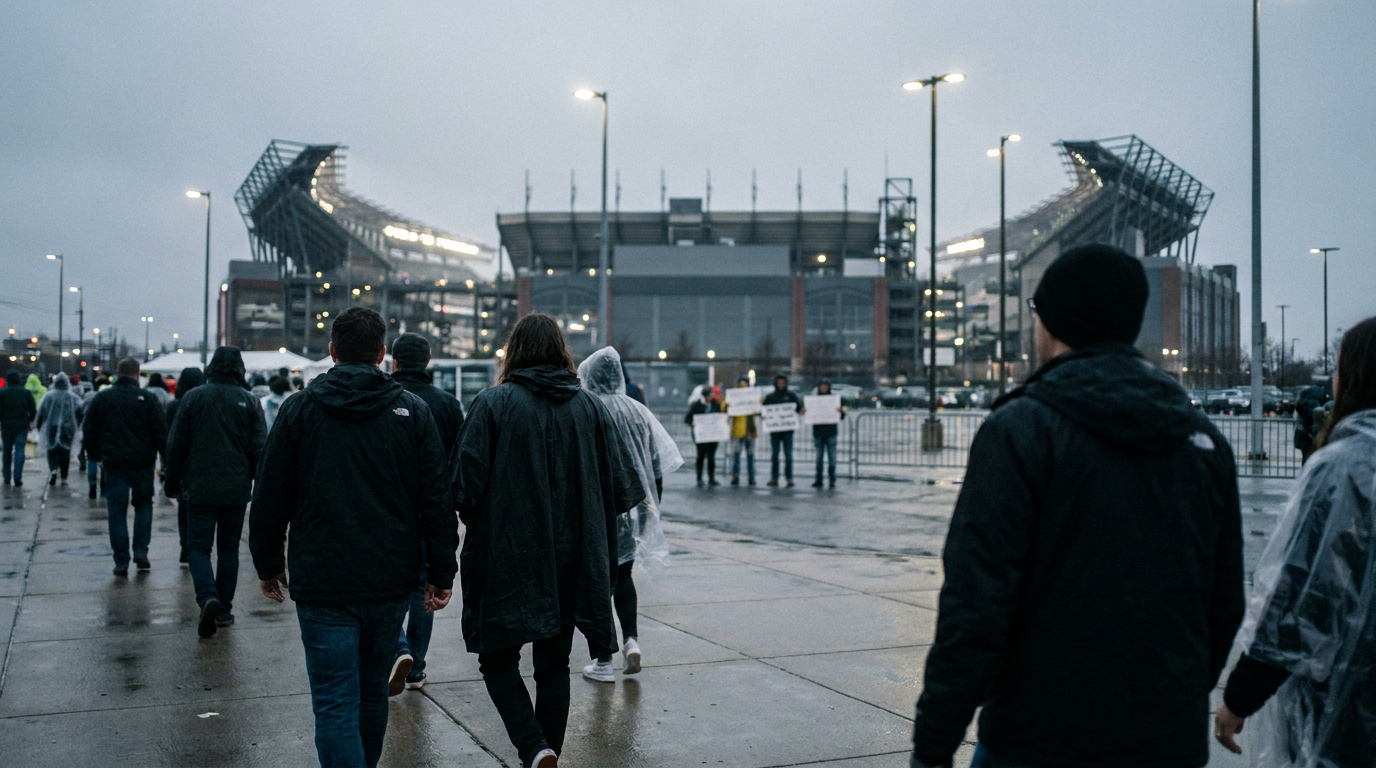
Outside Lincoln Financial Field, pro-Palestinian demonstrators gathered before Saturday’s performance. Their presence brought the protest directly to the venue as concertgoers arrived, while the withdrawals and criticism from fellow musicians had already made the dispute a wider issue for the tour.
Sheeran’s response on stage included an acknowledgement that he had handled aspects of the situation badly. He apologised and spoke about the difficulty of the decisions he had faced, presenting his intervention as a personal response to both the humanitarian crisis and the controversy involving his shows.
What happens next
Sheeran told the Philadelphia audience that he intended to carry on with the tour. That decision keeps the performances moving forward despite the departure of several artists associated with the original line-up.
In his Tuesday explanation, he had identified commitments to fans as one reason for proceeding. People had already organised their attendance, he said, and he did not want to abandon those plans. His position linked the decision to continue with obligations to ticket-holders, rather than solely with the dispute between performers and organisers.
He also pointed to the people earning their living through the tour, including its crew, musicians and support performers. That introduces a practical consideration beyond the headline names: a touring production provides work for people whose roles depend on the concerts taking place.
For a stadium tour, the headline performance and the opening programme are distinct parts of the evening. The withdrawal of support musicians changes that programme even when the main performer continues. Sheeran’s decision to proceed and the other artists’ decisions to leave therefore have different consequences for the same series of concerts.
Why this matters
For UK followers of the British singer, the dispute concerns both his public position and the musicians appearing alongside him. The involvement of Massachusetts stadium ownership and a performance in Philadelphia also shows how decisions taken within an overseas tour can become central to debate about a British artist.
The controversy draws together two different expectations of live music: that a concert offers an escape from political argument, and that artists can use their platform to address civilian suffering. Sheeran’s separate remarks at the beginning and end of the show brought both expectations into the same evening.
Reporting that informed this story
This article was written independently by The Daily Times from publicly available facts and headlines. No text has been copied from the outlets above.