Vienna-bound flight diverted to Sofia after bomb threat
Austrian Airlines’ flight from Tel Aviv landed under fighter escort in Bulgaria, where a search found no threat before passengers continued to Vienna.

By James Reeve, Foreign Affairs Writer
Published 19 Oct 2026, 07:00
What happened
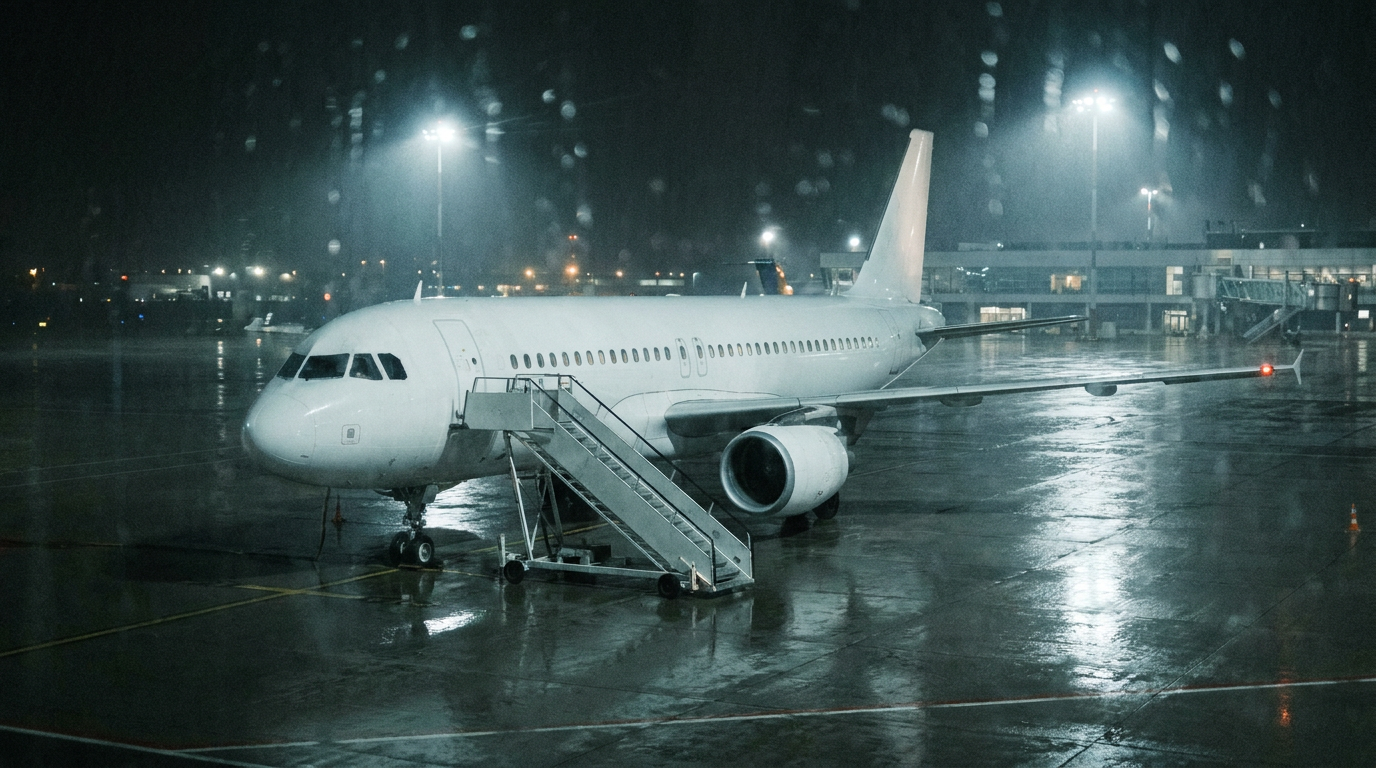
A bomb threat interrupted an Austrian Airlines flight carrying 57 people from Israel to Austria on Sunday night, prompting a diversion to Bulgaria under military escort. The aircraft reached Sofia safely, and everyone on board escaped injury.
The Airbus A320 had departed Ben Gurion Airport in Tel Aviv for Vienna with 51 passengers and six crew members. Its journey instead took it to the Bulgarian capital’s Vasil Levski airport, where passengers were evacuated so that authorities could examine the aircraft.
The alert arose while the airliner was over Romania, close to the Bulgarian border. The crew changed course towards Sofia, and Bulgaria’s air force sent a MiG-29 fighter to accompany the passenger aircraft during the diversion.
About half an hour separated the initial alert from the landing. The aircraft touched down at 7.42pm BST, roughly three hours after leaving Tel Aviv. Flight-tracking information showed it turning south after entering Romanian airspace.
A security inspection subsequently found no threat, Austrian Airlines said. The service then continued to Vienna with all its passengers aboard, completing the journey after the unscheduled stop. Bulgarian authorities opened an investigation into the incident.
The background
The aircraft was operating Austrian Airlines service OS82 between Tel Aviv and Vienna. Although its destination was in Austria, the emergency response took place in Bulgaria after the crew diverted from Romanian airspace, bringing several countries into the flight’s course through the region.
Tracking data also showed the aircraft transmitting transponder code 7700 during the incident. That code signals a general emergency to air traffic services; it does not, by itself, identify a bomb threat or explain the nature of the problem aboard an aircraft.
A transponder is equipment that allows an aircraft to send identifying and other information to air traffic surveillance systems. Emergency codes help controllers recognise a flight requiring attention, alongside the information exchanged directly with its crew by radio.
The diversion followed a separate aviation alert last week involving a passenger flight from Corfu, in Greece, to Nuremberg, in Germany. Croatia and Germany deployed fighters after that aircraft accidentally transmitted a hijacking alert. That incident involved a different emergency signal and an accidental transmission.
Last month, a pilot attempted to hijack a Flydubai service heading to Tel Aviv by attacking its captain. Crew members and passengers overpowered him, and the aircraft landed safely in Saudi Arabia. That episode involved violence aboard the aircraft rather than the threat that prompted Sunday’s diversion.
What people are saying
Bulgaria’s Ministry of Transport and Communications said the crew had reported a bomb-threat signal near Romania. It described the military escort as part of the procedures used to respond to the emergency, with the fighter accompanying the Airbus until it reached Sofia.
The ministry also announced the creation of a crisis response team to bring together the institutions handling the incident. Its account covered both the removal of passengers from the aircraft and the start of the inspection on the ground.
Austrian Airlines initially described the incident as a threat requiring an unscheduled landing. While the aircraft was being searched, the carrier said it intended to arrange prompt alternative transport for passengers and emphasised the safety of those travelling and working aboard.
Its later update gave a different operational outcome from that initial rebooking plan: following the checks, the flight itself completed the trip. The airline’s confirmation that the inspection found no threat closed the immediate safety response around the aircraft, while the Bulgarian investigation remained a separate matter.
How an aircraft emergency is handled
An airborne security alert involves two related tasks: getting the aircraft safely onto the ground and assessing the possible danger. Flight crews and air traffic controllers manage the flight itself, while security authorities can conduct checks after landing.
Diversion decisions are not simply a matter of continuing towards the ticketed destination. In an emergency, crews must consider where they can land and what assistance is accessible there. Weather, runway suitability, aircraft performance and the nature of the emergency can all affect that decision.
A fighter escort serves a different function from an airport security search. Military aircraft can intercept and accompany a civilian flight, but their presence cannot establish whether a suspicious object is inside the cabin, baggage compartments or other parts of the airliner.
Similarly, an emergency transponder transmission is a warning to those monitoring the aircraft, not a finding about what has happened. A general emergency code can be used for different problems. Its meaning therefore needs to be considered alongside communications from the flight crew.
Once an aircraft is on the ground, taking passengers off allows authorities to inspect it without keeping travellers aboard during the checks. An investigation into a threat can then continue independently of the decision about whether the aircraft is safe to fly again.
What happens next
For the passengers on Sunday’s service, onward travel has already taken place. For the Bulgarian authorities, the remaining process is the investigation into the alert. A search finding no danger aboard answers an immediate operational question but does not explain how a threat originated.
In general, enquiries into aviation threats can draw on communications, flight records and accounts from people involved in the response. Those records serve different purposes: operational data establishes the aircraft’s movements, while communications help establish the sequence and content of an alert.
Passenger rights are another practical consideration after an emergency diversion. European Union air passenger rules generally cover services arriving in the EU from outside it when operated by an EU airline, subject to conditions concerning assistance already received in the departure country.
Those rules distinguish between care during disruption and fixed financial compensation. Depending on the length and circumstances of a delay, assistance can include refreshments, meals and accommodation when an overnight stay becomes necessary. A security emergency does not automatically remove those obligations.
Compensation is assessed separately. Security risks can qualify as extraordinary circumstances, potentially exempting an airline from fixed compensation where the legal conditions are met. The fact that a flight diverted is therefore not enough, on its own, to determine a passenger’s entitlement to a payment.
Why this matters
For UK travellers using international connections, the relevant passenger protections depend on the route and operating airline, rather than nationality alone. A journey between Israel and Austria can fall within European rules even though neither the departure nor destination is in the UK.
Travellers who incur costs during disruption should retain receipts, booking details and airline messages. Those documents help distinguish expenses arising from the interruption from a separate compensation claim, and provide a record when asking the carrier to reimburse eligible spending.
Reporting that informed this story
- BBC News: Bomb threat forces Israel to Austria flight into emergency landing
- Daily Mail: Flight from Tel Aviv makes emergency landing in Bulgaria 'after bomb threat'
This article was written independently by The Daily Times from publicly available facts and headlines. No text has been copied from the outlets above.