Ireland players agree to face Israel with black armband protest
The Republic of Ireland squad voted to play Israel in Hungary after one player withdrew, with protests planned over the war in Gaza.

By Tom Brennan, Sports Writer
Published 26 Sept 2026, 18:01
What happened
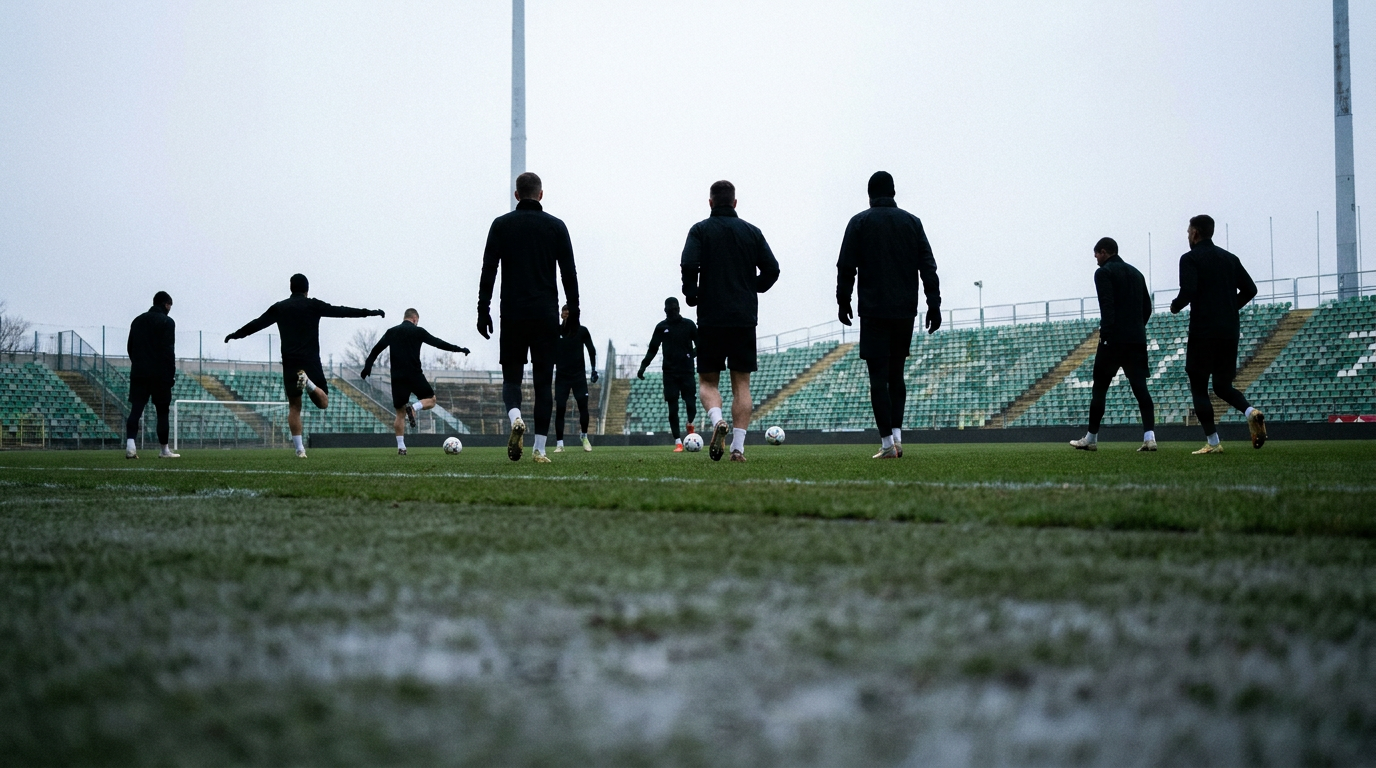
Republic of Ireland players will face Israel in the Nations League on Sunday evening after a squad vote backed playing the fixture. They intend to wear black armbands to commemorate those killed in the Gaza conflict, following prolonged discussions that disrupted their preparations in Hungary.
Goalkeeper Gavin Bazunu withdrew after expressing his discomfort about taking part. Football Association of Ireland chief executive David Courell confirmed that one player had left the squad and said a substantial majority of the remaining players supported proceeding with the match in Debrecen.
The squad also agreed not to take part in the customary handshakes before kick-off or the exchange of pennants between the teams. Those measures allow the players to register their opposition while fulfilling the fixture, rather than joining calls for a boycott.
Saturday's disruption began shortly before a scheduled 09:15 BST news conference involving head coach Heimir Hallgrímsson and a player. It was postponed with 15 minutes' notice, while the squad remained at their hotel to consider whether they should play.
The discussions lasted about four hours and were largely conducted among the players. Coaching staff and senior FAI officials joined at points. Courell said the withdrawal had changed the circumstances facing the squad and required the others to reconsider their positions.
Players began leaving the meeting room at about 13:00 BST. The news conference was then rearranged for 14:30 at Nagyerdei Stadion, with training to follow. The training session itself had been pushed back by five hours as the talks continued.
Courell eventually appeared alongside Hallgrímsson and FAI director of football John Martin to explain the decision. Hallgrímsson said all the other players would train, allowing preparations to resume after a morning dominated by questions about participation rather than the opposition on the pitch.
The background
The controversy began after the Republic of Ireland and Israel were drawn together in Nations League Group B3. Irish Sport for Palestine organised the Stop The Game campaign, pressing for the fixtures to be boycotted because of Israel's military actions in Gaza.
Pressure on the players and the association intensified during the week before the first meeting. Former Republic of Ireland manager Brian Kerr and former international James McClean were among the prominent football figures who supported calls not to play the games.
The war followed the attack on Israel by the armed Palestinian group Hamas on 7 October 2023. About 1,200 people were killed and 251 were taken hostage. Israel responded by launching a large-scale military offensive in Gaza.
More than 73,000 people have been killed in Gaza during that offensive, according to the territory's Hamas-run health ministry. The United Nations considers the ministry's figures reliable. The loss of life has been central to the campaign against the football fixtures.
The FAI had already sought Israel's exclusion from international football. It brought a motion to Uefa last year reflecting the position of its membership, but the proposal was not passed. The association therefore remained subject to its obligations to fulfil the scheduled games.
The debate also overshadowed the build-up to Ireland's opening Nations League match in Kosovo on Thursday, which they lost. Saturday's interruption left Hallgrímsson managing another difficult preparation period, this time immediately before the first of the two Israel fixtures.
What people are saying
Hallgrímsson described the pressure on his players as exceptionally difficult and said neither playing nor refusing to play offered an easy solution. His priority, he said, was to reduce the harm to individuals, the squad and Irish football while finding a course the group could follow.
He also revisited his use of the word genocide earlier in the week, saying he regretted choosing it. He explained that his intended point was that taking part in a football match did not mean accepting events in Gaza or supporting the military action there.
Courell emphasised that different views had been aired during the squad's discussions and that the association respected each person's right to hold an opinion. The decision emerged from a vote after those exchanges, rather than from a unanimous agreement among the players.
An Irish government spokesperson placed responsibility for the fixtures with the FAI and Uefa. The government said the association's decision to play, made in line with its Uefa membership obligations, remained in place following Saturday's engagement with the squad.
Israel Football Association head of communications Shlomi Barzel welcomed the decision at his team's news conference. The Israeli delegation argued that football should remain separate from politics and warned that abandoning that distinction would create wider problems for the sport.
Israel's officials said their team would take part in the usual pre-match formalities. Head coach Ran Ben-Shimon also said he would shake hands with Hallgrímsson, setting out his own approach despite the Irish players' decision to omit parts of the ceremony.
What happens next
Hallgrímsson expected further conversations within the Irish camp on Saturday evening and Sunday. He said the effect of the disrupted build-up on performance would become apparent in the match, while acknowledging that the players faced a situation in which any decision would attract disagreement.
The squad has asked to be released from media duties for the rest of the international window. That request forms part of its response alongside the matchday gestures, extending the players' proposed measures beyond what spectators will see before kick-off.
Israel also plans to challenge both yellow cards shown to Saied Abu Farchi in Thursday's defeat by Austria. His second booking followed a celebration after an equalising goal, when he pulled up a corner flag. Match officials interpreted his actions as imitating the firing of a rifle.
The Israeli delegation disputes that interpretation and says Abu Farchi was acting out a snooker shot. Its spokesperson referred to Irish former world champion Ken Doherty when explaining the celebration. The disciplinary challenge is a separate issue confronting Israel as preparations continue for Sunday's game.
Why this matters
For supporters following the Republic of Ireland from the UK, the schedule includes another meeting with Israel next Sunday. That return fixture is designated as Ireland's home match but will be played in Serbia. The players' planned gestures therefore concern two games staged outside either team's own country, rather than a single evening in Hungary.
The squad also intends to make a substantial charitable contribution using fees from both Israel matches and the Austria fixture at Dublin's Aviva Stadium on Thursday. That commitment brings a third game into the players' response, linking their participation during the international window to financial support for charity as well as their visible protests.
Reporting that informed this story
- The Guardian UK: Republic of Ireland players to wear black armbands after agreeing to play Israel
- BBC News: Republic of Ireland to wear black armbands for Israel game
This article was written independently by The Daily Times from publicly available facts and headlines. No text has been copied from the outlets above.