European diplomats attacked by Israeli settlers in West Bank
Three people were injured in Taybeh as settlers targeted Palestinians and European visitors during the olive harvest, prompting calls for prosecutions.
By Robert Aldridge, Senior Reporter
Published 18 Oct 2026, 07:00
What happened
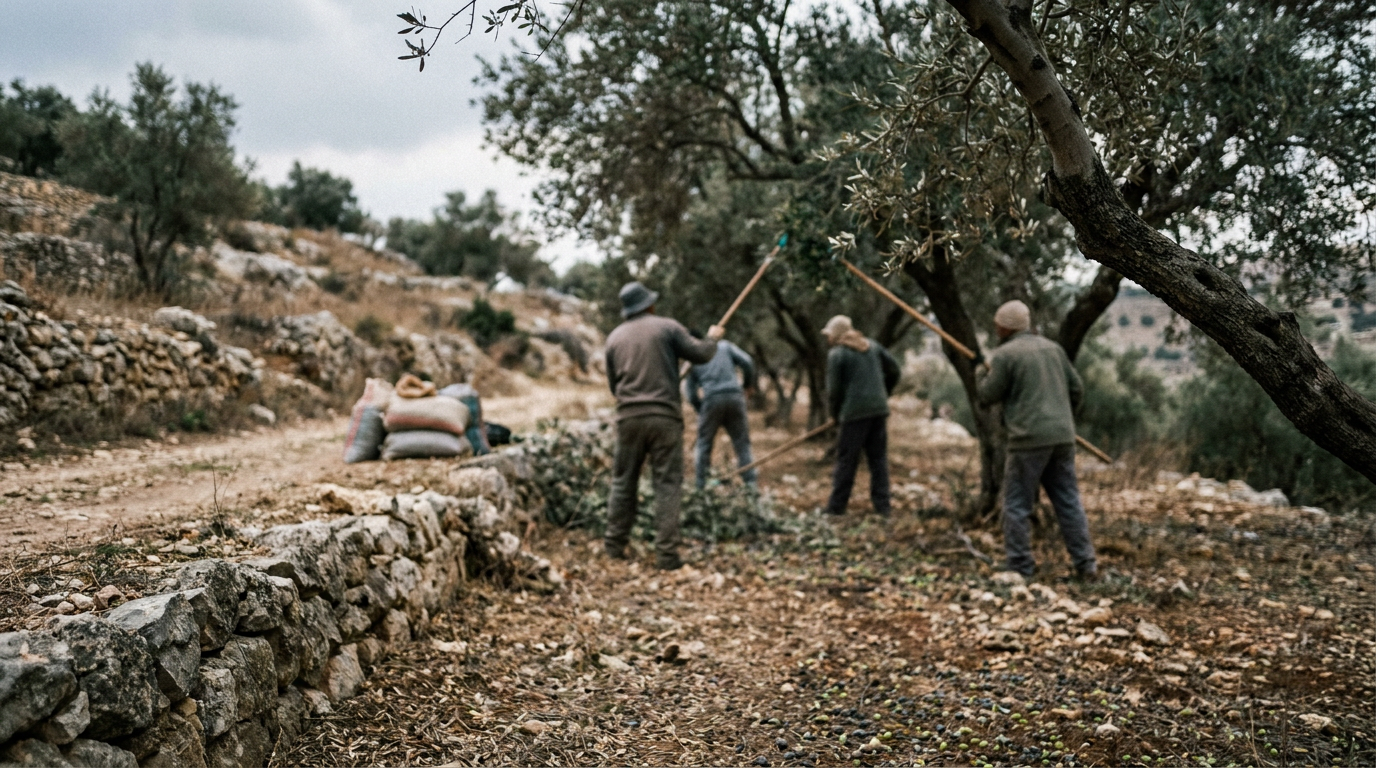
Masked Israeli settlers attacked a European diplomatic delegation visiting the occupied West Bank on Saturday, injuring three people and damaging a Belgian diplomatic vehicle. The violence took place near Taybeh, a predominantly Christian Palestinian community close to Ramallah, where residents were gathering olives.
The visitors included representatives of Belgium, France and Poland, alongside Catholic clergy. They had joined Palestinians on land belonging to Taybeh during a visit to examine conditions for the harvest, which has been disrupted by frequent settler attacks.
Bernard Baudoux, the mayor of Aulnoye-Aymeries in northern France, was knocked down as he tried to get into a vehicle bearing diplomatic number plates. He was wearing his French mayoral sash. Describing the assault afterwards, he said his attackers kicked him and struck him with iron bars.
A group of seven men, some carrying clubs, also threatened the mayor’s wife and Vincent Dollmann, the archbishop of Cambrai. The French consul general in Jerusalem and his wife were among those taking part in the visit, together with the Belgian and Polish consuls.
Before approaching the international visitors, settlers had targeted Palestinians harvesting on the lower hillside. They took olives and assaulted a woman in her 70s. Another Palestinian suffered a head wound that required six stitches. During the subsequent confrontation with the delegation, a window was smashed in an armoured vehicle belonging to Belgium’s mission.
The Israel Defense Forces condemned the assault and opened an inquiry. Its initial findings indicated that soldiers were not at the location when the visitors were attacked. Israeli police and forensic investigators are also examining the incident.
The background
Baudoux had travelled to Taybeh for the launch of a twinning arrangement with Aulnoye-Aymeries. His presence therefore combined a municipal link between the two communities with a visit to Palestinian olive growers during their annual harvest.
The harvesting season began in late September. Olive growing has both economic and cultural importance for Palestinian communities, but violence has repeatedly interrupted efforts to collect the crop. Israeli rights organisation Yesh Din recorded more than 170 settler attacks from 27 September onwards.
Palestinian authorities said at least four people had been killed and more than 100 injured in the violence over that period. They also recorded damage to thousands of trees, extending the consequences beyond the immediate assaults on people working in the groves.
Access restrictions have added to the difficulties this year. Israel introduced rules preventing Palestinians from harvesting trees in Area C, the part of the West Bank under Israeli military control. Most of the territory’s agricultural land lies within that area.
The day before the attack in Taybeh, settlers assaulted Palestinians and Washington Post photographer Heidi Levine in Abu Falah, another West Bank town. Levine, who was covering the harvest, suffered serious injuries and underwent surgery on Saturday morning. A spokesperson at Israel’s Beilinson hospital described her condition afterwards as moderate.
Taybeh’s parish priest, Father Bashar Fawadleh, said residents had endured intensifying settler violence for years. He said the targeting of foreign diplomats was new for the community, distinguishing Saturday’s incident from the attacks local Palestinians had already experienced.
What people are saying
Belgium’s deputy prime minister and foreign minister, Maxime Prévot, demanded accountability for the assault on his country’s consul general and the other visitors. He said Israel’s obligations as the occupying power included protecting Palestinians and ensuring that journalists and diplomatic personnel could work safely.
Prévot linked the violence to Israel’s settlement policy and called for the occupation of Palestinian territory to end. He also said Belgium would keep pressing for European Union sanctions against violent settlers and those supporting them, placing the incident within a wider argument over international action.
Israel’s foreign minister, Gideon Sa’ar, condemned the attackers and said his ministry was communicating with the ambassadors of the countries involved. He also criticised the absence of advance coordination with the Israeli military, arguing that such arrangements could have helped protect the delegation.
An unnamed western diplomat challenged that position, saying a requirement to give advance notice of diplomatic travel conflicted with diplomatic conventions and international law. The diplomat argued that Israel’s security responsibilities in Areas B and C obliged it to safeguard people there.
Prime Minister Benjamin Netanyahu’s office took a different approach from the military’s condemnation. It questioned whether circulating footage established the full course of events or responsibility for individual actions, and suggested the allegations formed part of an organised effort to damage Israel’s reputation during the harvest.
Baudoux blamed tolerance of settler violence by Israel’s right-wing government. He contrasted his own prospect of returning home with the circumstances facing Palestinians who would remain in Taybeh. Fawadleh similarly warned that the assault raised serious questions about farmers’ protection once international visitors had left.
The attack on Levine also drew criticism from senior American officials. US Secretary of State Marco Rubio said Washington was pressing Israel to take stronger action against settler attacks. Mike Huckabee, the US ambassador to Israel and a strong supporter of the country, characterised the assault as terrorism and demanded prosecution.
Israeli opposition politician Gadi Eisenkot, a former general, accused the government of enabling Jewish extremist violence. Although he supports Israeli settlement expansion, he argued that the attackers were damaging both settlement interests and national security. Former prime minister Ehud Olmert has called for International Criminal Court intervention over impunity for violence against Palestinians.
What happens next
The Israeli inquiries will seek to reconstruct the confrontation and identify those responsible. Netanyahu’s office said police and forensic investigators were working to establish individual responsibility, while the military’s preliminary examination has addressed whether its personnel were present.
Belgium’s response will also continue through European diplomacy. Its stated push for sanctions covers not only people directly responsible for violence but also their supporters. That approach sits alongside its demand that Israeli authorities bring the assailants to justice.
The dispute over military coordination concerns the arrangements for diplomatic visits in the West Bank. Sa’ar has presented coordination as a security measure; the western diplomat’s objection centres on freedom of diplomatic movement and the responsibilities of the authority controlling security.
Why this matters
For UK readers following British and European engagement in the region, the attack has brought the safety of diplomatic visits into direct focus. Officials from three European countries were present, while Belgium’s proposed response would involve the European Union rather than its national authorities alone.
The effects on Palestinian households are more immediate: injuries, lost olives, damaged trees and restrictions on reaching agricultural land. The presence of foreign officials, clergy and journalists did not prevent the latest violence, leaving the protection of people gathering an economically important crop at the centre of demands for action.
Reporting that informed this story
- BBC News: European diplomats attacked by Israeli settlers in West Bank
- The Guardian UK: Israeli settlers attack European diplomats in West Bank
This article was written independently by The Daily Times from publicly available facts and headlines. No text has been copied from the outlets above.