Jeffrey Donaldson faces rape investigation over Parliament allegation
The Metropolitan Police are investigating an allegation against the former DUP leader concerning a woman at the Palace of Westminster in 2016.

By Robert Aldridge, Senior Reporter
Published 21 Oct 2026, 18:01
What happened
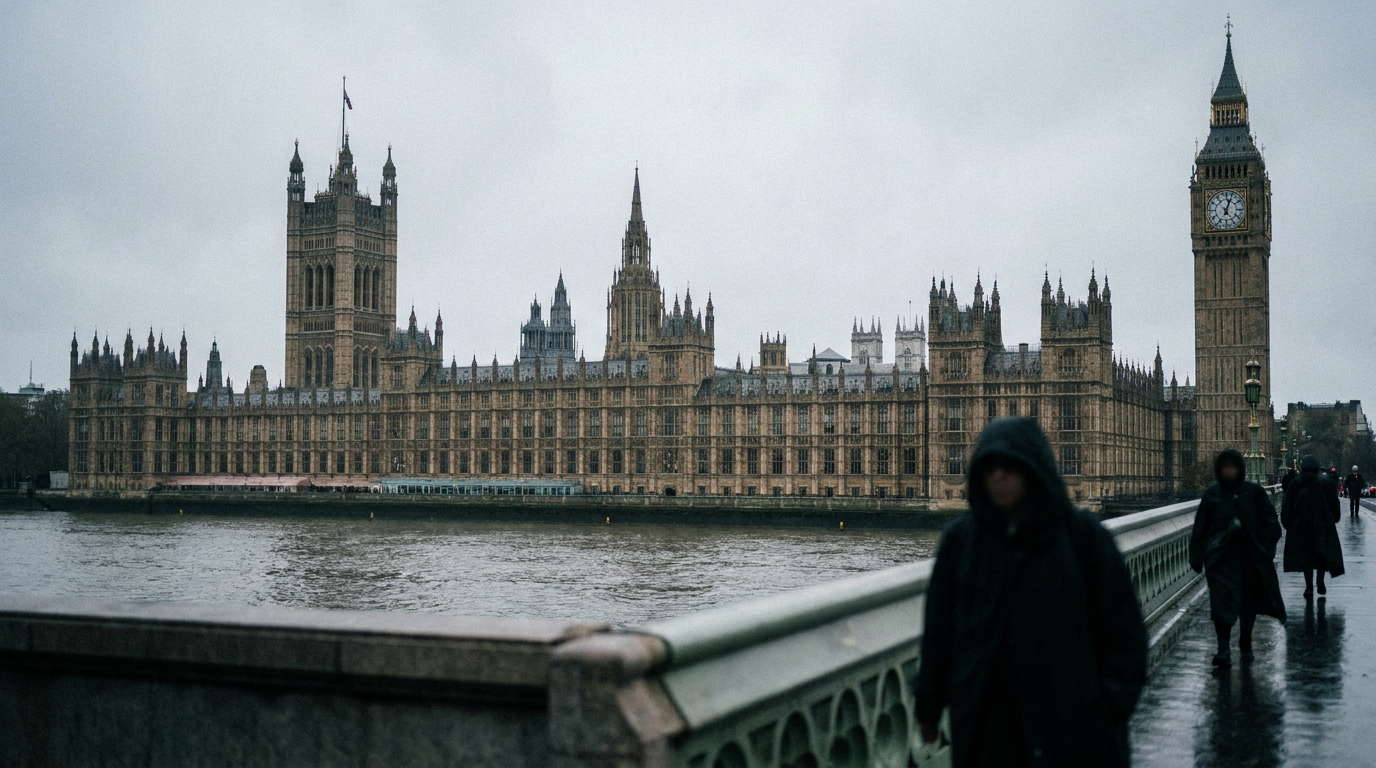
Jeffrey Donaldson is under investigation over an allegation that he raped a woman at the Palace of Westminster in 2016. The London inquiry concerns the former Democratic Unionist Party leader, who was sentenced last week to 15 years in prison for separate child sexual offences.
The Metropolitan Police received the allegation on 13 October through a referral from the Police Service of Northern Ireland. Officers in Northern Ireland had interviewed the woman before passing the case to London, where the alleged offence took place.
The woman, who is from Northern Ireland, alleges that Donaldson invited her to visit the House of Commons. Her account includes a tour during which he introduced her to prominent figures, followed by dinner and a visit to the DUP’s parliamentary offices.
She has also alleged that, in his office, Donaldson tried to persuade her to drink vodka shots, attempted to kiss her and put his hand up her skirt. The allegation of rape concerns the same woman and the same year.
Police say specialist officers are supporting the woman. The Metropolitan Police described the inquiry as being at an early stage and said it had made no arrests in connection with it.
The force’s public statement identified the subject of the investigation as a man now aged 63 but did not name him. Donaldson is the former MP under investigation; the allegation is not a finding of guilt.
The background
Donaldson led the Democratic Unionist Party from 2021 until 2024. The alleged incident at Westminster therefore predates his leadership of the party, whose parliamentary offices feature in the woman’s account of her visit.
The woman’s allegations of sexual assault became public in July. The case now being investigated includes an allegation of rape, rather than being confined to the alleged unwanted touching described at that time.
Her account also includes later contact during the Covid lockdown. She said she received a photograph of Donaldson with a Snapchat filter over his face, accompanied by a message about being ready to return to normal life after isolation.
Donaldson’s prison sentence relates to offences against two other victims. Those offences took place between 1985 and 2008 and included one count of rape. He is seeking to appeal against his convictions.
The distinction between the cases is important. The prison term follows convictions for offences within that earlier period; the Westminster inquiry concerns an allegation about conduct in 2016. A conviction in one case does not establish whether a different alleged offence occurred.
The involvement of two police forces reflects the geography of the allegation. A person can report an alleged crime to police where they live, while responsibility for investigating may rest with the force covering the place where it is said to have happened.
The Police Service of Northern Ireland operates within Northern Ireland’s criminal justice system. The Metropolitan Police investigate offences within their London remit. Passing an allegation between them allows the force responsible for the alleged location to take the inquiry forward.
What people are saying
The Metropolitan Police have confirmed that their referral concerns an allegation involving one woman. Their account establishes the scope of this investigation: it is not a statement that several complainants have made allegations about events at Westminster.
The force also said inquiries remained active. That describes a police evidence-gathering process, rather than a charging decision or a court proceeding. Police confirmation that an investigation exists does not amount to an endorsement of an allegation.
Specialist support for a complainant is a separate part of that process. Officers dealing with sexual offence allegations can help explain investigative steps and maintain contact as a case progresses. Providing that support does not determine the eventual legal outcome.
Donaldson’s effort to appeal concerns the convictions for which he has already been sentenced. Seeking an appeal is a request for those convictions to be reviewed through the courts; it does not itself overturn them or dispose of the separate allegation now before London detectives.
What happens next
Police investigations into alleged sexual offences can involve taking detailed witness accounts, seeking relevant records and examining material that may help establish what happened. Investigators must consider evidence that points away from a suspect as well as evidence that supports an allegation.
Because the alleged incident dates to 2016, this inquiry concerns events about a decade ago. England and Wales do not impose a general time limit on prosecuting rape. The passage of time therefore does not, by itself, prevent an allegation from being investigated or a prosecution from being brought.
For an allegation arising in London, any decision to prosecute rape would fall within the criminal justice system of England and Wales. The Crown Prosecution Service makes charging decisions in rape cases, assessing the evidence gathered by police rather than treating a complaint alone as sufficient.
Prosecutors apply a two-part test: whether the evidence offers a realistic prospect of conviction and whether a prosecution is in the public interest. That charging threshold is distinct from the test at trial, where the prosecution must prove guilt beyond reasonable doubt.
An arrest is not a prerequisite for every investigative step. Police can gather evidence before deciding whether to arrest a suspect, and interviews can take place under different legal arrangements. The absence of an arrest does not mean an investigation has ended.
Nor does the alleged location create an exemption from ordinary criminal law. Parliamentary privilege protects parliamentary proceedings, including speech in debates, but it is not a general immunity from investigation for alleged criminal conduct within the parliamentary estate.
If a case reaches court, rules governing evidence and fair proceedings determine what can be put before a jury. A defendant’s previous convictions are not automatically proof of a new allegation; their admissibility is governed by legal rules rather than public familiarity with an earlier case.
Why this matters
For people reporting sexual offences in the UK, the referral illustrates how an allegation can move between police jurisdictions when the complainant and the alleged location are in different places. Complainants in sexual offence cases also normally have lifelong legal anonymity, restricting publication of their names and other details likely to identify them.
For those following this case, the practical distinction is between an existing sentence, a proposed challenge to convictions and a separate police investigation. Each has a different legal function. The Westminster allegation must be examined on its own evidence, with protection for the woman’s identity and the presumption of innocence applying to the allegation under investigation.
Reporting that informed this story
- The Guardian Politics: Jeffrey Donaldson investigated over alleged rape in UK parliament
- BBC News: Jailed former DUP leader Jeffrey Donaldson being investigated over alleged rape inside Parliament
This article was written independently by The Daily Times from publicly available facts and headlines. No text has been copied from the outlets above.