Story Highlight
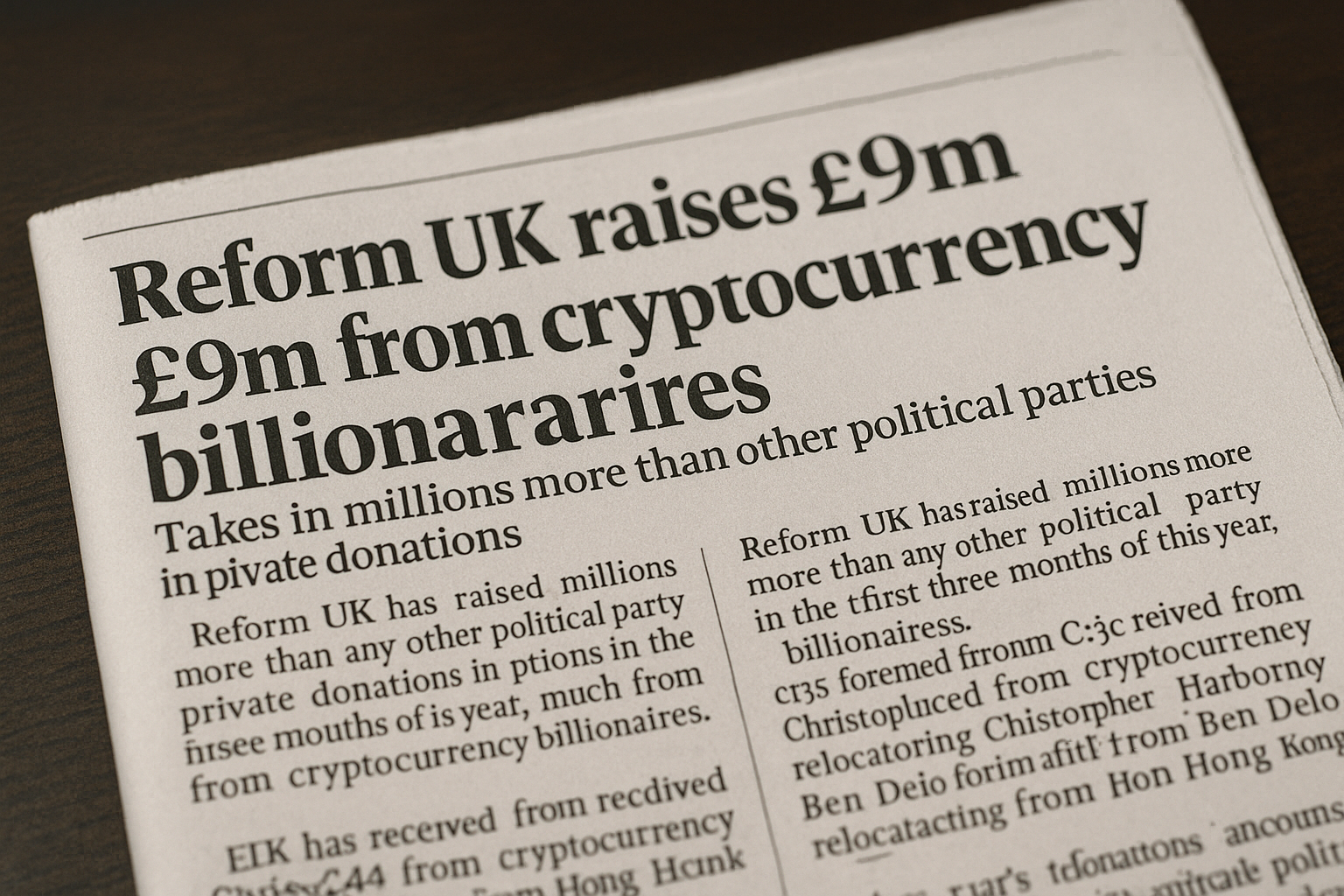
– Reform UK raised £9m from private donations in Q1 2023.
– Major donations from cryptocurrency billionaires Harborne and Delo.
– Reform’s fundraising exceeded Labour and Conservatives by £5m.
– Concerns raised over influence of wealthy donors in politics.
– GB News paid over £1m to Reform MPs, under scrutiny.
Full Story
Reform UK is significantly outpacing other political parties in fundraising, amassing £9 million in private donations in the first quarter of the year, predominantly from the cryptocurrency sector. Key contributions include a £3 million donation from Christopher Harborne, a dual British-Thai citizen with extensive investments in cryptocurrency and aviation, alongside £4 million from entrepreneur Ben Delo, who is transitioning from Hong Kong to the UK. Combined, these donations represent approximately one third of private political funding during this period.
In comparison, both Labour and the Conservatives raised around £4 million each from private sources. Harborne’s total contributions to Reform over the past year now stand at £15 million, whereas Delo is a newcomer to the party’s donor list. Beyond these substantial gifts, Reform received £1 million from David Grainger, who invests in health and biotechnology, and saw contributions from other new supporters such as Navroz Udwadia, co-founder of New Wave Global.
Notable smaller donations include £130,000 from Maria Rost, believed to be the spouse of US-based investor John Rost, and £50,000 each from Nicolas Homsy, known for his Middle Eastern business ties, and RMB Associates, owned by Robin Birley, a nightclub proprietor.
The Conservatives gained a boost from Mary V Doran’s £1.1 million gift, while Labour’s financial support primarily came from long-standing contributors like David Sainsbury and Gary Lubner, along with significant backing from trade unions. The total donations for this quarter were more than double those from the same period last year, underscoring the growing influence of cryptocurrency investors on political finance.
Susan Hawley, executive director of the Spotlight on Corruption campaign group, remarked that these figures unveil the significant amount of money entering British politics, prompting concerns over who is funding parties. She stated, “Time and again, we see a small number of wealthy individuals and opaque corporate structures playing an outsized role in financing our democracy.”
In response to these fundraising dynamics, Keir Starmer has reiterated calls for a cap on donations, while asserting the government’s intent to focus on limiting foreign contributions and pausing cryptocurrency donations.
The Electoral Commission’s latest donation report highlights £24.7 million in total political donations during the first quarter of 2026. Jackie Killeen, the Commission’s director of regulation, noted the high transparency levels within the UK’s political finance system, stressing the importance of public confidence in how parties are funded. She advocated for necessary legal reforms to enhance donation controls.
Furthermore, recent scrutiny by DeSmog has revealed that the right-leaning broadcaster GB News has compensated Reform MPs over £1 million, with Nigel Farage receiving £700,000 since his election, while MP Lee Anderson has made £300,000 from the channel, which is backed by Sir Paul Marshall and the Dubai-based Legatum investment firm. This has prompted discussions within the standards committee regarding the regulation of MPs’ media earnings.