Story Highlight
– Technology firms propose microchip tracking for convicted criminals.
– Existing options include electronic ankle bracelets and GPS devices.
– UK uses tags to monitor court-ordered movement restrictions.
– Human rights advocates criticize invasive tracking solutions.
– Future advancements may enhance public safety and rehabilitation.
Full Story
Technology companies are reportedly advocating for the implementation of tracking devices or microchips implanted beneath the skin of convicted offenders as a means of oversight, both while they are incarcerated and after their release, as revealed by a recent report. This proposal raises significant ethical concerns regarding human rights, although advancements in technology could potentially make such measures feasible.
Currently, electronic monitoring is commonly conducted via ankle bracelets. These devices typically operate using radio frequency signals that connect to a base station, akin to home Wi-Fi networks, allowing for a designated range in and around the wearer’s residence. Some models, on the other hand, utilise GPS to ascertain the individual’s location, although they require periodic recharging.
On the market, products like Apple’s AirTags and Samsung’s SmartTag enable users to track various items and individuals. These consumer technologies are integrated with mobile applications, facilitating monitoring through a secure network that can leverage other users’ smartphones.
In the UK, several technologies employing GPS and wireless systems are available to monitor individuals under court-imposed movement restrictions. The practice of electronic tagging was introduced in the UK in 1999 as an alternative to imprisonment. The government identifies three primary forms of tagging: curfew tags, location tags, and alcohol tags. Curfew tags monitor an individual’s whereabouts from a home base unit during specified hours, while location tags offer greater flexibility by tracking movements and identifying areas that should be avoided, including locations for rehabilitation appointments. Alcohol tags measure a person’s sweat to detect alcohol levels, aiming to curb offences linked to intoxication. A governmental report from 2022 indicated that approximately 97% of offenders with alcohol tags remained sober.
The wider application of electronic tagging could facilitate earlier parole for many prisoners, subsequently alleviating overcrowding in correctional facilities. This could benefit societal structures by supporting the maintenance of employment and familial ties.
Nevertheless, challenges such as signal loss and false alerts concerning breaches of court orders have been documented in various studies. A 2019 study by the Scottish Government noted the pros and cons of these monitoring technologies. As advancements continue, it is anticipated that these issues will be addressed, leading to more efficient applications in the future.
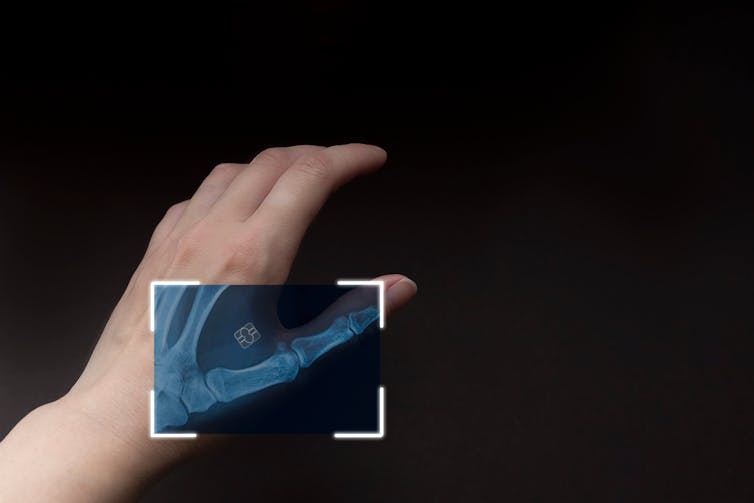
The concept of microchip implants under the skin has been explored historically for purposes such as identity verification, contactless payments, and granting access to secure locations. One implantation type utilises a radio frequency identification (RFID) tag, which is comparable in size to a grain of rice. This technology could theoretically be adapted to create a location tracking system integrated with a monitoring network.
RFID tags are commonly employed in retail settings to deter theft by attaching them to high-value items, preventing unpurchased removal from stores.
However, human rights advocates have condemned the tech companies’ suggestions for microchip tracking, labelling them as “dystopian.” Critics argue that making invasive surgical procedures a requisite for individuals allows technology firms to collect potentially sensitive personal information, surpassing the limits of punitive actions related to restricting an individual’s movement.
As electronic monitoring technologies, supported by artificial intelligence, continue to evolve rapidly, the future holds potential for enhancing public safety, aiding rehabilitation, and reducing fiscal burdens on public resources. Nevertheless, it is crucial to deliberate on the degree of integration we wish to allow for such technologies within our societal framework.