Headteacher murder trial shown footage of car before collision
Simon Richardson denies murdering cyclist Michael Mullins, who prosecutors say was dragged beneath a car for 1.3 miles after a collision in Trafford.
By Hannah Whitfield, Health Correspondent
Published 20 Oct 2026, 07:01
What happened
Jurors in the trial of a driver accused of murdering a headteacher have watched footage of a car overtaking traffic shortly before the fatal collision. Simon Richardson is accused of hitting Michael Mullins, 56, as he cycled home from Stretford Grammar School on 20 April.
The prosecution alleges that Mr Mullins became trapped beneath Richardson’s black Volvo XC90 and was dragged for 1.3 miles. The case is being heard at Manchester Minshull Street Crown Court, where Richardson denies murder and the alternative charges of manslaughter and dangerous driving.
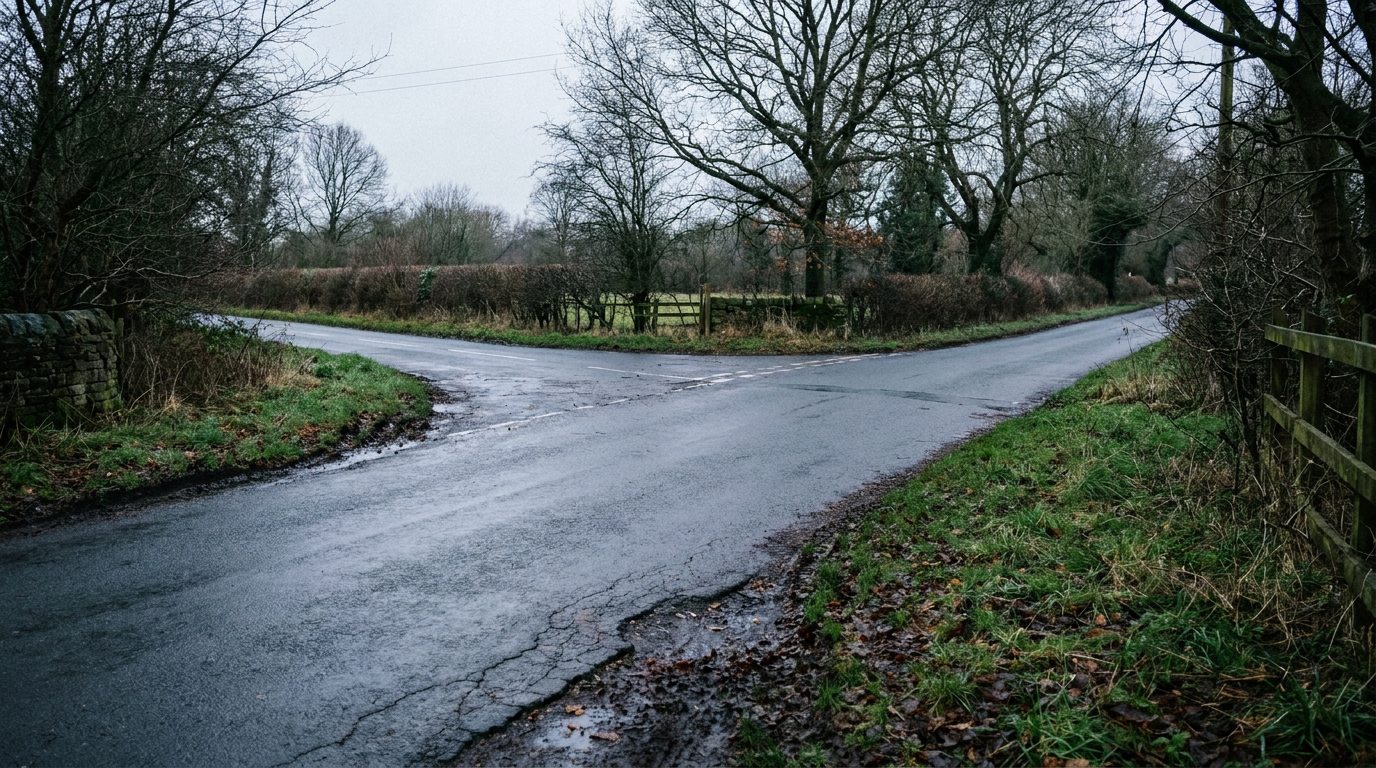
The collision happened at the junction of Dunham Road and Warburton Lane in Warburton, Trafford. The court heard that the Volvo passed through give-way signs and struck Mr Mullins, whose foot became caught in the vehicle’s suspension.
Prosecutors allege that Richardson accelerated rather than stopping at the collision, reaching 60mph on a road with a 30mph limit. Their case is that Mr Mullins remained alive while being carried beneath the vehicle.
They also allege that Richardson subsequently stopped and attempted to free the injured cyclist from underneath the car. According to the prosecution, he abandoned that attempt and continued driving while Mr Mullins was still trapped.
Mr Mullins eventually came free and was found on a grass verge. Paramedics treated him, but he was pronounced dead at the scene 40 minutes later. He was married and had two children.
The background
Mr Mullins was travelling home from his work as headteacher when the collision occurred. His journey placed him on a bicycle at the Warburton junction, where the prosecution says the Volvo entered without giving way.
The allegation before the court concerns both the impact and Richardson’s conduct afterwards. For a murder charge, the legal distinction is important: causing a death does not, by itself, establish murder. Prosecutors must prove the necessary intention as well as responsibility for the death.
Under the law of England and Wales, murder requires an intention to kill or to cause really serious injury. An intention to kill is therefore not the only state of mind capable of supporting a murder conviction. Whether the prosecution has proved the required intention is a question for the jury.
Manslaughter is a separate homicide offence with different legal requirements. Its presence as an alternative charge does not determine the outcome of the murder allegation; the jury must apply the judge’s directions to the evidence relevant to each offence.
The footage and other evidence
The Crown Prosecution Service has released a 17-second video that was previously played to jurors. Recorded from a vehicle behind the Volvo, it shows the car travelling behind two other vehicles before moving into the opposing lane to overtake on Dunham Road.
The clip concerns the driving before the collision. That makes its place in the sequence important: evidence of the approach to a junction addresses a different part of the journey from evidence about what happened after a cyclist became trapped beneath the car.
A separate image released by the Crown Prosecution Service shows Richardson at the wheel of the Volvo. Prosecutors identify it as an automatic number plate recognition camera image taken shortly after the collision. The driver’s window is fully open, and the front right of the bonnet appears dented.
Automatic number plate recognition, commonly shortened to ANPR, uses cameras to capture vehicle registration details. In a criminal case, camera records can help establish a vehicle’s movements, while the images themselves may also provide evidence about its appearance at a particular point.
The court has also heard about recordings from an Apple Watch worn by Mr Mullins. Those recordings form part of the medical evidence considered when assessing whether he survived the initial impact and what happened to him afterwards.
What people are saying
Witnesses described the Volvo travelling at high speed towards the Dunham Road and Warburton Lane junction before the collision. Their accounts concern the car’s movement on the approach, alongside the overtaking captured by the camera in the following vehicle.
On the fifth day of the trial, consultant in emergency medicine Dr Terrence McGloughlin gave evidence about Mr Mullins’s injuries and survival. Prosecutor Phil Barnes KC asked him whether, in his opinion, the headteacher had lived through the initial impact. The doctor said his assessment of the evidence was that he had.
Dr McGloughlin distinguished survival from consciousness. Asked whether Mr Mullins had been unconscious throughout the time he was dragged beneath the vehicle, he said the evidence did not allow him to determine whether the cyclist was conscious or unconscious.
The consultant discussed several factors in the fatal medical sequence, including multiple traumatic injuries and respiratory failure. He also explained how blood loss can produce hypovolaemic shock, a condition in which insufficient circulating blood compromises the body’s circulation and can lead to circulatory failure.
Dr McGloughlin said the Apple Watch continued recording Mr Mullins’s heart activity and helped identify the point at which he came free of the car. His evidence brought the device’s recordings into the assessment of the headteacher’s physical condition during the incident.
What happens next
The trial continues, with the jury responsible for deciding whether the prosecution has proved the charges. Richardson remains presumed innocent. The allegations about his driving, his actions after the collision and his responsibility for Mr Mullins’s death must be assessed through the trial process.
The prosecution bears the burden of proof. In a criminal trial, jurors must be sure of guilt before convicting; a defendant does not have to prove innocence. That standard applies even where the evidence includes distressing accounts of a death.
The judge’s role includes directing jurors on the law governing the offences they must consider. The jury’s role is to decide the facts, weighing witness testimony, expert opinions and recorded evidence rather than treating any single category as automatically decisive.
Expert medical evidence has a particular function within that process. It can assist the jury on questions such as survival, injuries and physiological effects, but the expert does not decide whether the defendant is guilty of murder or another offence.
Dangerous driving also has its own legal test. It concerns driving that falls far below the standard expected of a competent and careful driver, where the danger would be obvious to such a driver. That assessment is distinct from the intention required for murder.
Why this matters
For road users, the case concerns a familiar setting: a cyclist’s commute, an overtaking vehicle and a junction controlled by give-way signs. Such controls require drivers to give priority to traffic on the road they are entering; they are not simply advice to slow down.
The proceedings also illustrate why criminal responsibility after a fatal collision depends on more than the fact of a death. For those following the case, the verdict will turn on the offences proved in court, with separate legal questions governing dangerous driving, manslaughter and murder.
Reporting that informed this story
This article was written independently by The Daily Times from publicly available facts and headlines. No text has been copied from the outlets above.