Kosovo ex-president Hashim Thaçi jailed for 25 years for war crimes
Judges in The Hague convicted the former Kosovo Liberation Army commander of offences including murder and torture after a three-year trial.

By Robert Aldridge, Senior Reporter
Published 16 Sept 2026, 13:01
What happened
Hashim Thaçi, the former president of Kosovo, has received a 25-year prison sentence for war crimes committed during the conflict with Serbia in the late 1990s. The judgment holds a central figure in Kosovo’s independence movement criminally accountable for abuses during that struggle.
The Kosovo Specialist Chambers in The Hague delivered the verdict on Wednesday 16 September. Thaçi, 58, was convicted of offences including murder, unlawful arrests, torture and cruel treatment after proceedings lasting three years. Judges found that a number of other allegations against him had not been proved.
Three other former senior Kosovo Liberation Army commanders stood trial alongside him. The court also found the co-defendants criminally responsible for wartime offences. The prosecution had put the conduct of the organisation’s leadership at the centre of its case, rather than treating the alleged abuses as unrelated incidents.
Prosecutors accused the four men of overseeing violence against political opponents and ethnic minority communities. Their case described killings, torture and repression during the fighting between the Kosovo Liberation Army, known as the KLA, and Serbian forces in 1998 and 1999.
The allegations against Thaçi included responsibility for nearly 100 deaths, as well as enforced disappearances and other atrocities. That figure formed part of the accusations brought against him; it should not be read as a separate finding that judges convicted him over every alleged death.
More than 10,000 people died during Kosovo’s war. The conflict involved an armed uprising by the KLA and a military response directed from Belgrade, with war crimes committed by both Serbian and Kosovan armed organisations. Wednesday’s ruling concerns the criminal responsibility of the defendants before this court.
The background
The KLA emerged in the early 1990s as an ethnic Albanian militant organisation in Kosovo, then a province of Serbia. It sought independence through armed resistance. Thaçi helped establish the group and became one of its commanders, giving him a prominent position within the movement before his later political career.
The organisation fought Serbian forces but also faced allegations of attacks against Kosovo’s ethnic Serb minority. The prosecution of its former leaders therefore examined conduct beyond battlefield exchanges between armed opponents: it concerned the treatment of people whom the organisation detained, targeted or regarded as enemies.
International humanitarian law distinguishes between fighting an armed adversary and abusing people who are detained or otherwise protected. A conflict’s political purpose does not remove prohibitions on torture, murder or cruel treatment. Those protections apply to parties on both sides, regardless of their competing claims about the legitimacy of the war.
Thaçi subsequently moved from military leadership into government. When Kosovo declared independence in 2008, he became its first prime minister. He later held the presidency, placing a former insurgent commander at the head of the institutions created after the break with Serbia.
His presidency ended in 2020 when he resigned to face the charges in The Hague. His departure connected the prosecution directly to Kosovo’s contemporary political leadership, rather than leaving it solely as a case about people whose public roles had ended with the fighting.
The Kosovo Specialist Chambers form part of Kosovo’s judicial system but operate in the Netherlands with international judges. That arrangement separates the location of the proceedings from the country whose wartime history they examine. The court is distinct from the International Criminal Court, which is also based in The Hague.
A criminal trial of this kind determines individual responsibility, not the guilt of an ethnic community or an independence movement as a whole. Judges must assess the charges against each defendant against the applicable legal standard. The rejection of some allegations against Thaçi reflects the distinction between a prosecutor’s case and the offences ultimately proved.
What people are saying
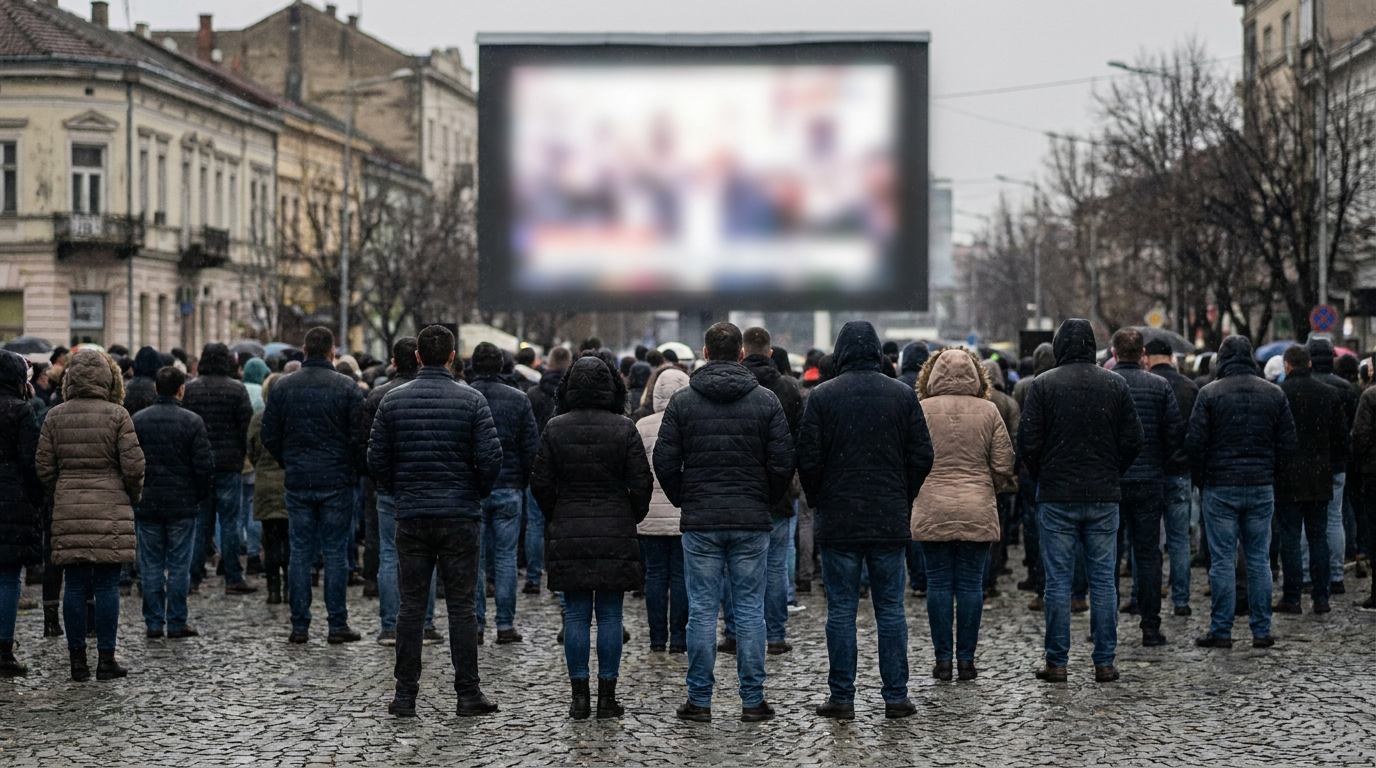
Thousands of people assembled in Kosovo to follow the judgments on large screens. In the capital, Pristina, supporters gathered in solidarity with the former KLA leaders, and some were visibly in tears when they heard the outcome. The public gatherings brought the distant courtroom proceedings into the centre of the city.
The trial has faced strong opposition in Kosovo and neighbouring Albania. Many Kosovo Albanians continue to regard Thaçi as a national hero because of his role in the independence struggle. That standing helps explain why the prosecution of a former president carries significance beyond the sentence imposed on one individual.
Amnesty International’s deputy director for Europe, Esther Major, responded by describing the convictions as a source of hope for thousands of people harmed by the Kosovo war. The human rights organisation’s reaction focused on victims, in contrast with the public displays of support for the defendants in Pristina.
The judgment also comes amid renewed attention to the public treatment of convicted wartime leaders elsewhere in the former Yugoslavia. On 7 September, thousands gathered in Belgrade for the funeral of Ratko Mladić, the former Bosnian Serb military commander convicted of genocide, crimes against humanity and war crimes. He received military honours.
European Commission president Ursula von der Leyen criticised the glorification of war criminals in her address to the European Parliament on Wednesday, referring to Serbia and Mladić’s funeral. The two cases concern different conflicts and defendants, but the public responses show how wartime leaders retain loyal followings despite criminal judgments against them.
What happens next
The legal process allows a convicted defendant to challenge a judgment through an appeal. That stage is separate from the trial: appellate judges consider arguments about errors of law, fact or procedure, rather than deciding the case according to the scale of public support for either side.
A sentence can also be examined through the appeal process. The distinction matters because a challenge to the length of imprisonment is not necessarily the same as a challenge to every conviction. The trial judgment’s findings and its reasons provide the starting point for any such legal scrutiny.
For those following the case, the findings on individual charges are essential to understanding its outcome. An allegation presented during a lengthy prosecution does not automatically become a judicial finding. Equally, the failure to prove some accusations does not cancel convictions for other offences that met the required standard of proof.
Why this matters
For UK readers, the proceedings concern a European conflict in which Britain played a military and diplomatic role. British forces took part in NATO’s intervention, and the UK recognises Kosovo’s independence. The judgment addresses wartime criminal responsibility separately from the question of Kosovo’s statehood.
For people in Britain with family or community ties to Kosovo, Serbia and Albania, the decision touches a history that remains deeply personal. The offences at its centre concern protections for detainees and civilians: people retain those protections even when armed groups or governments regard them as opponents.
Reporting that informed this story
- The Guardian UK: Former Kosovo president Thaçi sentenced to 25 years in prison by international court in The Hague – Europe live
- BBC News: Kosovo's former president sentenced to 25 years for war crimes
This article was written independently by The Daily Times from publicly available facts and headlines. No text has been copied from the outlets above.