British photographer wins bird award with underwater gannet image
Henley Spiers has won Bird Photographer of the Year 2026 with a photograph of a diving gannet in Scotland, in a competition attracting more than 24,000 images.

By Robert Aldridge, Senior Reporter
Published 22 Sept 2026, 07:01
What happened
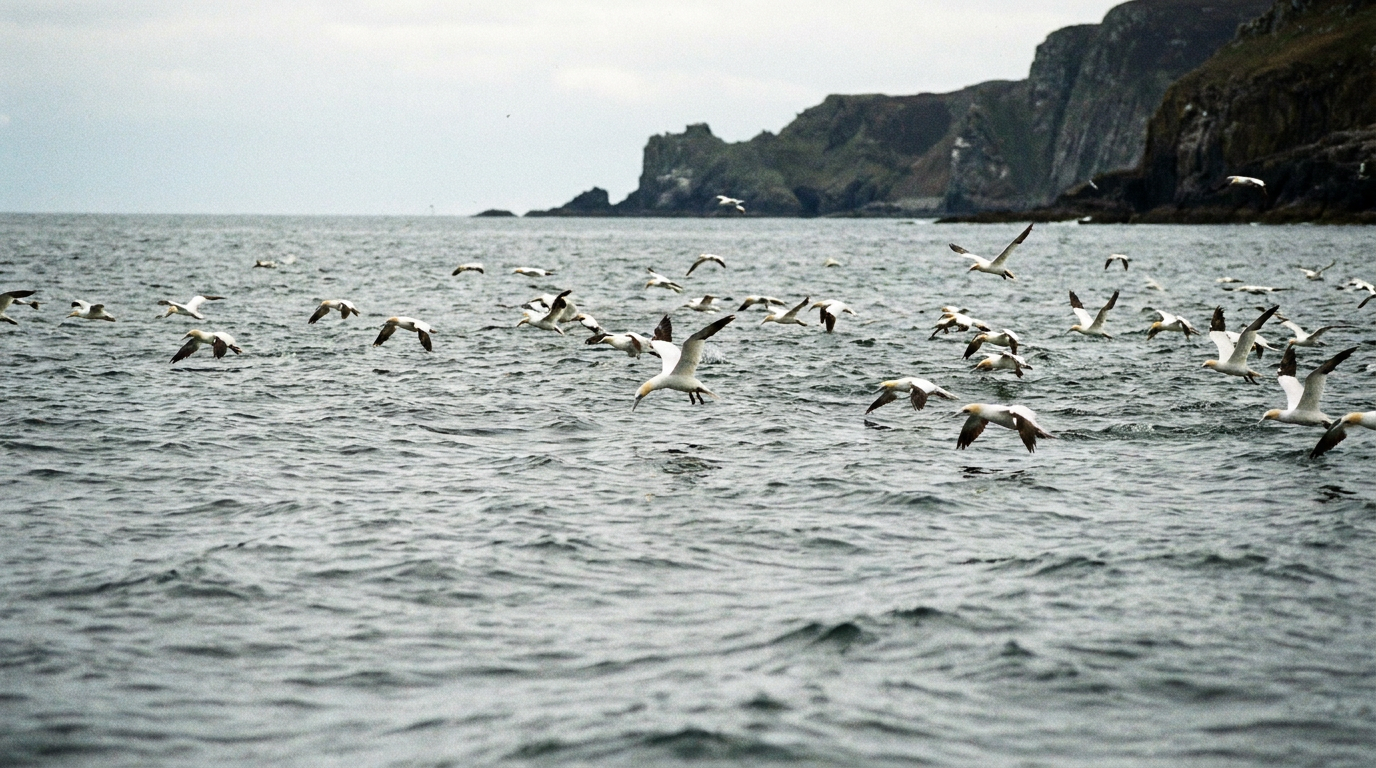
British photographer Henley Spiers has won the overall title at Bird Photographer of the Year 2026 for an underwater photograph of a northern gannet hunting off Scotland. His image, Sunball Rocket, catches the bird entering the sea, with sunlight visible above it.
More than 24,000 photographs were entered by photographers around the world. The awards cover subjects ranging from flight and courtship to urban wildlife and conservation, alongside categories for younger photographers.
Sunball Rocket also won in the Birds in the Environment category. Its subject belongs to a species capable of hitting the water at up to 86km/h, or 53mph, as it dives after fish.
Spiers earned a separate silver award in Creative Perspectives for Turbulence, another underwater study of northern gannets, photographed in Shetland. That scene records the bubbles and disturbed water created as numerous birds dive to feed.
British locations featured elsewhere among the winners. Skomer Island provided the setting for a silver-winning Atlantic puffin portrait, while a photograph of a great cormorant in London won the category for children aged 11 and under.
The background
The category results recognise several different approaches to photographing birds. Portrait awards concentrate attention on individual subjects, while the flight and behaviour categories include feeding, movement and displays used to attract a mate.
American photographer Thomas Deliberto won portrait gold with Radiant, showing a male greater sage-grouse displaying in Utah. Early sunlight catches the tail against a darker hillside, making the spread feathers the central feature of the photograph.
Courtship also provided the subject for portrait bronze. Australian David Stowe photographed a male western parotia in West Papua, Indonesia, where the bird performed its display in rainforest in an attempt to attract a female.
In the flight category, Swedish photographer Ivan Sjögren took gold for Eye-to-Eye with a Short-Eared Owl. The hunting ground was the salt marsh habitat of the Fraser River delta in British Columbia, Canada.
Silver went to Dutch photographer Alex Pansier for Patterns, made at Hornøya in Norway. Rather than isolating one bird, the photograph records guillemots flying together, using the repeated shapes of the flock as its subject.
Patryk Kurc of Poland received flight bronze for Lord of the Reedbeds. He photographed a bittern moving between reedbeds in Dąbrowa Górnicza, working from a floating hide with the morning sun behind the bird.
The black-and-white awards brought together three markedly different habitats. Gold winner Rahul Sachdev, from India, photographed an ostrich heading towards the dry lake bed at Amboseli in Kenya, placing the bird within an extensive, dusty landscape.
Australian Raoul Slater won silver for Grass Tree, photographed in Pomona, Queensland. A little wattlebird visits a native grass tree, whose nectar-bearing flower spikes also attract butterflies and native bees. Australia has 30 species of these slow-growing plants.
Bronze went to Spain’s Julian Terreros-Martin for Promenade Preening. His little penguin was photographed on a Tasmanian promenade at night, travelling towards a burrow among nearby shrubs — a setting that places the bird beside human infrastructure.
Creative Perspectives gold went to Norway’s Åsmund Keilen for Sundance. Made in Oslo during summer, it uses an in-camera multiple exposure and the reflective roof of a blue car to depict a common swift in flight.
What people are saying
Spiers described the contrasting behaviour of his winning subject: northern gannets care for their young and maintain pair bonds at the nest, but switch to searching the sea for food once airborne. His account connects the underwater moment with the bird’s wider daily life.
He explained that a gannet preparing to dive first adjusts its position above the fish, facing into the wind and using its wings to slow down. It then brings its wings close to its body for the descent into the water.
German photographer Volker Widmann, whose Sunset Puffin won portrait silver, described spending several days on Skomer. He concentrated on early mornings and late evenings, when day visitors had departed and fewer people were around the birds.
Sjögren’s account of making his gold-winning owl photograph described five short-eared owls feeding nearby as evening darkened. British photographer Mark Carwardine worked in very different conditions for his behaviour silver: persistent rain in Canada’s Great Bear Rainforest, where he spotted a juvenile bald eagle holding its wings open from a Zodiac boat.
Donald Chin, the Australian winner of behaviour gold, described a young tawny frogmouth extending its wings in a Perth forest during rain. In I’m Keeping Everyone Dry, its position gives the appearance of sheltering its siblings, rather than establishing that protection was the bird’s intention.
Conservation in focus
The conservation gold award went to American photographer Kent Stuart for Not a Good Day Fishing. His close view of a great blue heron shows fishing line and a float around its beak, recording an encounter with fishing equipment rather than a hunting success.
Stuart made the photograph at a pond in Warren County, New Jersey. Reaching his position involved approaching through a cornfield and using chest waders to get to a mudflat; the heron subsequently came close enough for a tightly framed head photograph.
French photographer Yann Bigant won conservation silver for Birds in the Red, showing yellow bitterns and other waterbirds being offered for sale in central Phnom Penh. The photograph formed part of an investigation that found illegal sales of wild birds across Cambodia.
Conservation bronze went to Italy’s Luca Eberle for Discarded Evidence, featuring an Egyptian vulture in Malta. National laws regulate hunting of migratory birds there, but illegal killing continues to affect protected and rare species, including birds of prey.
Human activity also shaped the encounter behind behaviour bronze. Austrian photographer Bernhard Schubert made Kleptoparasitism on a beach at Tulum, on Mexico’s Yucatán peninsula, where magnificent frigatebirds competed in the air when a fisherman threw away unwanted catch.
What happens next
The overall award brings Spiers £3,000 in prize money. The competition also recognises younger entrants through separate age bands: 11 and under, 12–14 and 15–17, with a Young Bird Photographer of the Year title alongside the adult honours.
Among those junior results, the winning photograph in the 12–14 category captures a bird rising from the water to take prey. The London cormorant portrait in the youngest category draws attention to the bird’s green eyes, adding an urban British subject to the international awards.
Why this matters
For UK readers interested in wildlife photography, the results encompass coastal Scotland, a Welsh island and the capital. They also demonstrate distinct ways of working, from underwater photography and floating hides to a kayak: Poland’s Julian Łoziński used one to photograph a great crested grebe for Creative Perspectives bronze.
The conservation results bring practical hazards into the same competition as portraits and flight studies. Fishing equipment, the sale of wild birds and unlawful hunting appear as subjects in their own right, giving these awards a documentary role alongside their recognition of photographic technique.
Reporting that informed this story
- The Guardian UK: Winners of bird photographer of the year 2026 – in pictures
- Daily Mail: Revealed: The Bird Photographer of the Year winners - and the images that flew to the top slots
This article was written independently by The Daily Times from publicly available facts and headlines. No text has been copied from the outlets above.