Trump presses Ukraine to halt refinery strikes as diesel prices surge
Donald Trump has urged Volodymyr Zelensky to stop attacks on Russian refineries as disruption in Russia and the Middle East squeezes diesel supplies.

By James Reeve, Foreign Affairs Writer
Published 21 Sept 2026, 13:01
What happened
Donald Trump has pressed Ukraine to stop attacking Russian oil refineries as a worsening diesel shortage puts fuel supplies at the centre of his dealings with Kyiv. His intervention comes as damage to Russia’s refining network compounds disruption to oil movements through the Middle East following US and Israeli strikes on Iran.
In a phone call on Sunday, the US president urged Ukrainian President Volodymyr Zelensky to halt the refinery campaign. Ukrainian officials described diesel supplies as the dominant concern in the conversation, with Trump seeking a return of Russian fuel to international markets to bring prices down.
On Monday morning, Trump publicly acknowledged the scale of the damage in a post on Truth Social. He said numerous Russian diesel refineries had been disabled, at least temporarily, and argued that Moscow had lost its grip on the industry. He also renewed his demand for an end to the war.
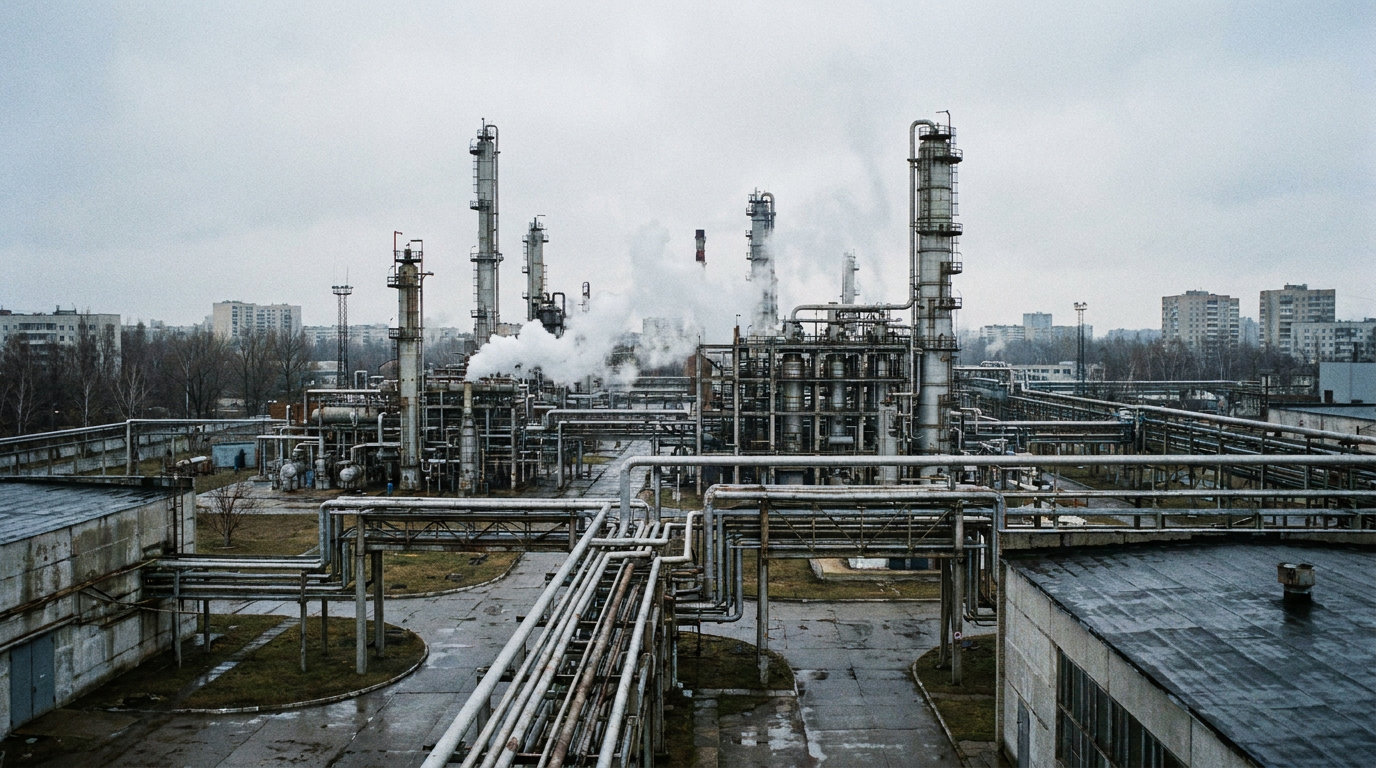
About a third of Russia’s refining capacity has been put out of action. The disruption has forced President Vladimir Putin to stop exports of refined fuels and bring in diesel from India, leaving a major oil-producing country seeking overseas supplies of a fuel made from crude.
The Sunday call followed a Ukrainian drone assault on Moscow that Russian officials described as the largest mounted against the capital. A major refinery caught fire and at least two people were killed. Moscow mayor Sergei Sobyanin said air defences had brought down 450 drones.
Ukraine’s drone operators have developed increasingly precise attacks against distillation towers, complex parts of a refinery that are particularly time-consuming to repair. Those installations separate crude oil into components used to make fuels, meaning damage can interrupt production even when crude remains available.
US diesel prices reached a record $6.51 on Monday, according to the American Automobile Association, compared with about $3.76 before the Iran war. That rise of roughly 73% has added to the political pressure on Republicans with crucial midterm elections only weeks away.
The background
The squeeze involves both the movement of crude oil and the capacity to turn it into usable products. Refineries manufacture fuels such as diesel; damage to them can therefore reduce fuel supplies independently of disruption at oilfields or along shipping routes. The current crisis brings those pressures together.
US and Israeli attacks on Iran in February effectively shut the Strait of Hormuz. About a fifth of the world’s oil supply normally travels through the passage, making the interruption significant far beyond the countries directly involved in the fighting and restricting an important route to international buyers.
An alternative route across Saudi Arabia has also been hit. Earlier this month, Iran-backed militias in Iraq bombed the East-West pipeline, which carried Aramco oil across the kingdom to bypass Hormuz. Damage to that infrastructure has increased the importance of the remaining routes for moving Saudi supplies.
One of those passages is the Bab el-Mandeb Strait, where Iran-backed Houthi forces have curtailed oil tanker traffic. The narrow waterway links the Red Sea with the Gulf of Aden, so restrictions there affect vessels using the southern approach to the Red Sea shipping corridor.
The regional fighting widened over the weekend when the Houthis took territory in Yemen during clashes with Saudi-backed militias. Saudi Arabia urged Trump to launch strikes against Yemen, adding another possible military operation to a confrontation already disrupting several parts of the oil transport network.
Trump pulled back from that operation at the last moment on Sunday. US commanders had been preparing targets and forces were ready to launch missiles when he withdrew. The decision stopped that planned attack as pressure on tanker movements continued.
Diesel has a particularly broad economic role because it powers lorries, trains and agricultural machinery. A shortage can affect the cost of moving goods and producing food, not simply what private motorists pay to fill their vehicles. Economists consequently regard sustained diesel increases as a wider inflation risk.
What people are saying
Zelensky defended the refinery campaign on Monday, presenting it as an effective way to put pressure on Russia. His position places the economic impact of the attacks at the heart of Ukraine’s military argument, while Trump is seeking relief from that same pressure in international fuel markets.
Ukrainian officials also rejected Trump’s assertion, made a week earlier, that Moscow and Kyiv had agreed to stop attacking each other’s energy infrastructure. They said no such truce existed. The disagreement concerns whether there is any mutual commitment to protect energy facilities, rather than simply how an agreement should operate.
Trump has attributed the worldwide diesel price surge to the Ukraine war rather than his conflict with Iran. In his Monday post, he also claimed that 25,000 people, most of them soldiers, were dying every month in the Russia-Ukraine conflict, using that figure to reinforce his call for it to end.
Putin has signalled a military response rather than a pause. This month, he said he had instructed Russian forces to prepare a large-scale air campaign in retaliation for attacks on Russian energy sites. He framed the planned strikes as a direct answer to Ukraine’s operations against those facilities.
What happens next
Zelensky is due to meet Trump on Tuesday on the sidelines of the United Nations General Assembly. The meeting follows their Sunday conversation and gives the two presidents a further opportunity to address the refinery campaign alongside the broader effort to end the war.
A sweeping Russia sanctions law signed by Trump last week provides another potential point of leverage. One senior Ukrainian official believes the president may be holding back action under the law to persuade Kyiv to stop its refinery attacks. That is the official’s assessment of Trump’s approach, rather than a declared US condition.
Russia’s preparations for winter complicate the prospect of an energy ceasefire. Putin is considered unlikely to accept such an arrangement before winter ends, while his forces plan an intensive assault on Ukraine’s electricity grid. The facilities at issue therefore include infrastructure supplying civilian power as well as plants producing transport fuel.
Why this matters
For UK readers, diesel provides a link between overseas energy disruption and everyday business costs. Hauliers and agricultural operators use the fuel to move deliveries and run machinery. More expensive supplies can put pressure on transport and food-production costs, creating a route through which the crisis could affect household spending.
The difficulty is that the disruptions sit at different stages of the supply chain: repairing Russian refineries would not reopen Hormuz, while restoring tanker access would not rebuild damaged processing equipment. Resolving one bottleneck would therefore leave others in place, limiting how far any single diplomatic or military decision could ease the squeeze.
Reporting that informed this story
This article was written independently by The Daily Times from publicly available facts and headlines. No text has been copied from the outlets above.