Labour faces criticism over £21-a-year food tariff savings
Ministers defend food import tax cuts ahead of the Budget, alongside changes to carers’ support, parental pay and tax-free business mileage.

By James Reeve, Foreign Affairs Writer
Published 27 Oct 2026, 13:01
What happened
Labour’s plan to reduce food import costs has drawn criticism over the size of the potential savings, with households promised up to £21 a year from tariff changes. The announcement forms part of a wider package unveiled by Prime Minister Andy Burnham before Wednesday’s Budget.
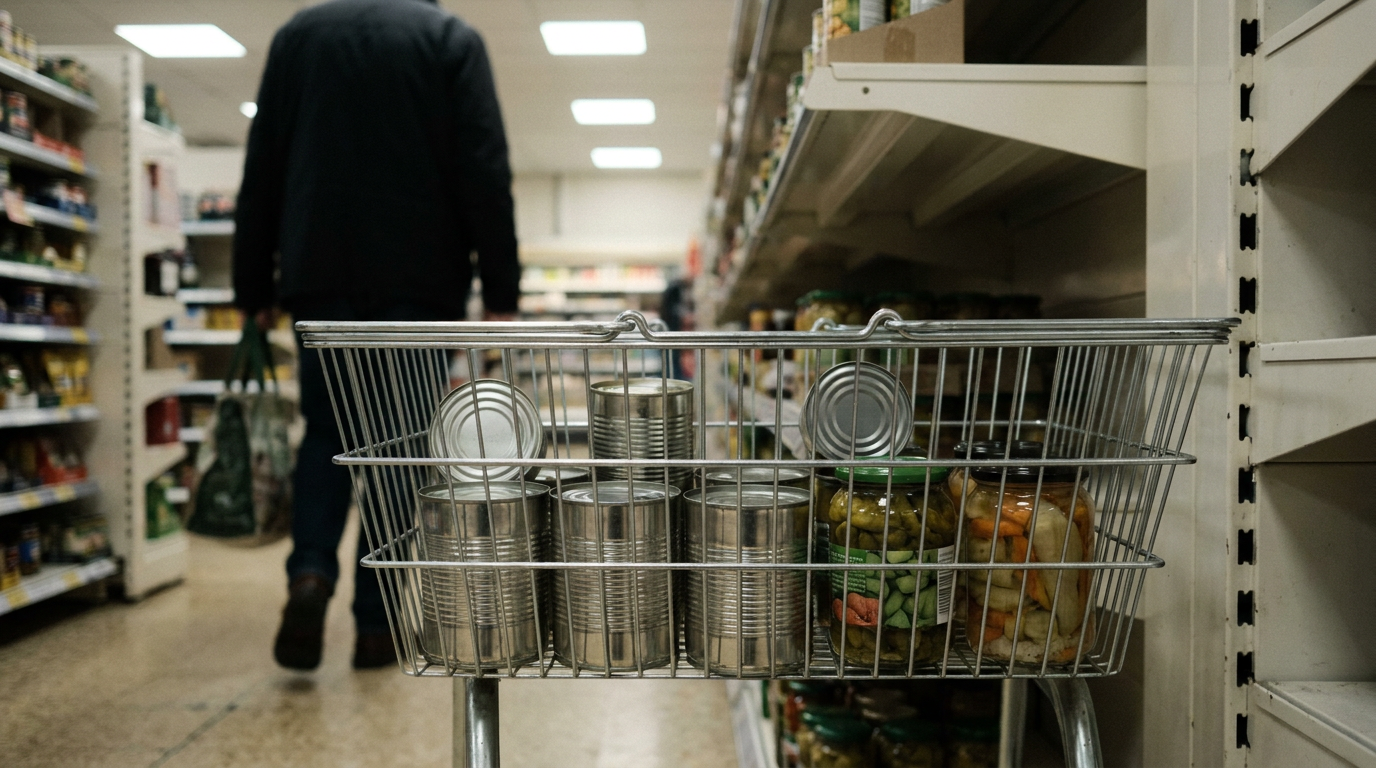
The government will remove duties on more than 100 products, including baked beans, chocolate and gherkins. Business Secretary Jonathan Reynolds defended the intervention on Tuesday, acknowledging its limited scale but arguing that smaller measures could still help families facing financial pressure.
The £21 estimate includes tariff suspensions introduced previously, rather than representing the benefit of the latest announcement alone. Spread across 52 weeks, that maximum annual saving amounts to about 40p a week — the figure highlighted by the Conservatives in their criticism.
Import tariffs are taxes charged when goods enter a country. Removing them reduces the relevant import cost, but does not itself set the price a supermarket must charge. The benefit to shoppers therefore depends on businesses passing savings through to customers.
The changes also cover support for farmers dealing with higher fertiliser costs and households using kerosene heating oil. That extends the scope beyond supermarket purchases to agricultural inputs and a fuel used for domestic heating.
Four other measures accompanied the tariff announcement: changes to business mileage allowances, wider access to parental pay, reform of Carer’s Allowance earnings rules and additional Post Office parcel drop boxes. The package combines household financial support with changes to everyday services.
For people using their own vehicles for work, the Treasury will make the tax-free allowance of 55p a mile permanent for the first 10,000 business miles. Above that distance, the rate will rise from 25p to 35p a mile.
The Treasury puts the number of employees and self-employed people supported by the mileage measures at around three million. Nurses, care workers and builders are among the groups whose work can involve journeys in their own vehicles.
The background
The announcements come as the British Retail Consortium puts food price inflation at 2.9%. Inflation measures the pace at which prices increase: a positive rate means food is becoming more expensive overall, even if some individual products fall in price.
A reduction in duties on selected imports can therefore operate alongside a rising grocery bill. A household’s eventual saving will depend both on the products it buys and on how their prices change, rather than being a fixed payment received by every family.
Burnham’s broader cost-of-living programme also includes removing the 5% VAT charge on electricity bills. That is a different mechanism from cutting import duties: VAT applies to the bill itself, while tariffs are charged earlier in the supply chain.
For unpaid carers, the package addresses an earnings rule under which crossing a weekly limit can mean losing the whole Carer’s Allowance entitlement. Even a very small breach can have a much larger financial consequence than the extra wages earned.
Hundreds of thousands of carers have faced demands to repay substantial sums after inadvertently exceeding the earnings threshold. Because the rule removes entitlement to the full allowance, the resulting debt can run to thousands of pounds rather than simply matching the amount earned above the limit.
The government will replace that abrupt withdrawal with a taper. Each extra £1 earned above the threshold will reduce support by £1, instead of triggering the loss of the entire allowance at once. The weekly earnings limit is equivalent to 16 hours paid at the National Living Wage.
Mileage allowances work differently from either benefits or food price reductions. They establish the amount that can qualify for tax-free treatment for business travel; they are not a universal payment to motorists and do not apply simply because someone owns a car.
For every 1,000 qualifying business miles above the 10,000-mile threshold, the announced increase adds £100 to the mileage allowance. That is an increase in the amount eligible for tax-free treatment, not necessarily an extra £100 in take-home income.
What people are saying
Speaking on BBC Breakfast, Reynolds said the government recognised the pressures facing households. He argued that ministers could address smaller financial problems while also confronting larger economic challenges, rather than treating those tasks as alternatives.
Shadow chancellor Andrew Griffith challenged that approach, saying the measures fell short of the pressures families faced from prices, energy costs, mortgages and taxation. He singled out gherkins to argue that the government’s response was too small for the scale of the problem.
Sarah Coles, head of personal finance at AJ Bell, warned that highlighting gherkins risked turning the package into a subject of ridicule. Her concern was that households under substantial financial strain would regard modest adjustments as inadequate.
Coles also questioned how far the tariff reductions would reach shop shelves. She pointed to rising food prices as a force that could absorb the benefit, leaving families with little noticeable improvement in their overall spending.
The Joseph Rowntree Foundation has warned that families could be up to £770 a year worse off by the end of this Parliament. That longer-term warning concerns the wider household outlook, rather than the effect of the food tariff measures alone.
Novara Media’s Aaron Bastani offered a different assessment of the political response. He argued that attacking small, useful changes could work against their critics, citing the practical attraction of making Post Office visits less time-consuming.
What happens next
Chancellor John Healey will present the Budget on Wednesday 28 October, following Tuesday’s advance announcement. The five measures will sit within the wider fiscal package, bringing changes to taxation, financial support and public-facing services into the same Budget programme.
The parental pay extension will reach more than 150,000 additional parents annually. It includes self-employed fathers and partners who previously lacked eligibility, widening access beyond those already covered by the existing arrangements.
Eligible parents will receive two weeks of support, currently worth up to £194 a week. At that maximum weekly rate, the two-week entitlement totals £388, providing financial help while parents spend time with their child.
The Post Office expansion will add hundreds of parcel drop boxes, taking the network to 1,000. Customers will be able to send or return parcels through them without waiting for service at a branch counter, with the rollout intended to ease errands before Christmas.
Alongside the drop boxes, 600 Post Office branches are due to receive upgrades by the end of the financial year. The programme therefore combines additional self-service parcel facilities with improvements to services inside branches.
Why this matters
For UK households, these measures offer different kinds of help rather than a single reduction in living costs. Grocery savings depend on purchasing choices and retail pricing, while mileage relief is tied to qualifying work travel. Their value will vary between families.
For carers considering additional paid hours, replacing the earnings cliff edge changes the financial consequence of crossing the limit. For newly eligible parents, meanwhile, the extension creates access to paid support that was previously outside their entitlement.
Reporting that informed this story
- Daily Mail: 'An insult to families': Labour Budget food price cuts will save just 40p a week and amount to 'little more than cheaper gherkins'
- The Guardian Politics: Tories dismiss PM’s budget ‘everyday fixes’ as little more than ‘cheaper gherkins’, and ‘an insult to families’ – UK politics live
This article was written independently by The Daily Times from publicly available facts and headlines. No text has been copied from the outlets above.