UK reviews Chagos deal as US opposition keeps payments on hold
Wes Streeting says the agreement needs changes to win Donald Trump's backing, with payments to Mauritius on hold as ministers seek to protect the Diego Garcia base.

By James Reeve, Foreign Affairs Writer
Published 23 Sept 2026, 13:01
What happened
Britain is reconsidering the terms of its Chagos Islands agreement after US President Donald Trump renewed his opposition, leaving the proposed sovereignty transfer and payments to Mauritius on hold. Defence Secretary Wes Streeting said on Wednesday that ministers needed an arrangement acceptable to Washington before proceeding.
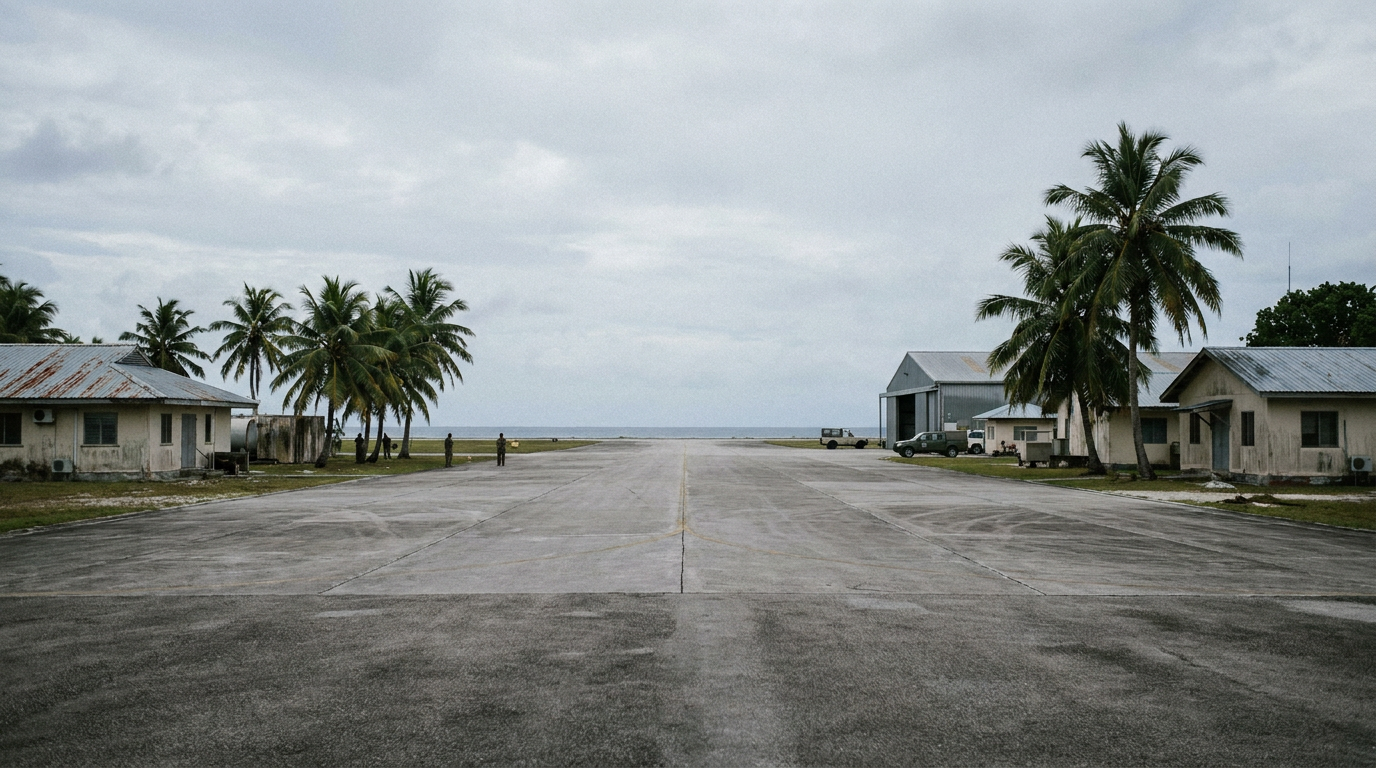
The agreement links two decisions: transferring the Indian Ocean archipelago to Mauritius and securing continued British use of the military facilities on Diego Garcia. That island, the largest in the Chagos group, hosts a base used jointly by the United Kingdom and United States.
Trump challenged the agreement during talks with Prime Minister Andy Burnham at the United Nations General Assembly in New York on Tuesday. It was their first meeting in person, and the president made clear afterwards that he remained opposed to the proposed settlement.
The latest intervention follows the agreement's indefinite suspension in April, when Trump withdrew his backing. Streeting said the president's position was already understood within government, but his comments reinforced the need to address American objections rather than proceed with the existing text.
Payments to Mauritius will not be released during this stage of the reconsideration, Streeting said. The treaty's financial commitments include annual payments of £120m from its fourth year, making the suspension relevant to both the sovereignty arrangements and the spending attached to them.
The government's immediate objective is to secure a durable basis for operating from Diego Garcia. Streeting presented that as a question of protecting military capability over the longer term, rather than simply resolving the immediate diplomatic disagreement with the White House.
The background
Mauritius's claim concerns the separation of the islands in 1965. It argues that it was compelled to give up the territory as a condition of gaining independence, and that Britain's continued administration rests on an unlawful division of its territory.
In 2019, the International Court of Justice issued an advisory opinion finding that separation unlawful. It said British administration should end quickly. Although the opinion was not binding, its endorsement by the United Nations General Assembly strengthened Mauritius's diplomatic position in pursuing sovereignty.
Britain opened negotiations in 2022. The legal distinction remains important: an advisory opinion does not itself operate as a binding judgment requiring a transfer, but it can shape the international setting in which governments negotiate. Mauritius's claim therefore remained a problem for ministers to address.
The UK and Mauritius signed their agreement in May 2025, during Sir Keir Starmer's premiership. Its central mechanism was a 99-year lease for the Diego Garcia base alongside the transfer of sovereignty, separating ownership of the territory from the arrangements governing British military access.
That distinction explains why handing over the islands would not, under the agreed terms, mean Britain immediately leaving the base. The lease was intended to preserve operations for almost a century while recognising Mauritian sovereignty over the archipelago as a whole.
Signing the treaty did not complete the domestic legislative process. Before the April suspension, the legislation needed to transfer sovereignty had not finished its passage through Parliament. The signed agreement and the legal steps required to implement it were therefore at different stages.
Streeting said successive prime ministers, beginning with Boris Johnson, had regarded the continuing legal dispute as a potential threat to the base. His argument was that leaving sovereignty unresolved carried security risks of its own, rather than preserving an entirely settled position.
What people are saying
Burnham has made the military relationship central to his response. After meeting Trump, he said he had taken over the issue from his predecessor and would seek a resolution between the parties, stressing that the base's future mattered to American as well as British security.
Before travelling to New York, the prime minister spoke with Mauritius's leader, Navin Ramgoolam. In that conversation, Burnham reaffirmed his commitment to pursuing ratification with American involvement, indicating that his diplomatic effort continued to include Mauritius rather than focusing solely on Washington.
Streeting defended the principle of paying for secure access to Diego Garcia. He argued that expenditure could be justified if it protected Britain's ability to use the base over the long term. That defence concerned the value of the military access, not an instruction to begin payments now.
Conservative Party leader Kemi Badenoch responded by urging Burnham to abandon the agreement. Reform UK leader Nigel Farage welcomed the review and characterised the deal as finished. Both reactions went beyond the government's stated intention to seek an acceptable settlement.
Cost has been a major point of contention since Starmer agreed the terms. His government put the overall net cost at £3.4bn, while opponents argued that an inflation-adjusted total could reach £35bn. Those figures reflect different ways of presenting the agreement's long-term financial burden.
Critics also argued that the sovereignty transfer could create an opportunity for China to gain a presence in the archipelago. That was an objection raised against the agreement, alongside the financial challenge; it was not a description of an established Chinese presence on the islands.
What happens next
Ministers intend to work through the American administration's concerns and seek terms that Britain, Mauritius and the United States can all support. Streeting explicitly rejected a strategy based on waiting for Trump's presidency to end, placing negotiations with the current administration at the centre of the approach.
The review is not expected to take the form of a separate, formal exercise with a fixed timetable. The work instead centres on diplomatic discussions about the agreement and the conditions needed to make it workable for the governments involved.
Government officials regard American consent as a continuing requirement, rather than a new condition introduced after the New York meeting. The significance of Streeting's intervention is his acknowledgement that the existing terms need further work if they are to obtain that consent.
Mauritius's possible legal options also remain part of the calculation. Streeting warned that further proceedings could follow the 2019 advisory opinion. His position is that ministers must consider that possibility when deciding how best to protect the base, alongside the difficulty of negotiating revised terms.
Why this matters
For UK taxpayers, the immediate consequence is that payments under the disputed agreement remain withheld during the review. The longer-term spending question is tied to what Britain secures in return: reliable access to an overseas military installation through a lease intended to last 99 years.
For British security policy, the dispute brings a territorial claim and a military partnership into the same negotiation. Diego Garcia's strategic position in the Indian Ocean makes continued access valuable, but a lasting settlement must also accommodate Mauritius's sovereignty claim and the requirements of the American government.
Reporting that informed this story
- BBC News: UK to review Chagos Islands deal over lack of US support, Streeting tells BBC
- The Guardian UK: Chagos Islands deal ‘can’t go ahead’ without US support, Streeting says
This article was written independently by The Daily Times from publicly available facts and headlines. No text has been copied from the outlets above.