Limoges town hall fire suspect arrested in rural French hamlet
Two British residents witnessed an armed police operation in Le Grand Pic as officers arrested a suspected organiser of the attack on Limoges town hall.

By James Reeve, Foreign Affairs Writer
Published 24 Oct 2026, 07:00
What happened
Armed anti-terror officers have arrested a man suspected of helping organise the attack that set Limoges town hall ablaze, carrying out an early-morning operation in a small hamlet in south-central France. Two elderly British residents witnessed the police arrival while moving a broken-down car.
Hodei Ciarra Docampo, 34, was detained on Tuesday in Le Grand Pic, in Limousin. Officers entered the cottage he shares with his parents before finding him asleep in a separate hut in the garden and taking him away.
The arrest followed the fire at the neo-Renaissance town hall in Limoges on 17 October. The city, in the Haute-Vienne department of Nouvelle-Aquitaine, was among the places affected by unrest stretching across France, from its northern coast to the Mediterranean.
Docampo is suspected of being a leading figure in the group responsible for the town hall attack. That allegation is distinct from his previous conviction: last year, he was convicted of punching a police officer during a demonstration.
Adrian Maxwell, a 77-year-old retired City of London Police detective and criminal barrister, saw the operation alongside an 82-year-old neighbour originally from Oxfordshire. They were pushing a Renault that had broken down when the officers prepared to enter the property.
The police put on black face coverings and protective vests before forcing the cottage door. Maxwell recognised the nature of the operation from his policing experience, but learned the identity of the person being sought only later that afternoon, during a telephone call from a friend.
The background
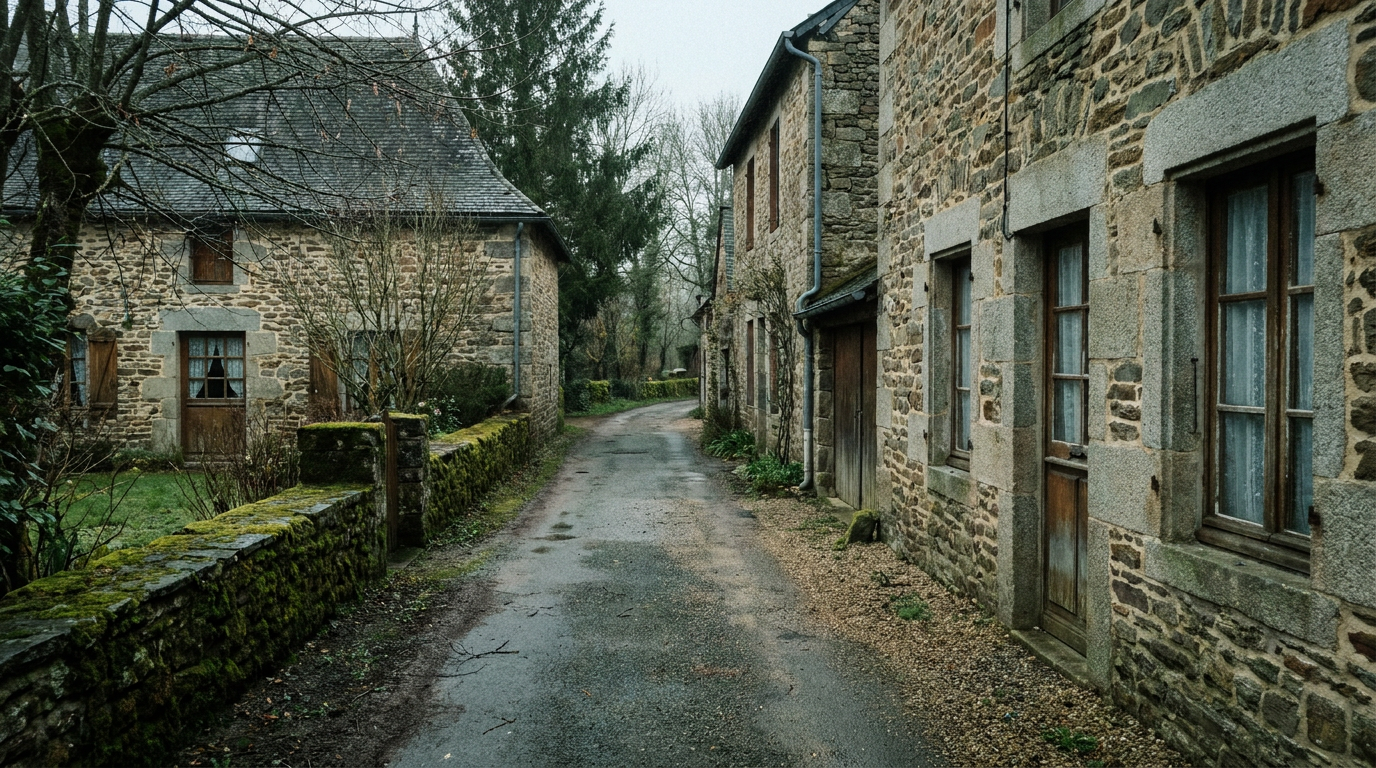
Le Grand Pic contains roughly 24 stone houses and has neither a shop nor a church nor a bus service. Its isolation places the arrest far from the urban streets where much of the unrest took place, bringing a national security operation into a very small residential community.
Maxwell discovered the hamlet 25 years ago. His neighbour, who asked not to be identified, has lived there for 22 years. Their long residence makes them witnesses not only to the police action but also to the contrast between it and the settlement’s normally quiet daily life.
Once an agricultural community, Le Grand Pic now also attracts people seeking alternative ways of living. Among them are British residents living off-grid in yurts in the surrounding woodland. Those residential choices are separate from the allegations against the man arrested there.
The wider area also features in French intelligence assessments of radical political activity. Intelligence officers have identified a Marxist group based on the Plateau de Millevaches, a rural upland area. The interest in such locations extends the security picture beyond demonstrations in major cities.
Geographically, the different place names describe overlapping parts of the story rather than separate countries or jurisdictions. Limousin is the historic regional setting of Le Grand Pic; Limoges sits within the modern administrative region of Nouvelle-Aquitaine. The town hall targeted in the unrest belongs to the city itself.
French town halls are centres of municipal government, not simply ceremonial buildings. They accommodate the work of elected local administrations and are associated with everyday civic functions, including civil registration. An attack on one therefore targets an institution with both a practical role and a public identity.
The distinction between a rural address and an organised political network is important. A person’s home can become the location of an arrest without the surrounding settlement being implicated. Neither living off-grid nor sharing a community with a suspect establishes involvement in a criminal offence.
What people are saying
President Emmanuel Macron has described organised groups on the far left as seeking to overthrow the Republic. His intervention places the unrest within a broader argument about threats to the French state, rather than treating each episode solely as an isolated public-order incident.
The government fears further disorder on Saturdays following the recent violence. That concern looks beyond the individual Limoges investigation to the possibility of repeated mobilisation in different parts of France, with consequences for policing and the protection of public buildings.
Maxwell expressed surprise that an operation of this kind had taken place in Le Grand Pic. His reaction reflected the expectations that drew him to the hamlet after a career involving criminal investigations and the courts: a quiet home well removed from that professional life.
His Oxfordshire neighbour likewise contrasted the raid with the settlement’s usual disturbances, describing escaped cattle as a more familiar interruption. Her account provides a local perspective on the scale of the police deployment, rather than evidence about the suspect’s alleged activities.
Political assessments, residents’ impressions and criminal allegations serve different purposes. Macron’s comments concern a perceived national threat; the witnesses describe what happened outside their homes. Responsibility for the fire is a question for the criminal justice process, which must assess evidence relating to particular individuals.
What happens next
An arrest begins or advances an investigation; it does not establish guilt. French criminal proceedings distinguish between police detention, the investigation of suspected offences and a court’s eventual determination of responsibility. The presumption of innocence applies throughout that process.
In the French system, prosecutors oversee criminal investigations, while investigating judges can direct judicial inquiries in serious or complex cases. Their functions are different from those of the officers carrying out an arrest: operational decisions at a property do not themselves determine the final legal case.
The use of anti-terror officers also needs to be distinguished from the legal classification of an offence. A specialist unit’s participation describes the resources deployed for an operation. The offences pursued against a suspect depend on the judicial process, not on officers’ clothing or equipment.
For an allegation involving an organised group, the law must distinguish individual conduct from association. Organising an attack, taking part in it and merely knowing someone accused of involvement are different propositions. Establishing responsibility requires evidence relevant to the conduct alleged against each person.
Docampo’s earlier conviction is a separate legal matter from the town hall fire. A previous offence can form part of someone’s criminal history, but it does not prove responsibility for a subsequent incident. The new allegations must be considered on their own evidence.
At the wider public-order level, preventing further violence is a different task from investigating an attack that has already happened. Protecting demonstrations, residents and municipal buildings concerns immediate policing; establishing criminal responsibility concerns the collection and assessment of evidence through the courts.
Why this matters
For British people living in France, the episode illustrates how local security operations can reach communities far from major cities. Maxwell and his neighbour encountered the raid during an ordinary roadside task, rather than while attending a protest or entering an area of urban disorder.
For UK readers following French demonstrations, the key distinction is between political protest and alleged criminal violence. The right to express political views does not remove criminal responsibility for attacks on people or property; equally, allegations against individuals do not establish wrongdoing by an entire rural community.
Reporting that informed this story
This article was written independently by The Daily Times from publicly available facts and headlines. No text has been copied from the outlets above.