Jeffrey Archer dies aged 86 ahead of final novel's publication
The novelist and former Conservative politician died at home on Monday, a day before Adam and Eve was due to reach readers.
By Marcus Odell, Political Correspondent
Published 6 Oct 2026, 07:01
What happened
Jeffrey Archer has died aged 86, leaving a publishing career that brought worldwide sales of more than 300 million books and a political record marked by imprisonment for lying in court. His death on Monday came immediately before the planned publication of his final novel, Adam and Eve.
HarperCollins announced that Archer had been at home and had stopped writing for a break when he died. The publisher described his death as peaceful but unexpected. He had continued meeting readers during the final days of preparations for the book's launch.
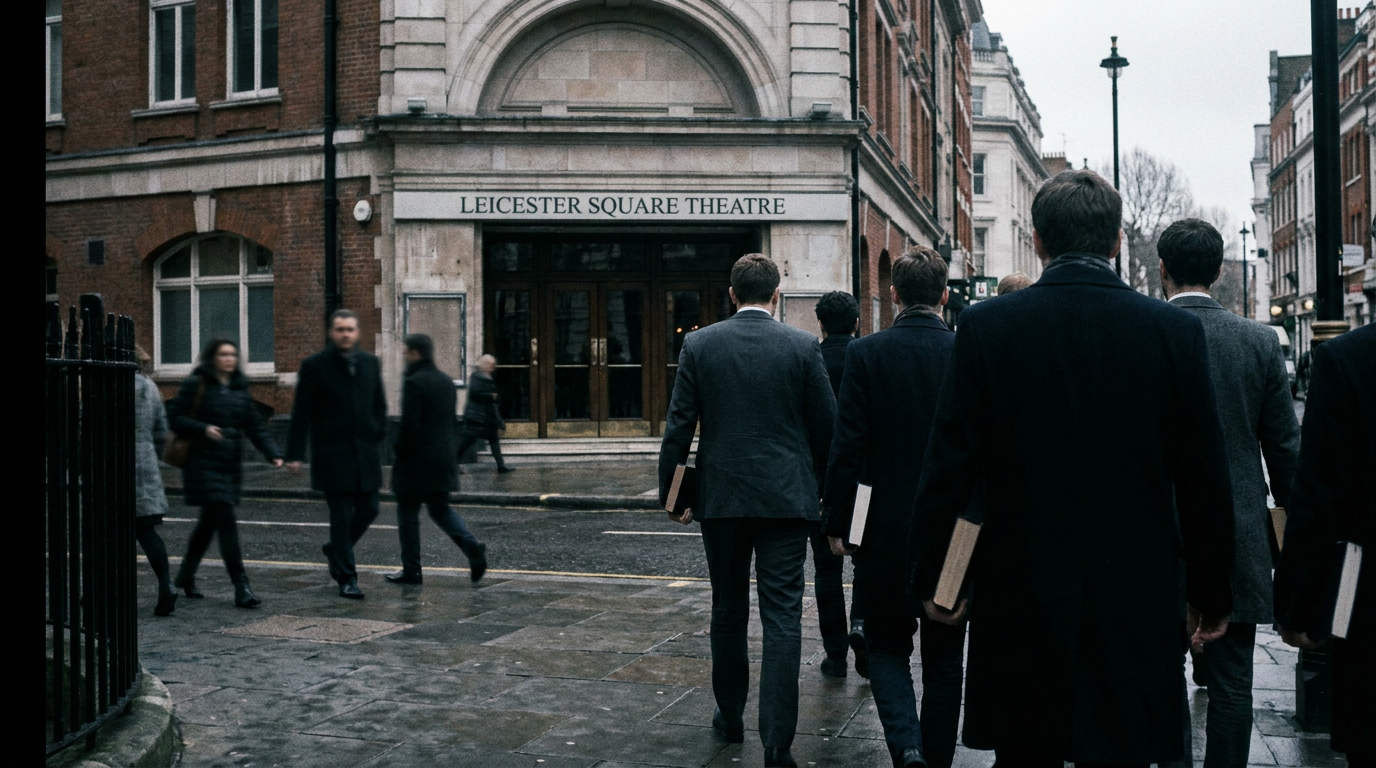
On Sunday, hundreds of people attended his sold-out appearance with broadcaster Gyles Brandreth at London's Leicester Square Theatre. Archer signed copies and discussed the novel. During the previous week, he had also visited Wellington School, where he was once a pupil, to promote it.
His surviving family includes his wife, the scientist Dame Mary Archer, their sons William and James, and five grandchildren. The couple marked 60 years of marriage in July, hosting 321 friends at the Old Vicarage, their home in Grantchester, Cambridge.
The background
Born in north London on 15 April 1940, Archer moved with his family to Weston-super-Mare in Somerset while still young. Their house had belonged to John Cleese's mother. His later working life took him through local government, Parliament, the art trade and commercial fiction.
Before entering the Commons, he served as a Conservative councillor in Havering, north-east London, and ran an art gallery in Mayfair. A 1969 by-election brought him to Westminster as the MP for Louth in Lincolnshire, aged 29.
In Parliament, Archer presented himself as a centrist and sometimes opposed the Conservative right. His first parliamentary career lasted five years. After a fraudulent investment scheme left him owing almost £500,000, he decided against contesting the 1974 election because of his financial position.
Writing offered a way to tackle those debts. His debut novel, Not a Penny More, Not a Penny Less, appeared in 1976 and subsequently reached audiences through radio and television adaptations. It began a second career that would continue for five decades.
Kane and Abel followed in 1979 and became his best-known success, selling more than 30 million copies. His output extended beyond novels to short fiction, plays and children's books. The Clifton Chronicles also became part of the catalogue through which generations of readers knew him.
Literary success helped Archer rebuild his political standing. He became a regular speaker at Conservative grassroots gatherings, and Margaret Thatcher appointed him deputy chairman of the Conservative Party in 1985. John Major later made him a life peer in 1992.
Archer remained socially close to Thatcher. She attended Christmas gatherings at the Archers' Thames-side penthouse, where champagne and shepherd's pie were served, until her health deteriorated in 2010. Alongside their homes in London and Grantchester, the couple owned a property in Majorca, where he wrote many of his novels.
His political ambitions foundered over the evidence he had given in a 1987 libel action against the Daily Star. The newspaper had alleged that he paid Monica Coghlan for sex. Archer won the civil case and received £500,000 in damages, but his conduct during that litigation later became the subject of criminal proceedings.
In 1999, he sought to become the Conservative candidate for mayor of London, with support from Thatcher, Major and the then party leader William Hague. Allegations that he had lied in the earlier case forced his withdrawal. Hague subsequently expelled him from the party.
An Old Bailey jury convicted Archer of perjury and perverting the course of justice in 2001. He received a four-year prison sentence, initially entering Belmarsh in London before transfers elsewhere. His release came in 2003, after he had served half the sentence. He retained his peerage and retired from the House of Lords in 2024.
Even as criminal proceedings approached, Archer continued working in the theatre. In 2000, he appeared in his own play, The Accused, at the Theatre Royal Haymarket. He played a man facing a murder allegation, with audiences voting at each performance on the character's guilt or innocence.
What people are saying
Conservative leader Kemi Badenoch said the news was particularly difficult to absorb because Archer had sent her a message that morning. In a tribute posted on X on Monday evening, she recalled his personal encouragement and friendship, and offered sympathy to Dame Mary and the wider family.
For Brandreth, the shock followed their appearance together less than a day earlier. He recalled an animated performer whose humour and willingness to make fun of himself had delighted the theatre audience. Speaking later on the BBC's World Tonight, Brandreth also reflected on a change in Archer after prison, saying he had become gentler.
Kate Elton, HarperCollins UK's chief executive and Archer's editor, focused on the work behind his publishing success. She praised his determination to keep revising manuscripts and his recognition of the contribution made by the wider publishing team, describing their editorial partnership as a particular privilege.
Former Conservative chancellor Nadhim Zahawi remembered Archer as a friend whose company combined humour, warmth and considerable energy. His tribute on X placed those personal qualities alongside Archer's ability to tell stories, reflecting the overlap between the novelist's literary audience and his longstanding political friendships.
What happens next
Adam and Eve is scheduled for publication on Tuesday 6 October. The novel examines Adolf Hitler's reluctance to invade Britain, developing an idea Archer had first considered six years earlier. He had already decided that it would be his last novel, rather than the beginning of another writing project.
The manuscript required 18 handwritten drafts over two years. Archer worked with a felt-tip pen on pads containing 32 lines, writing out the text rather than using a computer. Explaining his decision to stop producing novels, he had pointed to his age and the demands of that process.
A further promotional appearance had been scheduled for Saturday at the Cheltenham Festival, where he was due to discuss the book. His final round of engagements had therefore extended beyond publication day, taking in both a major literary festival and the school visit that reconnected him with his Somerset upbringing.
In September, Archer had spoken about difficulties with his hip and the frustration of moving more slowly. He had undergone surgery following a prostate cancer diagnosis in 2013; Dame Mary had also been treated for cancer. Both had spoken about the importance of spending their later years together.
Why this matters
For readers in Britain, Archer's death closes a writing career with an unusually sustained presence in bookshops. His books accumulated 14 years and five months on the Sunday Times bestseller lists, a measure of how repeatedly his work reached a large domestic audience.
That readership also crossed national and linguistic boundaries: his books appeared in 49 languages, and he spent more than five years on the New York Times bestseller lists. The final publication adds a posthumous chapter to a body of popular fiction that travelled far beyond British politics.
Reporting that informed this story
- Daily Mail: Jeffrey Archer dies aged 86: Best-selling author and politician passes away suddenly and peacefully at home
- BBC Entertainment: Author and former politician Jeffrey Archer dies aged 86
- The Guardian Politics: Jeffrey Archer, former Conservative politician and novelist, dies aged 86
This article was written independently by The Daily Times from publicly available facts and headlines. No text has been copied from the outlets above.