Meghan says police shared allegations against her father in 2018
The Duchess of Sussex has described receiving a letter containing allegations against Thomas Markle Sr, who denies new claims involving child sexual abuse images.

By Eleanor Hartley, Editor
Published 23 Oct 2026, 13:01
What happened
Meghan, the Duchess of Sussex, says she was told in 2018 that allegations concerning her father were being investigated, after a letter sent to the Metropolitan Police was shared with her. Thomas Markle Sr has denied new allegations that he possessed child sexual abuse images.
The latest accusations come from his son, Thomas Markle Jr, who says he discovered images on electronic devices in the Philippines. His father disputes that account and says the computers had been outside his control since he moved from Mexico in January 2025.
In her statement, Meghan identified the Metropolitan Police and its Royalty and Specialist Protection unit as recipients of the earlier letter. She said she subsequently received it and was assured that the allegations it contained were under investigation.
The duchess also linked her decision to prevent contact between her father and her children to concerns about their safety. She said he had never met Prince Archie, who is seven, or Princess Lilibet, who is five.
Thomas Markle Jr, 60, alleges that the devices were among belongings his father left in the Philippines when he returned to the United States earlier this year. He described finding a phone and computers in four large storage boxes.
His account dates the discovery to July 2026. He says he first found an image on a phone, then opened a computer and saw hundreds of small preview images that he alleges depicted child sexual abuse. Those accusations are contested by his father.
The background
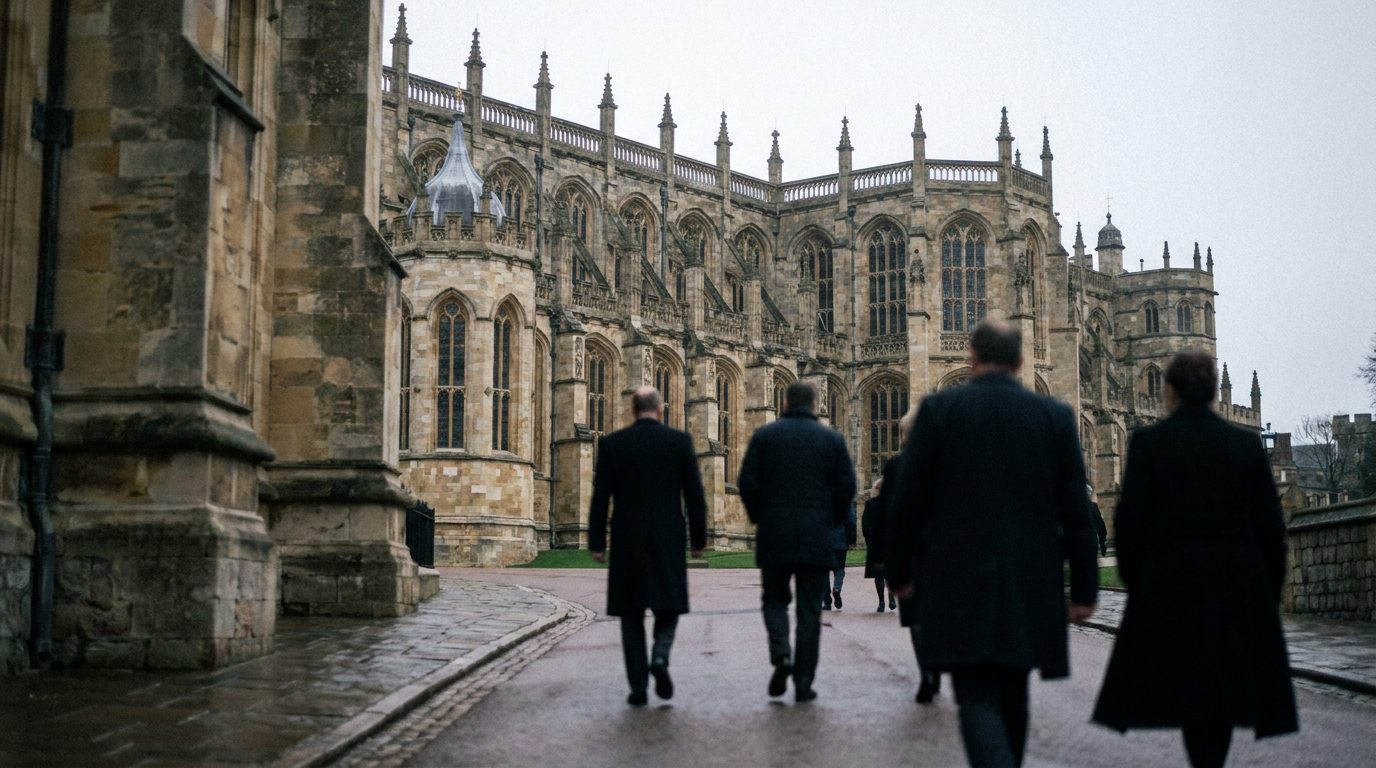
Meghan and her father, now 82, have been estranged since the year of her marriage to Prince Harry. Their wedding took place on 19 May 2018 at St George’s Chapel, Windsor Castle, without Thomas Markle Sr attending.
King Charles III, who was then Prince of Wales, accompanied Meghan for part of her walk towards the altar. The wedding marked a public milestone in a family relationship that had begun changing long before the present allegations emerged.
Meghan’s parents, Doria Ragland and Thomas Markle Sr, divorced in 1988. She lived mainly with her mother while continuing to have a close relationship with her father during her childhood.
The duchess returned to Britain with her family over the summer after spending six years in the United States. Her statement now gives a safeguarding explanation for the separation between her father and the next generation of the family.
Thomas Markle Sr moved from Rosarito, Mexico, to the Philippines in January 2025, travelling with his son. He says his computers were packed in Mexico and transported by cargo ship, with the shipment taking months to arrive.
According to his account, he repeatedly asked his son to return the computers but did not receive them. His denial therefore challenges both the allegation about the material and the account of his access to the equipment during the period before the alleged discovery.
He is now at a rehabilitation centre in Florida, learning to use a prosthetic leg. His left leg was amputated below the knee last December after a major blood clot, and he received hospital treatment in the Philippines.
What people are saying
Meghan expressed distress at the latest allegations and concern for any children who might have suffered harm. Her statement placed the welfare of children at the centre of her response rather than calling for a particular outcome for an individual.
She also criticised how parts of the media had portrayed the estrangement over the years. She presented her refusal to allow contact with her children as a protective decision, challenging accounts that had treated the family’s separation differently.
The duchess said she had relied on the authorities to protect other families as well as her own. She called for justice and for children’s safety to remain the priority as the allegations were addressed.
Her father issued his denial before her statement. He described himself as shocked and hurt by his son’s accusations, rejected the suggestion that he could have committed the alleged conduct and said he did not understand his son’s motive for making the claims.
The disagreement between father and son concerns an allegation of serious criminal conduct, not simply ownership of possessions. Possessing a computer does not, by itself, establish responsibility for every file on it; responsibility requires evidence about the material and the person’s knowledge and control.
What happens next
For allegations involving electronic devices, establishing how an item moved between people is an important investigative task. Records of packing, shipping, delivery and storage can help reconstruct who had access to equipment at different stages, alongside accounts from those involved.
Digital examination addresses a separate set of questions. Investigators can look at file locations, user accounts and available records of activity to assess how material reached a device and how it was used. The significance of any finding depends on its technical context.
Small preview images, often called thumbnails, also require careful interpretation. Software can create them automatically to display larger files. Their presence may provide evidence for examination, but assessing what they show and how they were generated is different from accepting a witness’s description of them.
Preserving a device matters because using it can alter records or other information relevant to an inquiry. Digital forensic work commonly involves making a controlled copy for examination while protecting the original, so that findings can be checked and the handling of evidence documented.
The locations involved also create distinct legal considerations. Where equipment was kept, where alleged conduct occurred and which authorities have jurisdiction can affect the handling of an investigation. Evidence crossing national borders may require formal cooperation between law enforcement bodies.
An allegation being passed to police is not a finding of guilt. Investigators assess evidence, while prosecutors apply the relevant legal tests before bringing a case. In England and Wales, a prosecution ordinarily requires sufficient evidence for a realistic prospect of conviction and must be in the public interest.
The law in England and Wales prohibits possessing indecent photographs or pseudo-photographs of children. Separate offences cover making and distributing such material. In this legal context, making an image can include downloading or copying it, rather than taking the original photograph.
A criminal court must be sure of a defendant’s guilt before convicting. Public statements, family disagreements and the seriousness of an accusation do not replace that requirement. The distinction between an allegation, evidence and a verdict remains essential throughout any criminal process.
Why this matters
For UK families, child safeguarding and criminal proceedings serve different purposes. Protective decisions focus on reducing potential risk to a child, while a prosecution determines whether a particular offence can be proved. A parent’s decision about contact is not itself a criminal judgment.
Anyone encountering suspected child sexual abuse material should avoid copying it or sending it to others, including to demonstrate concern. Suspected online material can be reported to the Internet Watch Foundation, and concerns about an identifiable child can be raised with police. Immediate danger should be reported through 999.
Reporting that informed this story
- Daily Mail: Meghan says she is 'deeply distressed' by allegations her father Thomas possessed child sex abuse images and reveals letter with 'disturbing' claims was passed to Met Police in 2018
- Daily Mail: Meghan was first told of allegations against her father Thomas after she married Harry in 2018 - as he faces probe over child sex abuse images
This article was written independently by The Daily Times from publicly available facts and headlines. No text has been copied from the outlets above.