Man faces six death by dangerous driving charges over A61 crash
Christopher Cockell, 50, is due in court on 28 October over the collision near Wakefield that killed four family members and a married couple.
By Hannah Whitfield, Health Correspondent
Published 21 Sept 2026, 18:01
What happened
Christopher Cockell, 50, faces six charges of causing death by dangerous driving following a collision on the A61 in which two young sisters, their parents and a married couple died. His first appearance on the charges is scheduled for 28 October at Leeds Magistrates’ Court.
West Yorkshire Police’s Major Collision Enquiry Team investigated the crash before Cockell, of Gresford Close in Woolley Grange, was summoned to court. He was already facing a separate allegation of failing to stop at the scene of a collision. The charges are allegations, not findings of guilt.
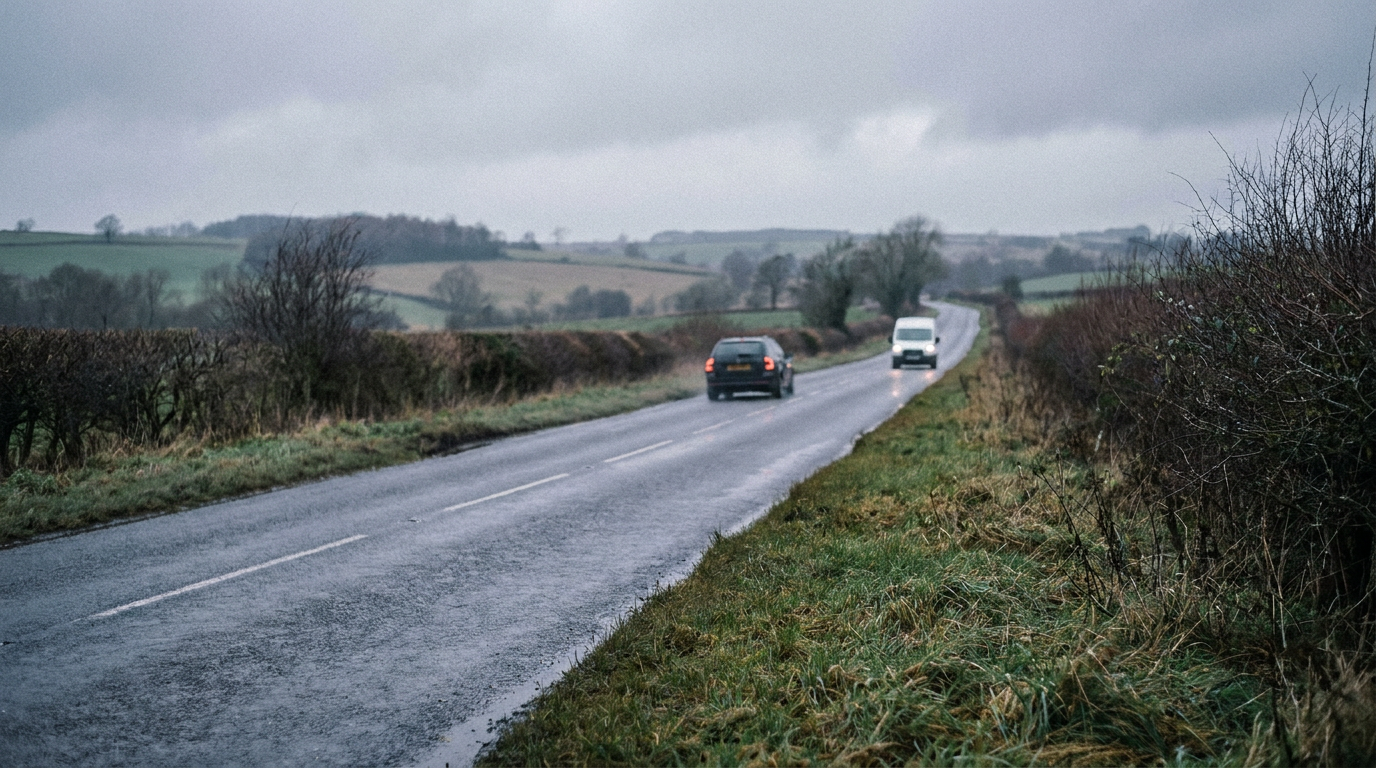
The collision happened on 21 July 2024 on the stretch of the A61 linking Barnsley and Wakefield. A Ford Focus carrying Shane Roller, Shannen Morgan and their daughters Rubie and Lillie collided with a BMW motorcycle carrying Christopher and Janine Barton.
Rubie was nine and Lillie was four. Their father, who was driving the car, was 33. Christopher Barton, the motorcycle’s rider, was 56, and his wife Janine was 48. All six lost their lives in the collision.
A third daughter of Mr Roller and Ms Morgan was not travelling with the family that afternoon. She was 11 at the time. A fundraising appeal subsequently attracted more than £400,000 to help provide for her after the deaths of her parents and sisters.
The background
Mr Roller and Ms Morgan lived in Athersley, Barnsley, and Mr Roller worked as a van driver. The two younger children attended Athersley North Primary School, whose staff later joined relatives in paying tribute to the family.
The Bartons also lived in Barnsley. They had recently marked 25 years of marriage, and their son later issued a tribute through West Yorkshire Police describing the care and commitment they had shown him as parents.
A family friend established the online appeal for the surviving daughter through GoFundMe. Its stated purposes included meeting the costs of her education, emotional support and future care, giving donations a long-term role beyond the immediate aftermath of the crash.
The appeal also described aspects of the child’s everyday life, including her enjoyment of football and outdoor play. Those details accompanied the request for help with her upbringing following the loss of four members of her immediate family.
Police sought witnesses and recordings from dashboard cameras after the collision. Such material can help investigators examine the movement of vehicles before an impact, alongside physical evidence from the road and the accounts of people who were present.
What the inquest heard
An earlier hearing at Wakefield Coroner’s Court examined the circumstances of the deaths. The court was told that the crash occurred at about 3.50pm between Staincross and Newmillerdam, on a single-carriageway section where the speed limit was 50mph.
The account presented to the coroner described the motorcycle overtaking another vehicle before the head-on collision with the silver Focus. That evidence formed part of the inquest proceedings; it was not a criminal verdict about responsibility for the six deaths.
Coroner’s support officer Phil Marr explained that the impact sent the car towards the roadside, where a fire broke out. The four people inside could not be freed, and paramedics pronounced each of them dead at the scene.
The hearing also received medical evidence concerning the Bartons. A pathologist gave head and chest injuries as Christopher Barton’s provisional cause of death. Janine Barton was thrown on to a neighbouring golf course and died from chest injuries.
The distinction between an inquest and a criminal prosecution is important. A coroner investigates who died and how, when and where the death occurred. An inquest does not decide whether a named person is criminally guilty; that question belongs to the criminal courts.
What people are saying
The families’ public tributes after the crash focused on the victims’ relationships and their lives at home. Graham Roller, Shane’s father, remembered his son’s generosity and devotion to fatherhood, while recalling Shannen’s humour and the importance she placed on being a mother.
Shane’s brother, Callum, used a social media message to express his grief for all four members of the family. He described the shock experienced by relatives on both Shane’s and Shannen’s sides, making clear how widely the deaths had affected their families.
At Athersley North Primary School, co-head teachers Clare Storr and Kirsty Wordsworth remembered Rubie and Lillie warmly as pupils. Their tribute also acknowledged the support the school had received from the girls’ parents and the loss felt by staff who knew them.
The Bartons’ son spoke about parents who consistently put his needs ahead of their own. His tribute, released through the police in 2024, emphasised their affection and care, providing a personal account of the couple beyond the circumstances of their deaths.
Superintendent Alan Travis, of Wakefield District Police, expressed sympathy for the bereaved families after the crash. He said officers were working with them to provide support, alongside the investigation into the collision that had killed their relatives.
What happens next
The next scheduled step is Cockell’s appearance before magistrates on 28 October. In England and Wales, an allegation of causing death by dangerous driving is an indictable-only offence, meaning that any trial takes place in the Crown Court rather than before magistrates.
The magistrates’ hearing is nevertheless part of the normal route into that process. At an initial appearance, the court deals with preliminary matters and arrangements for sending an indictable-only case to the Crown Court. It is not itself a trial of the evidence.
Further proceedings depend on the defendant’s pleas and the court’s directions. A contested case requires the prosecution to prove the charges so that the court is sure of guilt. The defendant does not have to prove his innocence, and the presumption of innocence applies throughout.
The legal test for dangerous driving concerns driving that falls far below the standard expected of a competent and careful driver, where the danger would be obvious to such a driver. For a charge of causing death by dangerous driving, the prosecution must also establish the necessary connection between the driving and the death.
The existing failing-to-stop allegation concerns a different legal obligation. Road traffic law requires drivers to stop when they are involved in certain collisions, including those involving injury. That allegation is distinct from deciding whether driving caused a death, and should not be treated as proof of the more serious charges.
Why this matters
For road users, the case highlights two separate features of the law: the standard required of driving and the duties that arise after a collision. Criminal proceedings must assess each alleged offence against its own legal requirements, rather than infer guilt from the scale of the loss.
For bereaved relatives, a prosecution serves a different purpose from practical support. The court process concerns criminal responsibility, while the appeal for the surviving child was established to help sustain her care and education over the years ahead.
Reporting that informed this story
- Daily Mail: Man charged with dangerous driving over fireball crash that killed six - including two children and their parents
- BBC News: Man charged with causing death by dangerous driving over crash that killed 6
This article was written independently by The Daily Times from publicly available facts and headlines. No text has been copied from the outlets above.