Noah Woods' father pays tribute after discovery at Suffolk pond
Rhys Woods has paid tribute to his three-year-old son and thanked the volunteers and emergency crews who searched for him in Brantham.

By Robert Aldridge, Senior Reporter
Published 17 Sept 2026, 13:01
What happened
The father of three-year-old Noah Woods has confirmed that his son was the child recovered from a pond in Suffolk after a search involving at least 1,300 people. Rhys Woods described his family's grief in a Facebook tribute that also thanked those who had tried to bring Noah home.
Noah, who lived in East Bergholt, disappeared at about 3pm BST on Tuesday while visiting a playground in nearby Brantham with a relative. He ran from the play area in Merriam Close towards an alleyway leading in the direction of woodland and Decoy Pond.
Police divers recovered a child's body from the pond on Wednesday afternoon. Suffolk Police classified the death as unexplained and said officers were not treating it as suspicious. The force informed Noah's family before his father subsequently confirmed his identity publicly.
In its initial announcement, the force said formal identification had not taken place. The police description of the death concerns the circumstances requiring investigation; it does not establish a medical cause of death. Those are separate questions in the process that follows a sudden death.
The background
The playground Noah left was intended for children under five. CCTV recorded him leaving, and the alarm was raised when he could not be found after running away from the relative accompanying him.
Noah was non-verbal, had partial hearing loss and was undergoing assessment for autism. These were important aspects of his vulnerability: a missing child who does not use speech cannot be expected to answer a searcher's calls in the same way as another child, while hearing loss may also affect communication.
An autism assessment is a process for establishing whether someone is autistic, rather than a diagnosis in itself. Autism can affect communication, sensory experiences and responses to unfamiliar situations, but its effects vary considerably between individuals. Noah's assessment should not be treated as an explanation for how he reached the pond.
Autism charities and water-safety campaigners have warned about drowning risks for autistic children. Some children may find the movement, sound or sensation of water particularly appealing while not recognising its dangers. That general safety concern is distinct from determining the circumstances of any individual death.
Brantham lies near the River Stour on the Suffolk-Essex border. The search therefore took place in an area containing both residential streets and waterside terrain, rather than solely around the playground where Noah had last been seen.
The search and the area
At least 1,300 people took part in efforts to find Noah during the 24 hours after his disappearance. Volunteers travelled from beyond the immediate area, including Birmingham and Hampshire, to help local residents and emergency services search.
Helicopters and dog units were deployed as teams worked across the area. Police, coastguards and firefighters joined the operation, with members of the public also searching on foot. The underwater search brought specialist police divers to Decoy Pond.
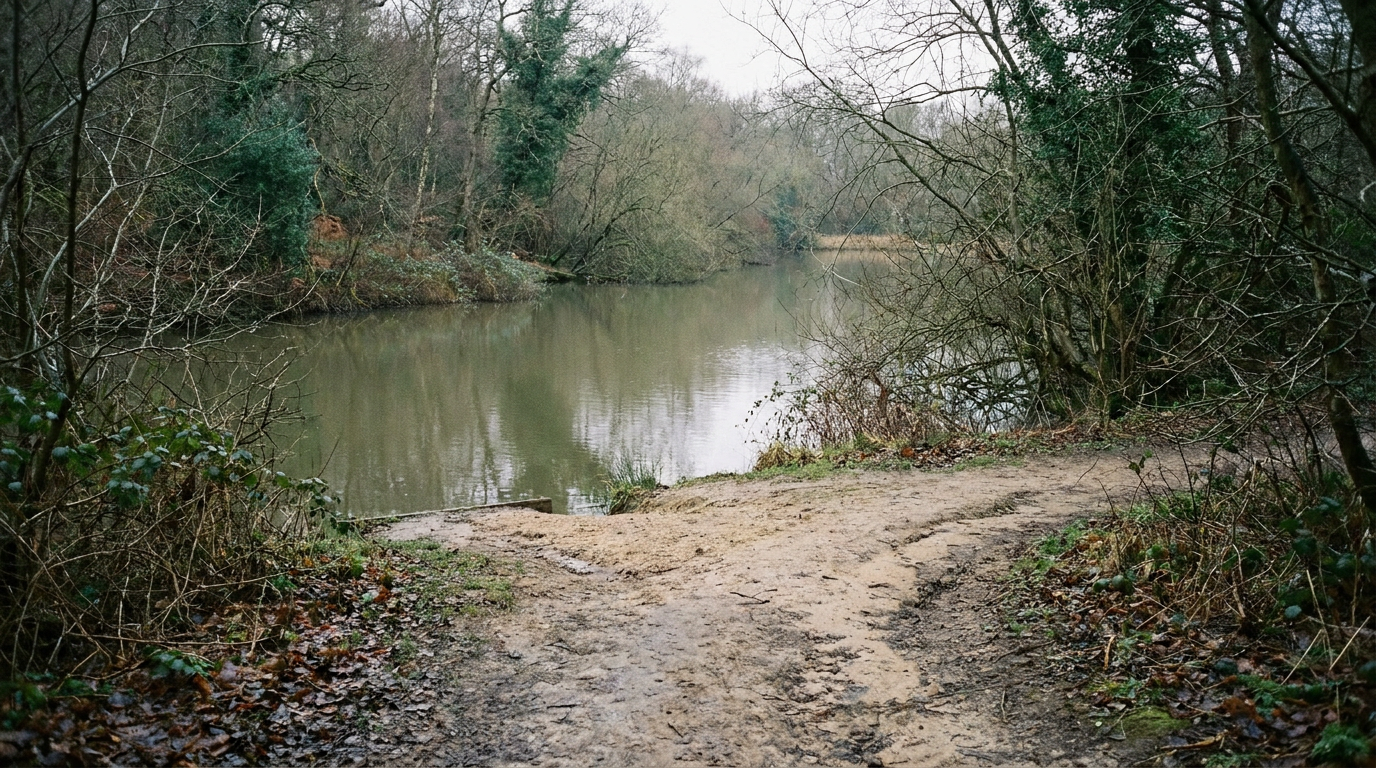
The pond is about 250 yards from the playground and roughly 150 yards across. It is used for private fishing and provides a habitat for wildlife, with woodland around its edge. Several paths connect the surrounding track to the water.
From the playground, the alleyway becomes a sandy track running downhill. Woodland stands on one side and a development of new homes on the other. Farther along, it meets another track passing through the trees beside the pond.
Some sections of the bank are shallow, and the paths provide direct access to the water's edge. Police cordons around the alleyway were removed overnight after the discovery on Wednesday afternoon.
What people are saying
Rhys Woods's tribute placed Noah's affectionate nature at the centre of the family's memories. He wrote about the love his son had given them and the profound loss felt by his parents and younger brother, expressing gratitude for the three years they had shared with him.
He also described the hope that sustained the family during the search: they had imagined Noah concealed somewhere nearby, waiting for someone to spot him. His message conveyed how difficult it was to reconcile that hope with the outcome at the pond.
The father thanked Suffolk Police, Norfolk Constabulary and the Metropolitan Police, alongside HM Coastguard, Suffolk Lowland Search and Rescue, fire and ambulance services and private dog-search teams. His acknowledgement reflected the range of specialist and voluntary organisations involved in looking for Noah.
His thanks extended to RTT Catering, Brantham Leisure Centre, Brantham village hall, St Michael's Church and other local businesses. He recognised people who had interrupted their own commitments to help, as well as those who had travelled to the village from elsewhere.
For the family, that response offered support amid their bereavement. Woods said the care shown by strangers and neighbours had helped them through the search and its aftermath. He signed the message on behalf of Noah's mother, father and younger brother, ending with a personal farewell to his son.
What happens next
An unexplained death requires a different process from a missing-person search. In England and Wales, deaths with an unknown cause must be referred to a coroner, an independent judicial office-holder responsible for investigating certain deaths. The coroner's role is separate from the police assessment of whether a crime may have occurred.
A coroner considers the person's identity and how, when and where they died. Where a medical cause needs to be established, the coroner may order a post-mortem examination. The decision depends on the circumstances and the evidence needed, rather than simply on where a body was found.
An inquest is a fact-finding hearing, not a criminal trial. It does not determine criminal guilt or civil liability. Where an investigation proceeds to an inquest, medical findings and other relevant evidence help establish the circumstances of the death.
The procedures for a child's death also include a separate child death review in England. These reviews consider information from the organisations involved with a child and examine whether any factors could inform future prevention. Their purpose is learning and improving safety, rather than assigning blame to a bereaved family.
Why this matters
For families elsewhere in the UK, the practical safety issue extends beyond rivers and beaches. Ponds and other inland waters can be accessible from familiar places, including paths and residential areas. Water-safety planning for children needs to take account of nearby access routes as well as the immediate space where they are playing.
When a young child goes missing, police should be contacted immediately; there is no requirement to wait 24 hours. Information about the child's communication, hearing, last known location and nearby hazards can help emergency teams organise their response. Members of the public should follow search instructions and avoid entering water themselves.
Reporting that informed this story
- Daily Mail: Heartbroken father of tragic Noah Woods pays tribute to 'sweetest and most innocent boy' after police find body in lake
- BBC News: Father's tribute to 'sweetest little boy' Noah Woods
This article was written independently by The Daily Times from publicly available facts and headlines. No text has been copied from the outlets above.