No 10 defends RAF Fairford security after US bombers leave
US bombers have returned home from Gloucestershire after fresh threat warnings, while six men arrested in a counter-terrorism investigation remain on bail.
By Hannah Whitfield, Health Correspondent
Published 5 Oct 2026, 13:01
What happened
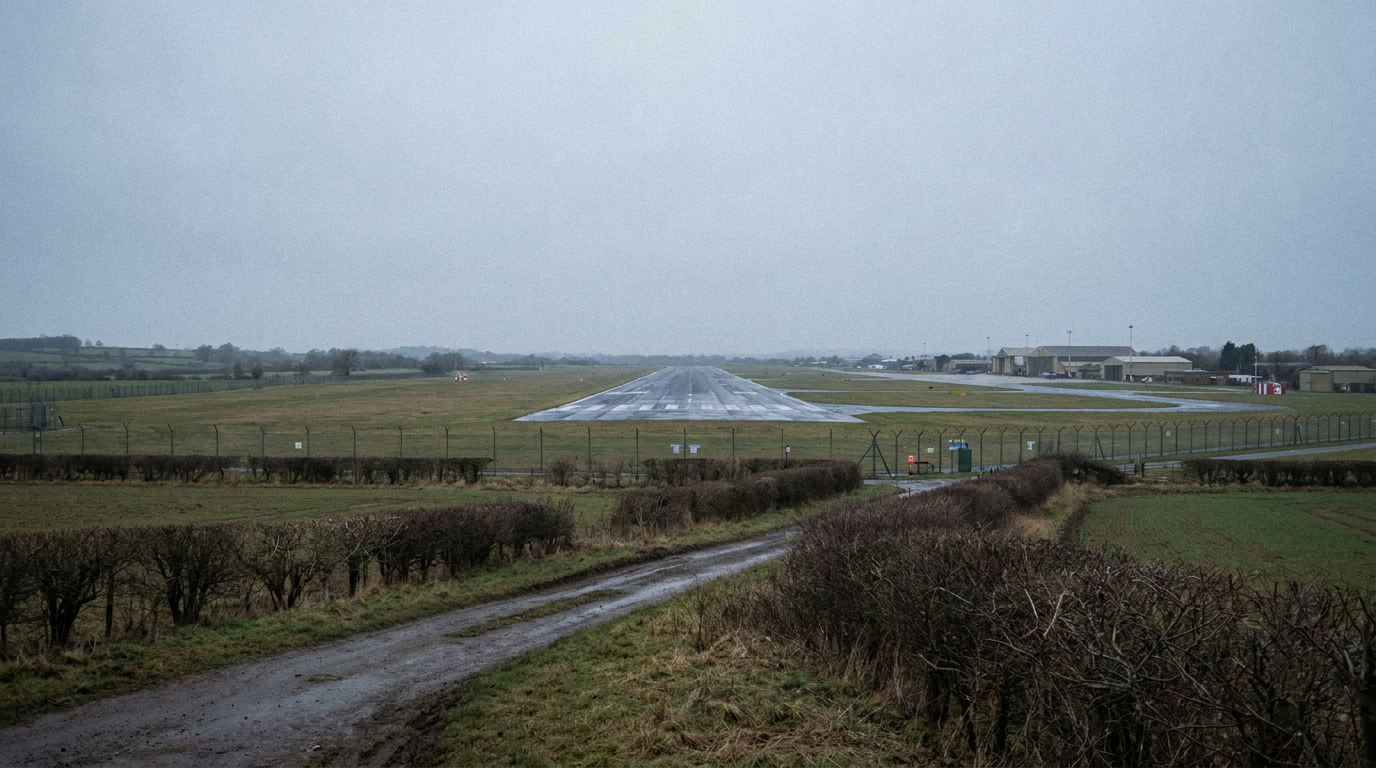
The United States has withdrawn its bombers from RAF Fairford following fresh security warnings, while Downing Street has maintained that the Gloucestershire airbase is safe. The departure comes amid a counter-terrorism investigation in which six men have been arrested and subsequently released on bail.
The Pentagon confirmed on Sunday that the aircraft had returned to their home bases in America. The deployment is understood to have comprised around a dozen B-1 bombers. Their removal was an operational decision by the US military, communicated directly to British military counterparts, rather than a political instruction.
US officials said commanders had received more detailed warnings about a suspected Iran-backed plot against Fairford. The information developed from earlier threat warnings dating back about three weeks, with specific details emerging during the 24 hours before the decision prompted rapid action.
The investigation began after police were alerted to three vehicles considered suspicious near the base on 27 September. Five British men, all in their mid-20s, were arrested near Fairford on suspicion of terrorism offences. All five were later released on bail.
A sixth man, a 25-year-old with dual British and Iranian nationality, was arrested on 1 October and also released on bail. Those arrests form part of the investigation into the suspected targeting of the military site; they do not establish that any of the men committed an offence.
At Monday's Downing Street briefing, the prime minister's spokesperson gave an unequivocal assurance about Fairford's safety. However, he declined to discuss another country's military operations, leaving the explanation of the aircraft movements to the United States while defending Britain's arrangements for protecting the base.
The background
RAF Fairford lies near Whelford, a village in the Gloucestershire Cotswolds. The United States Air Force has used it for decades as a forward operating location, allowing American aircraft to deploy from Britain rather than carry out every mission directly from their permanent bases in the US.
In recent months, both B-1 and B-52 bombers have operated from Fairford for missions in the Middle East. Britain approved an American request to use the airfield for defensive strikes on Iran, placing the Gloucestershire installation within the military arrangements supporting those operations.
A forward operating location serves a different purpose from an aircraft's home station. It provides somewhere to deploy for particular operations, while the aircraft retains a permanent base elsewhere. In this case, the Pentagon described a return to those American home stations, rather than a transfer to another overseas airfield.
The two bomber types belong to America's long-range strike capability. Their presence at Fairford has made the base important not simply as an airfield, but as a location from which the United States can position substantial military capability outside its own territory.
Iran had already issued a warning in July that it would regard bases used to launch attacks on Iranian territory as military targets. That statement preceded the September incident and provides the wider backdrop to concerns about installations supporting American operations against Iran.
Days after the incident, Prime Minister Andy Burnham said there were significant indications of Iranian involvement. US Secretary of State Marco Rubio separately attributed the episode to foreign involvement during an appearance on Fox News. Tehran has firmly rejected any suggestion that it was responsible.
The allegations about state involvement and the investigation into individual suspects are distinct questions. Establishing whether a foreign government directed or supported an incident is different from determining whether particular people committed criminal offences. The public positions taken by Britain, the United States and Iran concern that broader dispute over responsibility.
What people are saying
Downing Street pointed to Defence Secretary Wes Streeting's comments last week about established methods for defending British bases at home and overseas. The spokesperson used those assurances to support the government's position that Fairford remained secure despite the American decision to move its bombers.
The spokesperson also referred to US President Donald Trump's praise last week for Britain's police, defence and security services in their handling of the Fairford incident. His remarks were presented as evidence of American recognition of the British response, alongside the separate operational choice to withdraw the aircraft.
Ezra Cohen, who served as a defence official during Trump's first administration, supported the withdrawal in an interview on BBC Radio 4's Today programme. He argued that protecting the B-1 fleet was sensible because the aircraft are strategically valuable, limited in number and no longer being manufactured.
Cohen's explanation centred on preserving the aircraft themselves. A fleet that is no longer in production cannot be replenished simply by ordering newly built examples of the same type. That makes the protection of existing bombers an important consideration when commanders assess threats to a deployment.
Liberal Democrat defence spokesperson James MacCleary expressed serious concern about the decision. He called on the government to explain how it would ensure that Britain's military bases were suitable for their purpose, extending the political debate beyond the immediate movement of aircraft from Fairford.
Some nearby residents welcomed the departure for more personal reasons. One described relief after weeks of growing anxiety about living near the base, alongside concerns about aircraft noise. Their response highlighted the effect of a major military deployment on people whose homes are close to the airfield.
Another resident said he had watched bombs being loaded on aircraft from his back garden. He realised something significant was happening on Sunday when he saw aircraft departing in succession, giving neighbours a direct view of the withdrawal before its operational significance became public.
What happens next
The counter-terrorism investigation continues with all six arrested men on bail. Bail allows a person to remain outside custody while an investigation proceeds; it is not a finding of guilt or an acquittal. Decisions about any prosecution belong to the criminal justice process, separately from decisions about where military aircraft should operate.
Investigators' work concerns the suspected activity around Fairford, whereas American commanders have responsibility for protecting and positioning their aircraft. Those different responsibilities explain why an operational move can take place while the police inquiry is still under way, rather than waiting for a criminal case to reach a conclusion.
MacCleary's demand puts the adequacy of military base protection before ministers as a political question. The government's response so far has rested on its existing defence arrangements and its assessment of Fairford's safety, rather than treating the American redeployment as a change in Britain's own position on the installation.
Why this matters
For people living around Whelford, the story brings overseas military operations close to home. Residents have described both the noise of the bomber deployment and concern about their proximity to a potential target, making aircraft movements a matter of everyday life as well as defence policy.
For the wider UK, Fairford illustrates the responsibilities involved in allowing an ally to conduct operations from British territory. The UK authorised use of the base for defensive strikes on Iran, while US commanders made the decision to bring their bombers home following the latest threat information.
Reporting that informed this story
- BBC News: No 10 insists RAF Fairford is safe after US withdraws bombers
- The Guardian Politics: No 10 insists RAF Fairford is safe after US withdraws its bombers – UK politics live
This article was written independently by The Daily Times from publicly available facts and headlines. No text has been copied from the outlets above.