Healey to back UK-built submarine docks and £115m research ship
The chancellor will set out shipbuilding and skills plans at Labour’s Liverpool conference, a month before his first Budget.

By Marcus Odell, Political Correspondent
Published 28 Sept 2026, 07:01
What happened
Chancellor John Healey will commit the government to having three submarine maintenance docks built in Britain when he addresses Labour’s annual conference in Liverpool on Monday. The decision will reserve the work for UK construction rather than expose it to competition from shipyards overseas.
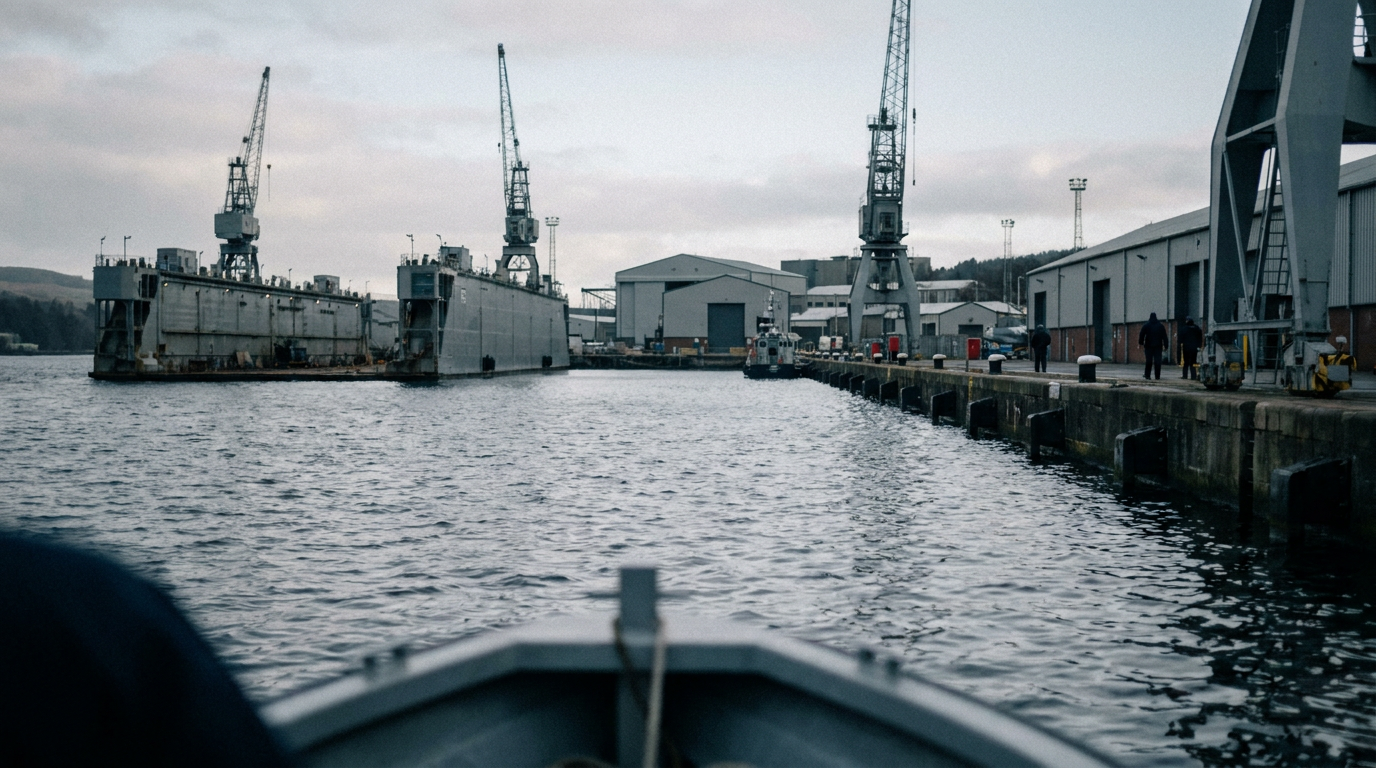
The floating docks are intended for HM Naval Base Clyde at Faslane, where they will support the Royal Navy’s nuclear submarine fleet. Their purpose is to prepare the base’s maintenance infrastructure for the next generation of British submarines, with entry into service expected in the early 2030s.
Healey is also expected to allocate £115m to a marine research vessel. That ship is due to begin operating in the same period, giving the conference package a civilian research element alongside the investment in naval facilities.
His speech will extend beyond shipbuilding to training, with £15m for the return of the Union Learning Fund in England. The money will come from existing government budgets and support a scheme delivered through trade unions, including help for employees who are not union members.
The address, scheduled for noon on 28 September, will be Healey’s first to the party conference as chancellor. He is expected to use it to set out an industrial strategy centred on advanced manufacturing, rather than disclose the tax and spending measures in his first Budget next month.
The background
The Clyde project predates this conference. Plans for the facilities, known as Programme Euston, emerged in 2023. Monday’s announcement concerns how the docks will be procured, with domestic construction forming the central industrial commitment.
They sit within a £15bn programme covering improvements to the Royal Navy’s shipyards. That figure describes the wider programme, rather than the cost of the three floating docks alone. The distinction separates the scale of the existing naval infrastructure plans from the individual measures being presented in Liverpool.
Healey, formerly defence secretary, took over the Treasury from Rachel Reeves. He now faces pressure to address the rising cost of government borrowing through spending restraint or higher taxes, even as he makes the case for government support for industry.
His industrial argument draws on South Yorkshire, where his politics developed. He will point to the Advanced Manufacturing Park in Rotherham, on the former Orgreave colliery site, as an example of a place finding a new economic role after coal mining. His emphasis will be on different industries, not a restoration of the pits.
Prime Minister Andy Burnham has made rebuilding Britain’s industrial capacity a political priority, raising the ambition during discussions last week with US President Donald Trump. The shipbuilding measures put government purchasing alongside that wider ambition: public orders can provide work directly, rather than relying solely on incentives for private investment.
The research ship also follows a commitment made on Sunday by First Secretary of State Louise Haigh. Her conference speech established the government’s intention to commission the vessel, ahead of the funding allocation expected from Healey.
What people are saying
Before the speech, Healey linked the choice of British shipyards to both defence and economic resilience. He argued that domestic orders would strengthen national security while supporting the industrial capacity needed for growth and future national requirements.
The GMB union, which campaigned for the change, welcomed the direction of the procurement policy. National secretary Charlotte Brumpton-Childs said UK shipyards and their surrounding communities stood to benefit, arguing that overseas yards, sometimes supported by subsidies, had taken too much of this work.
Conservative shadow chancellor Andrew Griffith challenged the package on both its novelty and its funding. He accused Labour of presenting existing dock plans again and avoiding difficult decisions about defence expenditure. Griffith said the Conservatives would reduce welfare spending to help meet defence costs.
A separate warning about the wider economy will come from the Confederation of British Industry. Its survey, due on Monday, records weaker activity across major sectors during the three months to September. Retail and services contracted, while manufacturing experienced a less pronounced decline.
Alpesh Paleja, the CBI’s deputy chief economist, identified higher energy and employment costs, together with subdued demand, as pressures on company profit margins. He also said uncertainty before the Budget was restraining some activity, and urged the Treasury not to impose further costs on recruitment, investment or business operations.
From within the trade union movement, Unite general secretary Sharon Graham has pressed Healey to focus on household finances. She wants income tax thresholds unfrozen and further measures on energy bills, placing the cost of living alongside industrial investment among the demands facing the chancellor.
Those thresholds determine the income levels at which tax becomes payable or higher rates apply. When they remain fixed as wages rise, workers can pay more tax even without a change in the headline rates. Graham’s demand therefore concerns take-home pay, rather than the funding of shipyards or training providers.
What happens next
Burnham will make his main conference address on Tuesday. Healey’s Budget follows next month, while the spending review is scheduled for next year. The Budget concerns the government’s tax and spending plans; a spending review sets departmental allocations over a longer period, shaping what individual public services can afford.
For shipbuilding, the expected early-2030s service dates place delivery well beyond the conference and the coming Budget. The docks are maintenance infrastructure rather than submarines themselves: their role is to support the fleet at Faslane, while the research vessel is a separate construction project with a different purpose.
The learning fund is intended to help employees respond to technological change, including the increasing use of artificial intelligence at work. Its scope ranges from basic English and maths to digital skills and preparation for roles in expanding sectors such as advanced manufacturing. That gives it a broader remit than training workers for the naval orders alone.
Using existing budgets for the fund means its £15m allocation is a redirection of government resources, rather than an addition to overall spending. The scheme also has a defined geographical reach: it will help workers in England, whereas the naval facilities will operate at a Scottish base.
Why this matters
For Britain’s shipbuilding communities, the practical significance lies in where public contracts are placed. Choosing domestic construction keeps these dock orders within the UK industry. The benefit is tied to a long-term defence requirement, giving the policy a different role from short-term support intended to help businesses through weak demand.
For employees seeking training, union membership will not be an entry requirement, opening the learning fund’s support beyond organised workplaces. For households concerned about tax and energy costs, the next major decision point is the Budget: the industrial programme sits alongside, rather than replaces, the competing demands on the Treasury over living standards and public finances.
Reporting that informed this story
- The Guardian Politics: Chancellor John Healey to promise ‘new age of industrialisation’ in speech to Labour conference – UK politics live
- BBC Business: Healey to promise 'new age of industrialisation' for UK in conference speech
This article was written independently by The Daily Times from publicly available facts and headlines. No text has been copied from the outlets above.