MPs reject assisted dying bill for England and Wales
The Commons voted 286 to 270 against the proposed law, ending a renewed attempt to give some terminally ill adults access to assisted dying.

By Marcus Odell, Political Correspondent
Published 11 Sept 2026, 18:01
What happened
MPs have rejected legislation to allow assisted dying in England and Wales, defeating a renewed attempt to change the law after an earlier bill stalled in the House of Lords. The House of Commons divided by 286 votes to 270 on 11 September 2026, a majority of 16 against the proposal.
Labour MP Lauren Edwards introduced the private member’s bill. It would have enabled adults with a terminal illness and an expected remaining lifespan of no more than six months to seek medical help to end their lives. MPs rejected it at second reading, when they consider a bill’s general principles.
Around 70 MPs sought a place in the debate, which took place in a chamber with few empty seats. Members drew on their experiences of illness, bereavement and clinical practice as they argued over personal choice, safeguards and the capacity of care services.
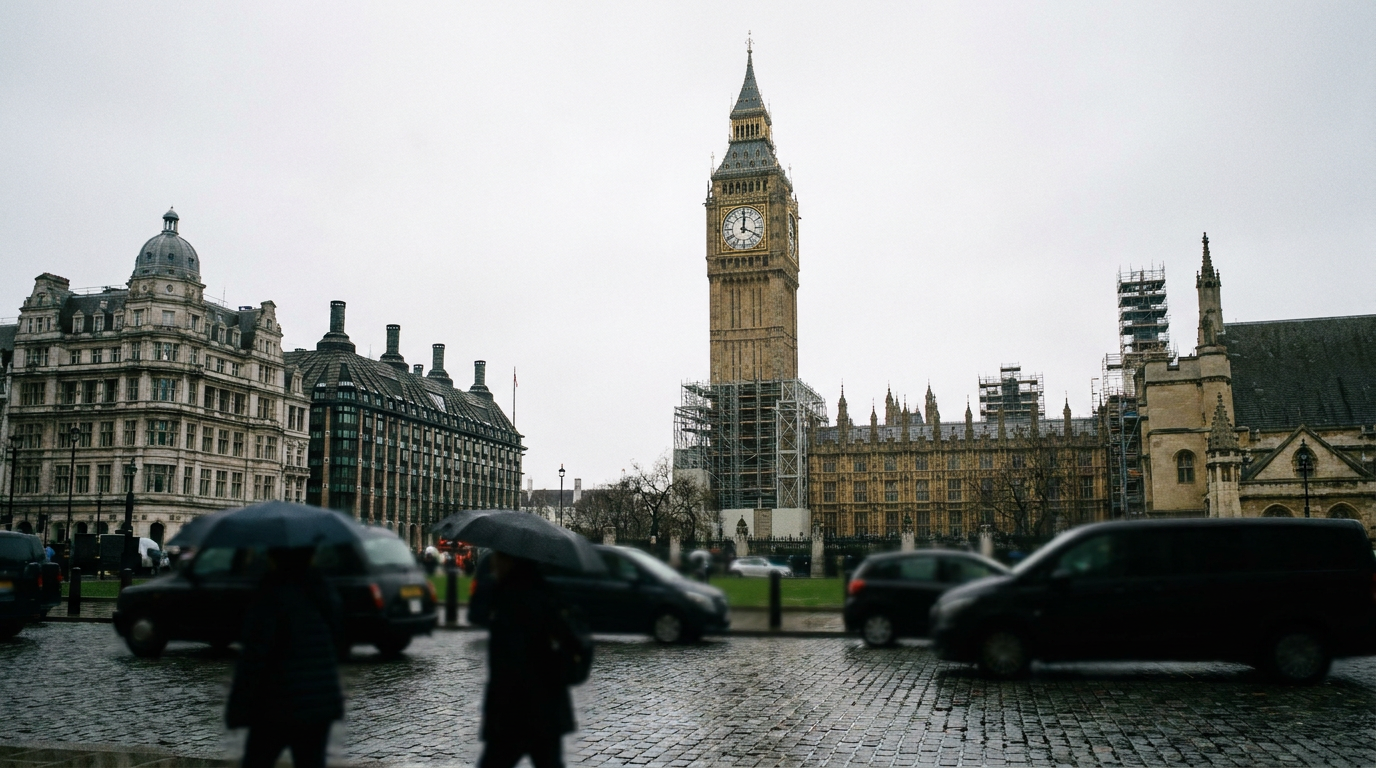
The result prompted sharply different responses inside and outside Parliament. Some MPs greeted it with cheers and embraces. In Parliament Square in London, opponents of assisted dying celebrated, while supporters comforted one another, with some crying and others standing quietly.
The background
The legislation closely resembled an earlier proposal led by Labour MP Kim Leadbeater. That bill won Commons approval during the previous parliamentary session but failed to complete its passage through the Lords before parliamentary time ran out in April.
A small group of peers had submitted hundreds of amendments to Leadbeater’s bill. Its failure in the upper chamber made parliamentary procedure a central issue in the renewed effort: supporters were seeking not only another Commons endorsement but a route past the resistance that had stopped the first attempt.
Leadbeater’s proposal had secured 330 votes in favour and 275 against at second reading. At third reading, its final Commons approval stage, the figures were 313 to 291. Both sides recorded fewer votes in Friday’s division than at either of those earlier votes, but the fall was substantially greater among supporters.
The political setting had also changed. Prime Minister Andy Burnham maintained government neutrality on a question treated as a matter of conscience, but said he would not participate in the vote. His predecessor, Keir Starmer, had voted for assisted dying legislation.
Burnham argued that Parliament should pause the assisted dying debate until social care had improved. Some MPs also described receiving less lobbying from campaigners supporting the change than they had during the passage of Leadbeater’s bill.
Another point of contention was the possible use of the Parliament Act if peers blocked the legislation again. That mechanism limits the Lords’ ability to hold up legislation supported by the Commons indefinitely. The prospect of using it to secure assisted dying legislation caused concern among some MPs.
What people are saying
Edwards blamed the outcome on disputes over parliamentary procedure rather than a collapse in support for end-of-life choice. She argued that public backing for reform remained strong and criticised both the peers who obstructed the earlier bill and MPs who declined to challenge that obstruction.
Leadbeater focused on terminally ill people and campaigners who had worked for reform over many years. She expressed sorrow at the result and said the people seeking a change wanted greater control and dignity at the end of their lives.
Esther Rantzen, a longstanding advocate for assisted dying who has terminal cancer, was too unwell to attend the gathering outside Parliament. Speaking to the BBC, she said she still expected the law eventually to change, but feared that many people who needed it would not live to benefit.
Her daughter, Rebecca Wilcox, described herself as devastated and challenged the democratic legitimacy of the process. Her criticism centred on the fate of legislation that had previously secured the support of elected MPs before being stopped in the Lords.
Labour opponents Ashley Dalton, Meg Hillier and Jess Asato issued a joint response emphasising their concerns about the proposal’s operation and protections. They acknowledged the strength of feeling among those seeking reform, while arguing that relevant medical colleges, professional bodies and experts had not endorsed the bill as safe and workable.
Dalton, a former minister receiving chemotherapy for incurable stage 4 breast cancer, told MPs she had received a terminal diagnosis before the earlier second-reading vote but had not disclosed it then. She said the legislation offered insufficient protection for terminally ill people experiencing depression that could be treated.
Her contribution also addressed the emotional upheaval following a terminal diagnosis. Dalton argued that the bill did not adequately support people through that initial period and rejected the idea that her own limited time should be a reason to accept legislation she considered flawed.
Claire Hazelgrove, the Labour MP for Filton and Bradley Stoke, supported the measure and spoke about her mother, who died the previous October after living with a rare blood cancer. She described severe pain during her mother’s final weeks despite access to good palliative care, arguing that such care could not relieve every patient’s suffering.
Zubir Ahmed, the Glasgow South West MP, transplant surgeon and former Labour health minister, questioned whether social care and palliative services were prepared. He also highlighted the difficulty of predicting whether an individual patient had six months left to live, a judgement central to the proposed eligibility threshold.
Outside Parliament, John Sherrington, the Catholic archbishop of Liverpool, welcomed MPs’ decision. Andrew Copson, chief executive of Humanists UK, opposed it, arguing that rejection brought no additional resources for palliative care or disability support and left terminally ill people facing suffering and unequal options, including travel to Switzerland.
What happens next
Defeat at second reading stops Edwards’ bill from advancing to detailed parliamentary consideration. The proposed route to assisted dying will therefore not be created through this legislation, and the possibility of using the Parliament Act to overcome renewed Lords opposition does not arise for it.
Leadbeater predicted that MPs and peers distressed by the outcome would seek another opportunity to pursue reform. She offered no timetable. Edwards also said the campaign would continue, maintaining that the existing law required change.
Before the division, health minister Alison McGovern said the government would implement the proposal if Parliament made it law. She also reiterated concerns about social care, reflecting the issue Burnham had identified as a reason to pause the debate.
Toby Porter, chief executive of Hospice UK, urged both sides to turn their attention to hospice funding. He called for the energy devoted to the assisted dying campaign to be directed towards addressing financial pressures and ensuring people could obtain the end-of-life care they needed.
Why this matters
The proposed change covered England and Wales, rather than the whole UK, and was limited to terminally ill adults within a six-month prognosis. Its rejection leaves those patients without the new option its supporters had sought; it was not a proposal for unrestricted access to assisted dying.
For patients and families using end-of-life services, the debate also exposed two distinct concerns: whether care can relieve suffering, and whether services have sufficient capacity. MPs heard both testimony about pain despite good care and warnings about an overstretched system. Hospice UK’s response places access to that care at the centre of the next debate.
Reporting that informed this story
- The Guardian UK: ‘A tragic day’: campaigners react after MPs vote against legalising assisted dying in England and Wales
- The Guardian Politics: MPs vote against legalising assisted dying in England and Wales
This article was written independently by The Daily Times from publicly available facts and headlines. No text has been copied from the outlets above.