Two men arrested after RAF Molesworth perimeter breach
Counter-terrorism police are investigating after two UK-resident Latvian men were detained inside the Cambridgeshire intelligence base.

By Robert Aldridge, Senior Reporter
Published 8 Oct 2026, 18:01
What happened
A security patrol’s discovery of an abandoned vehicle led to an overnight search at RAF Molesworth and the arrest of two men inside the Cambridgeshire base. Counter-terrorism officers are investigating the incident at the military intelligence site, which serves both the United States and Nato.
The Metropolitan Police said the men, aged 32 and 36, were Latvian nationals living in the UK. Officers detained them at about 02:00 BST on Thursday, around four hours after Ministry of Defence Police personnel spotted the vehicle outside the installation during a Wednesday evening patrol.
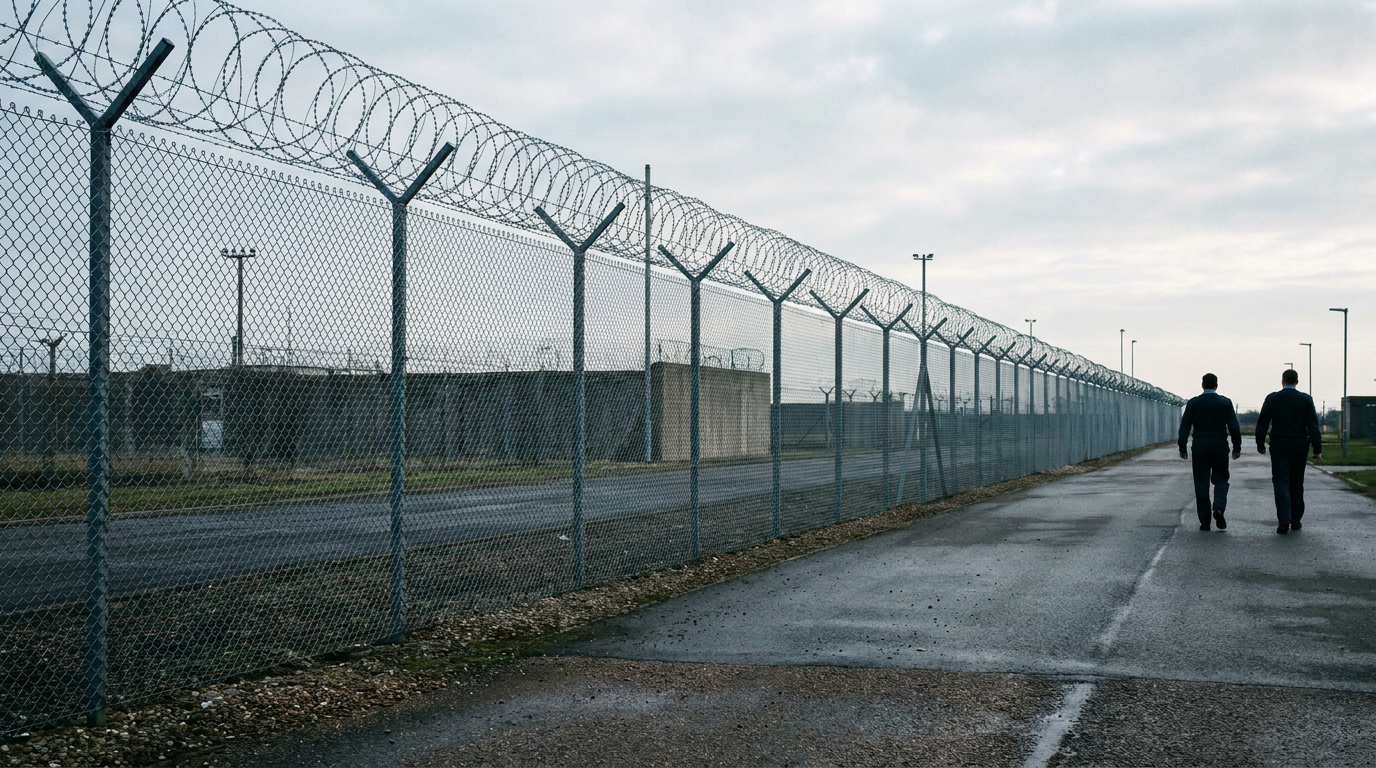
Cambridgeshire Police joined the operation, and officers searching the site found a small opening in its boundary fence. The men were initially detained on suspicion of criminal damage and trespass at a prohibited site, then taken to a local police station.
Further arrests followed under Section 4 of the National Security Act 2023. The suspected offence concerns entry into a prohibited place with a purpose harmful to the United Kingdom’s safety or interests. Both men remained in police custody on Thursday.
The vehicle was moved to a nearby police location for inspection. Concerns arising during the first checks prompted officers to seek assistance from explosives specialists, extending the security response beyond the base itself.
At about 13:00 BST, part of the A1(M) and other roads around Glatton were closed while specialists examined the vehicle. The precautionary cordon affected an area south of Peterborough. Traffic restrictions were subsequently removed after Cambridgeshire Police said the examination had found nothing concerning.
The Metropolitan Police’s Counter Terrorism Policing London took responsibility for the investigation because of the nature of the incident. The involvement of that command places the inquiry with specialist officers; the arrests themselves concern suspected offences and do not establish that either man committed a crime.
The background
RAF Molesworth lies west of Huntingdon, near Cambridgeshire’s boundary with Northamptonshire. Its role is centred on intelligence: it accommodates US intelligence operations serving Europe and Africa, alongside a Nato facility supporting the alliance’s military work.
Among the organisations based there is Nato’s Intelligence Fusion Centre, which supplies military intelligence to the alliance. Molesworth also houses the US Joint Intelligence Operations Center, Europe, supporting US European Command. That command is distinct from US Central Command, whose responsibilities include Iran.
The incident comes during heightened concern about security at another British base used by American forces, RAF Fairford in Gloucestershire. The United States moved B-1 bombers away from Fairford on Sunday amid concerns about a possible attack directed by Iran.
Those concerns included the possibility of drones being used against aircraft while they were on the ground. British officials have been sceptical about Iran’s ability to carry out an operation of that sophistication. The aircraft withdrawal was a precautionary operational decision rather than the bombers’ routine departure from a permanent home base.
A separate police investigation concerns five men who arrived in three white vans at a village beside Fairford. All five were British nationals in their 20s from London. They were arrested and subsequently released on police bail without charge.
A sixth suspect, who holds both British and Iranian nationality, was arrested later and also released on bail. A seventh man, aged 22, was detained on Wednesday on suspicion of preparing terrorist acts and was bailed on Thursday. Police work on the Fairford case continues.
Commander Helen Flanagan, who leads Counter Terrorism Policing London, said investigators had identified nothing at this stage connecting the Molesworth incident with the events near Fairford. She stressed that work on the Cambridgeshire case was still at an early stage, keeping the two investigations distinct despite the wider focus on military security.
What people are saying
The Ministry of Defence said protecting military installations involved several forms of security working together. It identified boundary defences, patrols, surveillance, monitoring and measures against drones as elements of that approach, with arrangements subject to continuing review.
The department also emphasised its cooperation with police and allied forces in responding to potential threats. Its position places the security of bases used by overseas forces within a joint effort, involving the UK authorities as well as the military organisations operating at each site.
US European Command thanked British agencies for their assistance. It declined to discuss intelligence matters or particular protective arrangements, while saying it would continue assessing threats around its installations and taking measures to safeguard personnel, equipment and the locations from which its forces operate.
Air Chief Marshal Sir Richard Knighton, the chief of the defence staff, expressed confidence in the security of military bases while visiting troops on an exercise in Wales on Thursday. He pointed to close intelligence-sharing and operational cooperation between Britain and the United States as important reasons for that assessment.
Addressing the Fairford aircraft withdrawal, Knighton explained that returning the bombers, which are not normally based there, reduced operational risk. His comments distinguished the decision to move those aircraft from the broader question of whether British military installations could be kept secure.
Metropolitan Police Commissioner Sir Mark Rowley described a faster-moving threat environment involving both terrorism and activity directed by foreign states, including Iran and Russia. Speaking about the Fairford investigation, he urged public confidence in officers working alongside MI5, GCHQ and international intelligence partners, and indicated that further progress would follow.
What happens next
Officers are searching two addresses in the Peterborough area as part of the Molesworth inquiry. Those searches extend the investigation beyond the military perimeter and the vehicle examination that prompted the temporary road closures.
Establishing why the men were at the base is a central task for investigators. Flanagan said officers were considering possible motives without settling on an explanation, and that inquiries remained active. That work concerns the purpose of their presence, as well as the circumstances in which they entered the site.
The distinction matters to the suspected national security offence: Section 4 concerns not simply entry into a prohibited place but the purpose behind it. Investigators must examine the evidence relevant to that suspicion separately from the initial allegations of trespass and damage to property.
Flanagan also appealed for members of the public to stay alert and contact police about anything causing concern. The appeal was directed at public vigilance as officers continued their inquiries, rather than asking residents to investigate suspicious activity themselves.
Why this matters
For people living and travelling near military installations, security operations can have consequences beyond a base’s boundary. A vehicle requiring specialist examination can lead to restrictions on surrounding public roads, bringing nearby communities and major transport routes into an otherwise contained police response.
The case also concerns facilities that support Britain’s allies, not only its own armed forces. Protecting an intelligence site involves preserving the working environment for organisations serving both US military commands and Nato, while police examine suspected wrongdoing through the UK criminal justice system.
Reporting that informed this story
- BBC News: Two Latvian men arrested on suspicion of trespass at RAF base in Cambridgeshire
- The Guardian UK: Two Latvian men arrested at RAF base in Cambridgeshire used by US military
This article was written independently by The Daily Times from publicly available facts and headlines. No text has been copied from the outlets above.